NGV. National Gallery Of Victoria. Melbourne, Australia. LINK: Spotlight on the NGV Collection | Korean Art
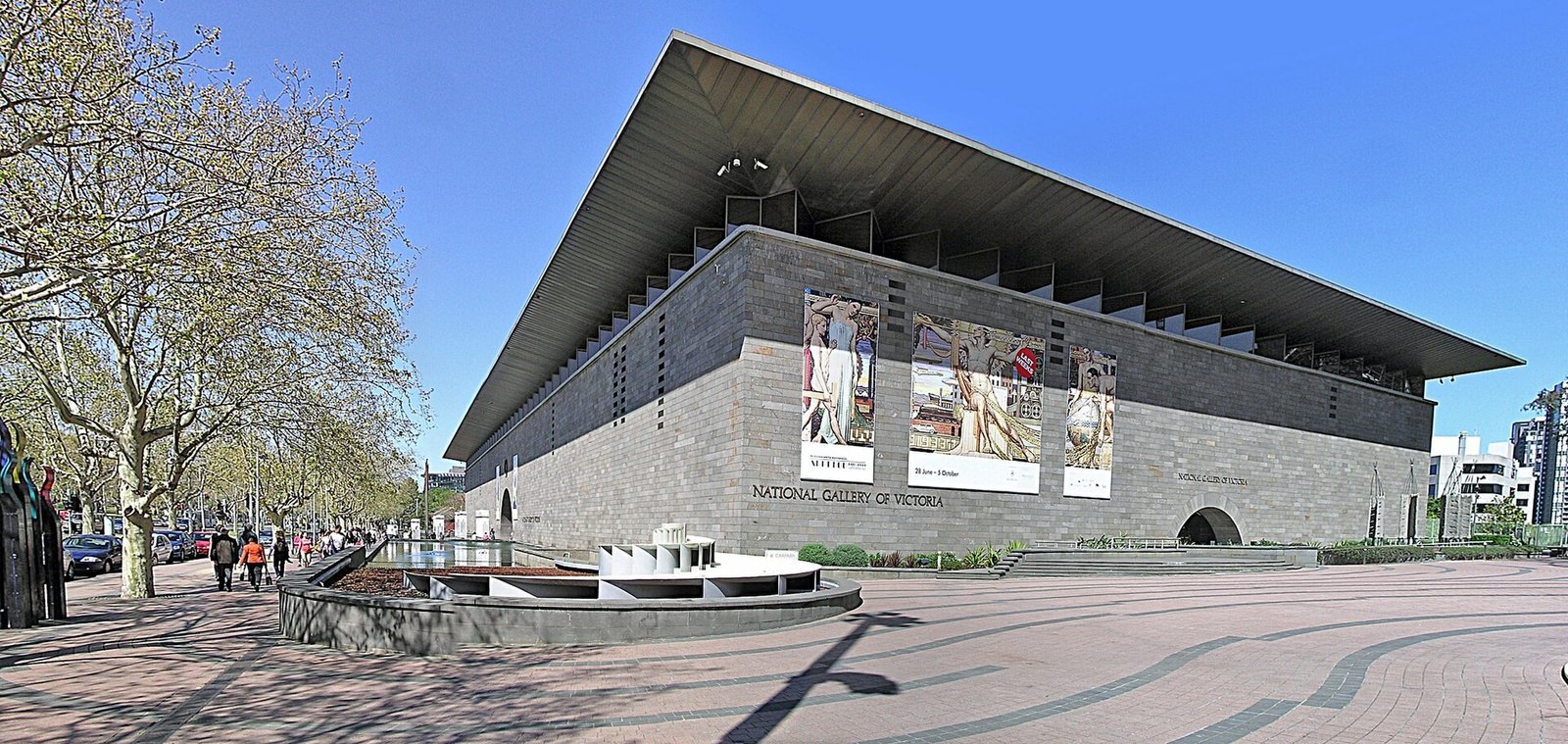
NGV. National Gallery Of Victoria. Melbourne, Australia. LINK: Spotlight on the NGV Collection | Korean Art

CHRISTIE’S SOTHEBY’S
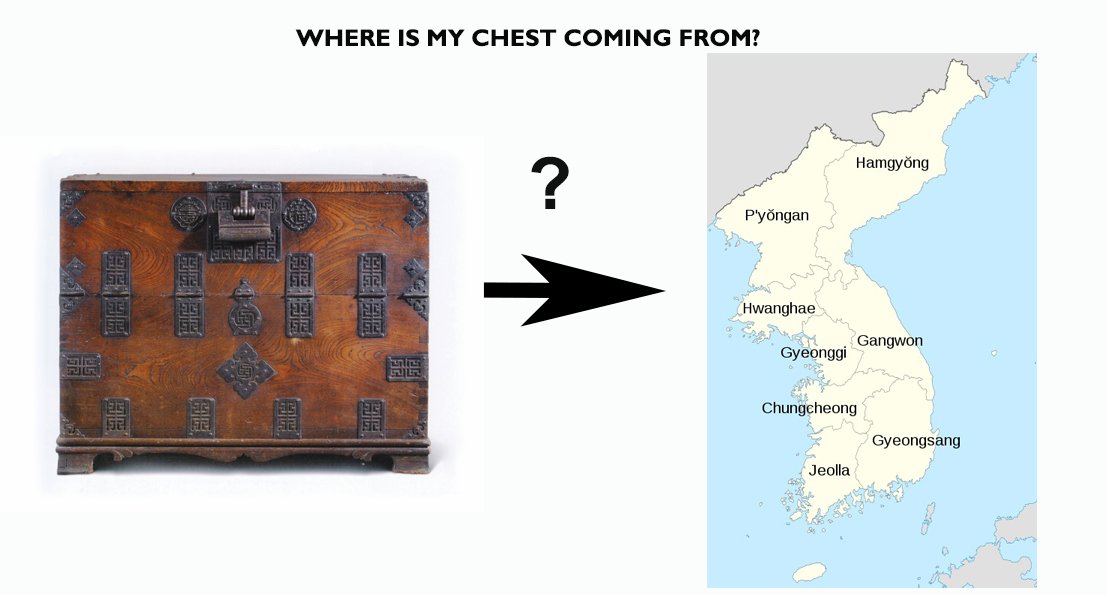
In this publication, we examine bandaji of various designs and attempt to determine their geographical origin. One important point worth emphasizing is that metalwork alone is not sufficient to establish regional provenance. Hinges and locking plates can be replaced, and similar designs were sometimes used in different regions. Wood species, construction, proportions and documented provenance […]

PATTERNS SYMBOLISM IN KOREAN ART. In a previous publication METALWORK PATTERNS ON KOREAN FURNITURE, we listed the various decorative motifs on the hinges of Korean furniture. Below, we examine their meanings. Korean furniture, such as bandaji (storage chests), jang (wardrobes), mungap (stationery chests), and ham (boxes or cases), is often decorated with symbolic patterns that […]
Hamgyŏng Do province was bounded on the west by P’yŏngan Do province, on the south by Hwanghae Do and Gangwŏn Do provinces, on the east by the Sea of Japan, and on the north by China and the Russian Empire. It was one of the eight provinces of Korea during the Joseon dynasty and the provincial capital was Hamhung. Hamgyŏng-Do is the […]
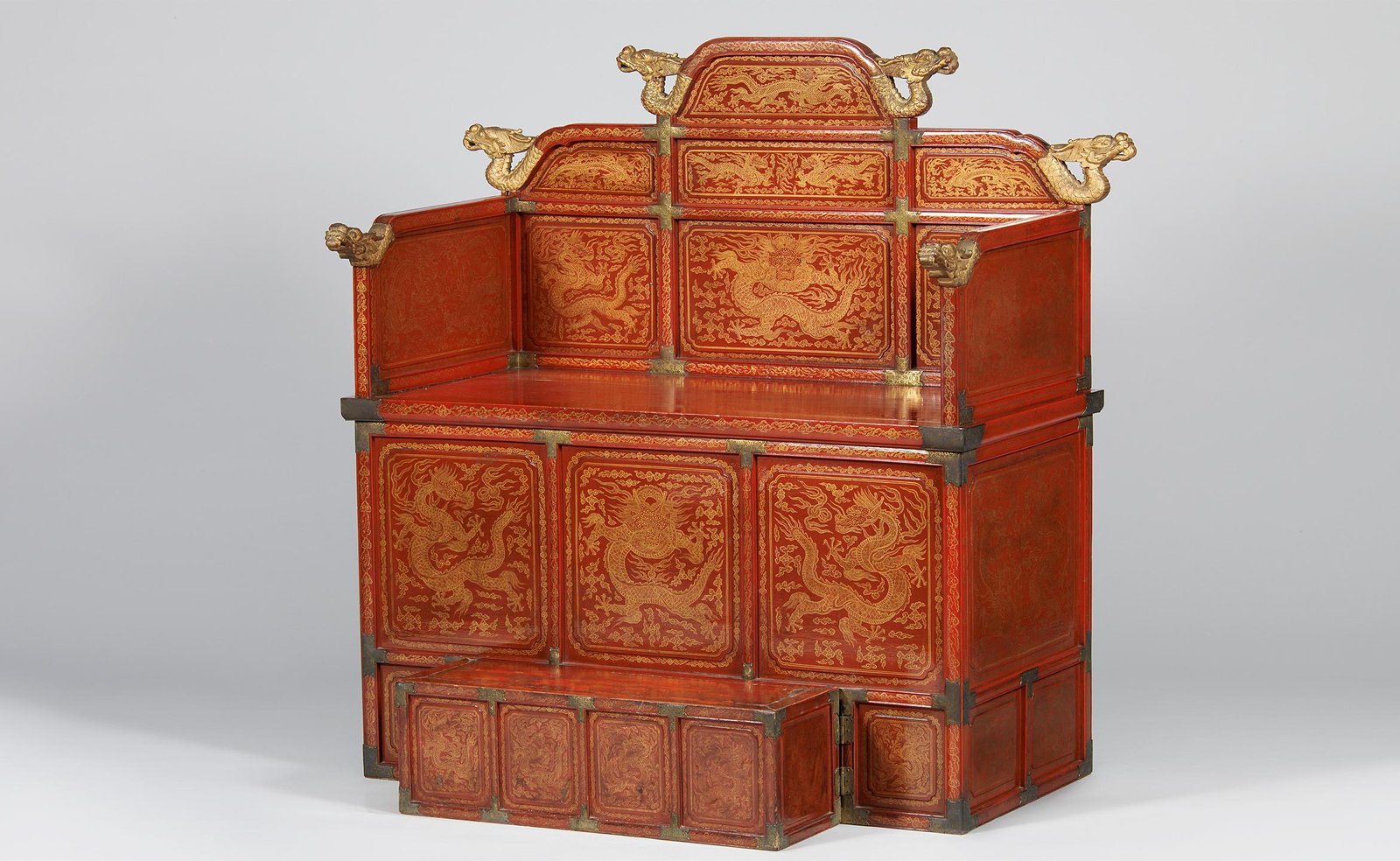
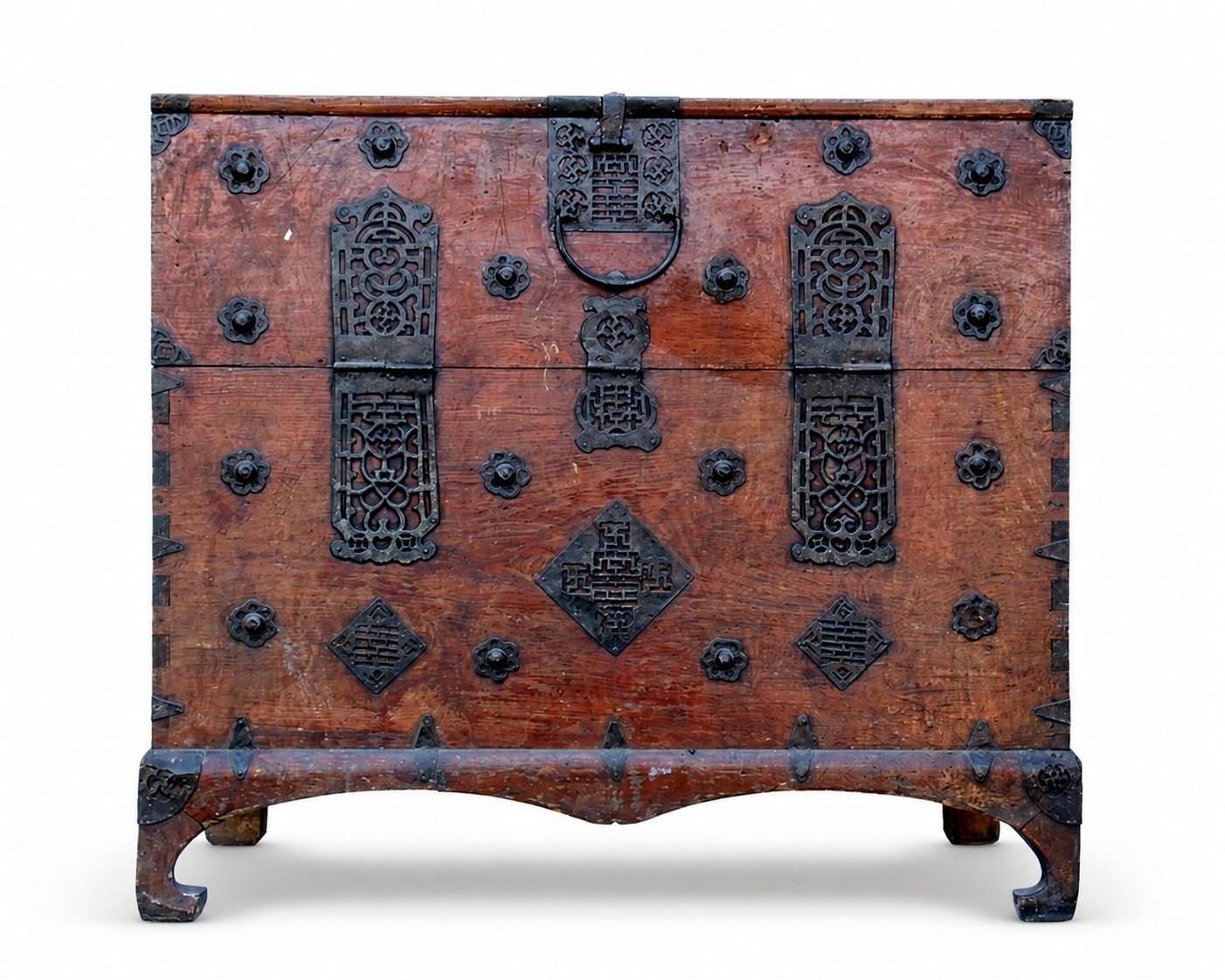
The furniture illustrations in this chapter come from the collections of selected Korean museums. Most of the pieces date from the late Joseon dynasty, specifically from the late 18th and 19th centuries. The study is relatively complex, given the limited amount of information available on the subject. Our deductions are based on the analysis of […]
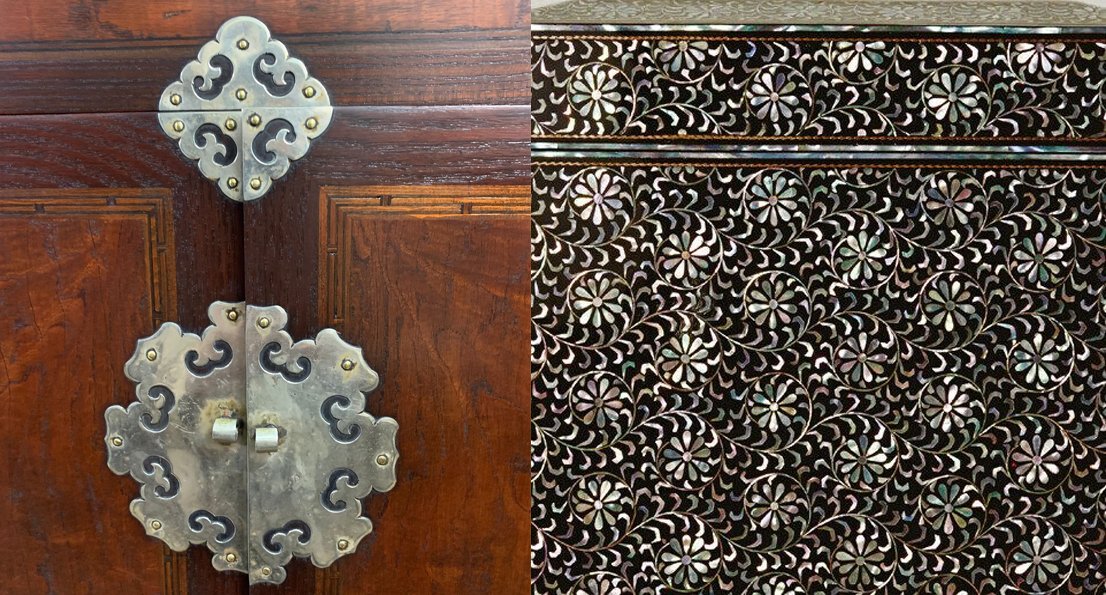
Tongyeong (통영) in Korean, is a coastal city in South Gyeongsang Province, South Korea. Chungmu City and Tongyeong County were reunited in 1995, creating Tongyeong City as it is known today. It was formerly known as Chungmu, named after the posthumous title of Admiral Yi Sun-sin. Thanks to its location at the southern tip of […]

Analyzing the evolution of Korean furniture shapes during the Joseon dynasty is no easy task, given the lack of documentation and pieces available today.However, the study of a large number of photos from various Korean museums allows us to make the following observations:In Asia, in general, and unlike European furniture, emperors did not impose new […]

Since the inception of this blog, we have consistently monitored auctions featuring Korean furniture. Geographically, the majority of these sales take place in the USA, Europe, and Korea. Concurrently, we also review the inventories of dealers specializing in Asian furniture. As dealers, we established a gallery in Bangkok, Thailand specializing in Asian furniture, with a […]

When you buy antique Korean furniture, it’s rare for it to come with a padlock. In fact, padlocks have either disappeared, or if they were of good quality, they were sold separately to enthusiasts. In the book “Korean Style,” which focuses on the interiors of Korean homes, a fine collection of padlocks is presented From […]