

Since the inception of this blog, we have consistently monitored auctions featuring Korean furniture. Geographically, the majority of these sales take place in the USA, Europe, and Korea. Concurrently, we also review the inventories of dealers specializing in Asian furniture.
As dealers, we established a gallery in Bangkok, Thailand specializing in Asian furniture, with a notable preference for Korean furniture. Consequently, we were able to track the market’s evolution from the 1980s to 2018.
The recognition of Korean furniture by Westerners is a recent development. In the 20th century, the first pieces emerged on the market, reaching their peak at the end of the 20th century (1980 – 2000).
In the 21st century (2000 to the present day), tastes and trends gradually shifted, leading to a substantial decline in demand for this type of furniture. This largely explains why prices are currently decreasing.
An examination of the pieces offered by galleries today reveals stagnant prices and the challenge for many of them to acquire original 19th-century pieces.
Regarding auctions, only the most reputable establishments (such as Sotheby’s and Christie’s) occasionally present “one-off” pieces, often lacquered and capable of fetching relatively high prices. In other cases, the pieces available at auction were generally acquired in the mid-20th century by individuals passing through or living in Korea. In general (80% of cases), they are largely restored pieces of 20th-century furniture with little appeal to the true collector. Currently, there is also a profound lack of knowledge about this type of furniture among many experts, as well as very low demand, which explains the low estimates.
THE EVOLUTION OF THE MARKET FROM THE EARLY DAYS TO NOW.
The Korean antique furniture market has developed in an unusually complex manner. Rather than emerging through continuous trade and connoisseurship, it has been shaped by historical ruptures such as prolonged isolation, late opening to foreign contact, colonization, war, and, more recently, globalization.
As a result, the market observed today is not the product of a sustained collecting tradition, but one defined by discontinuity, loss, and eventual rediscovery. The following analysis traces this evolution period by period, focusing exclusively on original pieces and their circulation.
Earlier Period (Before the 19th Century)
During the Joseon Dynasty and earlier, furniture was produced primarily for functional use within domestic settings rather than as an artistic commodity. Its forms and materials reflected Neo-Confucian values, emphasizing restraint, hierarchy, and the organization of gendered space.
Production was decentralized. Regional workshops in areas such as Kaeseong, Pyongyang, Gyeonggi, and Jeolla supplied local elites and households, resulting in distinct provincial styles. These regional differences in form and decoration are discussed in our chapter on regional variations. REGIONAL DIFFERENCES.
Ownership mirrored social hierarchy: yangban elites commissioned wardrobes, book chests, and scholar’s furniture; the royal court and Buddhist institutions used lacquered and mother-of-pearl inlaid works; commoners relied on simpler forms.
No secondary market existed in the modern sense. Furniture was typically inherited, reused, or eventually discarded. Export was negligible, and collecting as a cultural practice had not yet emerged.
As a consequence, furniture dating prior to the 18th century is exceptionally rare today, its survival limited by repeated use, material fragility, and historical upheavals.
Mid–Late 19th Century — The Emergence of Collecting
The late nineteenth century marked a transitional moment. While the Joseon state continued to operate within a Confucian framework, new perspectives began to emerge following Korea’s forced opening to foreign powers. The Treaty of Ganghwa (1876) and subsequent agreements ended centuries of relative isolation and brought foreign diplomats, missionaries, and scholars to the peninsula.
These early collectors, including figures such as Horace Newton Allen and Percival Lowell, encountered Korea less as an established art market than as an ethnographic field. Their acquisitions were guided largely by documentary and cultural interest rather than aesthetic hierarchy.
They collected everyday objects such as bandaji (blanket chests), clothing chests, scholar’s desks, and small lacquered boxes, often contemporary or near-contemporary pieces. Earlier furniture was already scarce or retained within family lineages, limiting access to older material.
Early 20th Century (1910–1945) — Colonial Extraction and Export
The annexation of Korea by Japan in 1910 profoundly altered the circulation of cultural objects. Large numbers of artifacts were systematically collected, catalogued, and exported, often through Japan.
Dealers such as Yamanaka & Co. played a central role in this process, facilitating the acquisition of Korean works by Western and Japanese collectors. Mother-of-pearl inlaid furniture, particularly from the Kaesong region, along with late Joseon chests and utilitarian objects, entered international collections in significant numbers.
The long-term impact is clear: many of the finest surviving examples of Korean furniture left the peninsula during this period. As a result, major collections in Japan, the United States, and Europe remain disproportionately rich today.
At the same time, new designs appeared under the supervision of foreign entrepreneurs who initiated export-oriented businesses. These chests, richly decorated with numerous brass fittings, were adapted to contemporary uses.
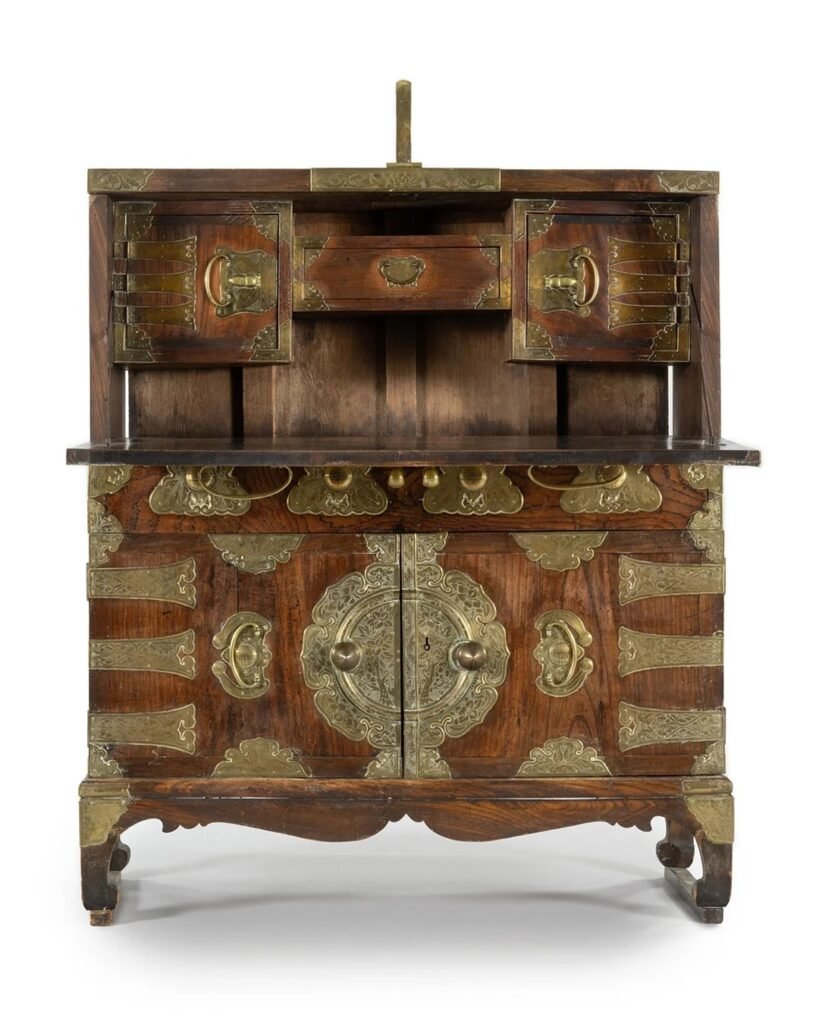
H. 125cm, W. 105cm, D. 44cm.
Elm wood, yellow brass fittings
Early 20th century. Purchased by Eileen Reeve Currier.
Mid-20th Century (1945–1970s) — Destruction and Dispersal
Further disruption followed liberation in 1945 and the devastation of the Korean War. Furniture was widely lost as homes were destroyed, objects burned for fuel, and traditional systems of inheritance disrupted.
This period marks a significant contraction in the surviving corpus of original furniture.
At the same time, a new wave of acquisition emerged. U.S. military personnel, diplomats, and expatriates purchased objects that were still in everyday use but increasingly regarded locally as obsolete. Many pieces now found in Western collections and auction houses can be traced to these opportunistic acquisitions.
1970s–1990s — Market Formation and the Rise of Reproductions
Rapid industrialization in South Korea brought profound social change. Traditional furniture, once central to daily life, became obsolete domestically while gaining appeal among foreign buyers.
Until the 1980s, 19th-century bandaji and provincial furniture could still be found, though supply was already declining. Growing demand, particularly from tourists and export markets, soon outpaced availability.
This imbalance led to the emergence of a reproduction industry. Commercial districts such as Insadong and Itaewon became centers for newly produced furniture, often made from reclaimed wood or artificially aged materials.
By the late 20th century, reproduction had become a structural component of the market rather than a marginal phenomenon.

2000s to the Present — Scarcity and Market Maturity
Today’s market is defined by a clear imbalance between limited supply and sustained demand.
Authentic antique furniture consists primarily of late Joseon pieces, including bandaji (blanket chests), jang (wardrobes), and kitchen chests. High-quality mother-of-pearl inlaid works appear only occasionally, while pre-18th-century examples are almost exclusively held in museum collections.
The finest pieces are now concentrated in Korean national and private museums, as well as in established collections in the United States, Japan, and Europe, and at high-end auction houses.
The reproduction market, by contrast, primarily serves tourism and interior design sectors. It includes both faithful replicas and hybrid reinterpretations. A significant proportion of objects sold as “antique” are in fact late 20th-century reproductions or heavily restored composites, often difficult to identify without expertise.


Conclusion
Unlike China or Europe, Korea did not develop a continuous antique trade; the market effectively begins only after 1876.
Three major waves of loss define the field: long-term pre-modern attrition through use and reuse, large-scale extraction during the colonial period (1910–1945), and widespread destruction during the mid-20th century. The result is an extreme scarcity of early material.
What survives today largely reflects what remained in circulation in the late 19th century, explaining the dominance of 19th-century forms and the relatively narrow stylistic range.
Reproduction began in earnest in the 1970s–1980s and expanded rapidly from the 1990s onward. It is now an integral part of the market ecosystem. This trajectory explains the current landscape: a field dominated by reproductions, alongside a limited and finite corpus of genuine late Joseon furniture, with earlier works largely confined to institutional collections.
A preview of the pieces presented by various galleries is available on the following website: TROCADERO.
AUCTIONS RESULTS.
The pieces presented below are just a few examples of the furniture available at past auctions. A more comprehensive list of auction results is available on our website in the following post: Korean Furniture Auctions.
We have classified the furniture based on condition and age:
- Recent furniture (20th century): Largely restored or rebuilt.
- Older pieces: Late 19th and early 20th-century furniture.
- Collector pieces.
RECENT FURNITURE.
These pieces are frequently crafted in the 20th and 21st centuries, often through extensive restoration or rebuilding using old materials. They tend to lack appeal for discerning collectors and might be deemed as decorative rather than valuable. Descriptions of these items are frequently inaccurate, particularly regarding their dating.

June 2021. UNSOLD.
NOTE: This bandaji is contemporary; the use of bamboo was rare, and few pieces dating before the 20th century are available.
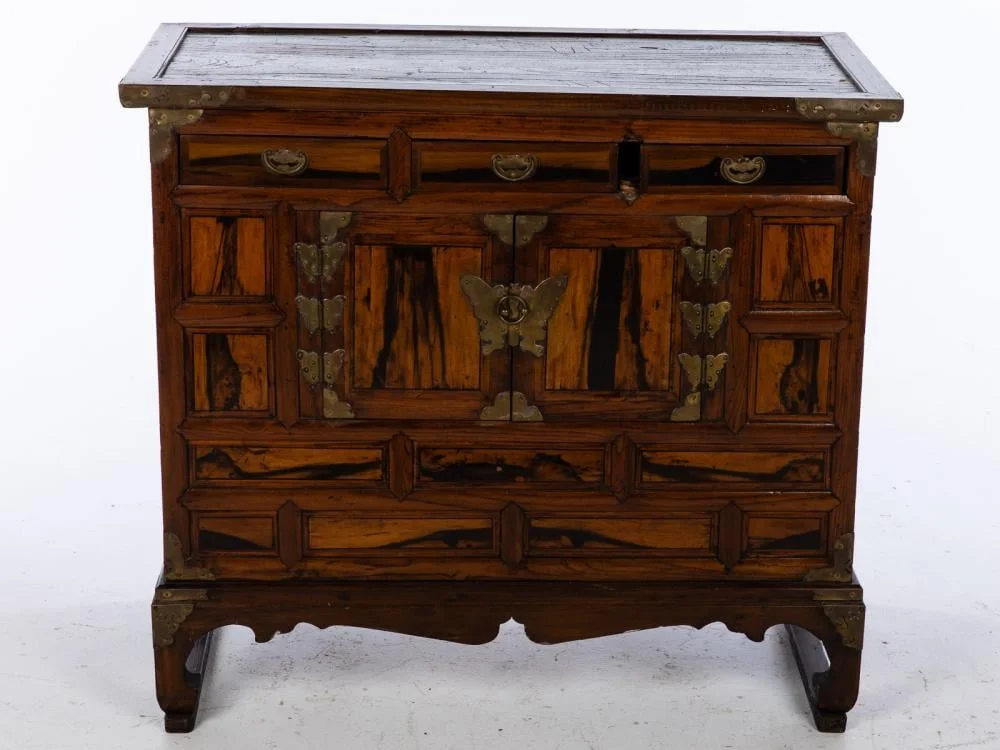
Korean Exotic Wood Chest, the rectangular top above three drawers over cabinet doors, raised on incurved legs.
H: 33 3/8 in. W: 37 1/4 in. D: 18 1/4 in.
October 2021
Estimate: $ 400 – 600.-
Starting bid: $ 250.- SOLD for $ 313.-
NOTE: A perfect example of a Mid to late 20th-century Morijang.

33.5 in. H., 31.5 in .W. 18 in. D.
April, 2022,
Estimate: $ 500 – 600.-
Starting bid: $ 250.- SOLD for $ 325.-
NOTE: Recent Morijang, likely from the late 20th to the 21st century. The metal decorative plates adorning this chest were popular on decorative pieces intended for the export market.

Estimate: Euros 300 – 500.- UNSOLD.
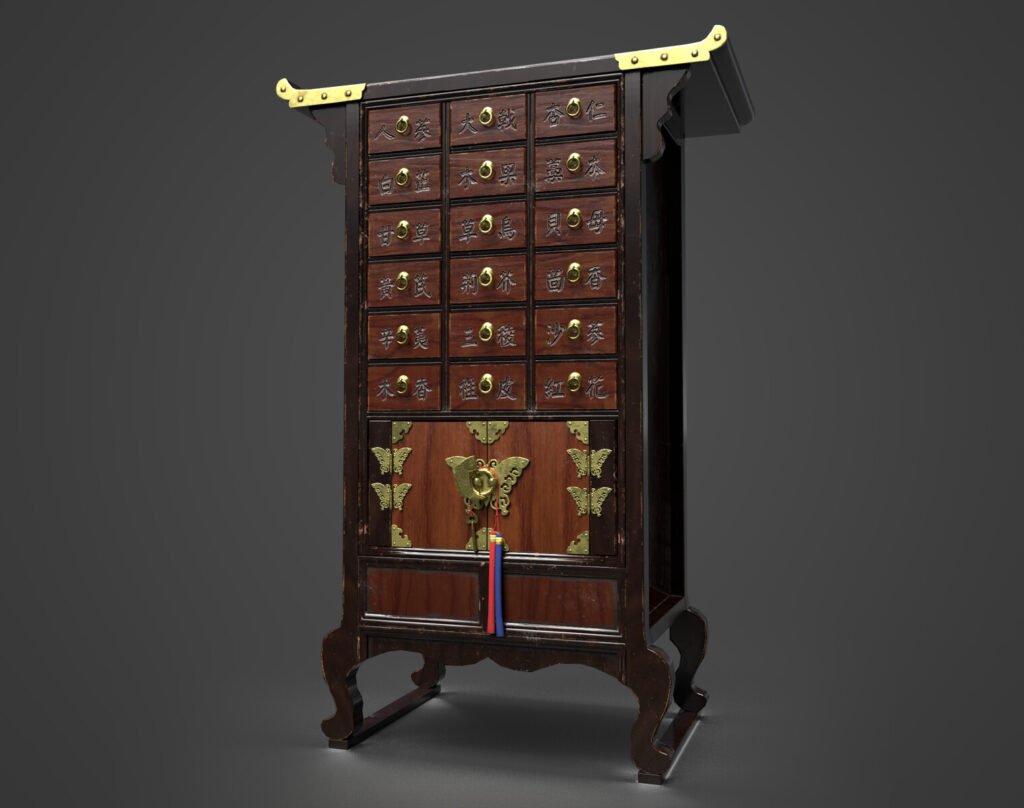
NOTE: This items has been described as Chinese but is Korean. This medicine chest is of recent manufacture, likely from the mid to late 20th century. Older furniture typically featured fewer metal fittings, limited to only the necessary ones.

Size: 31 1/2 x 15 x 29 in.
December, 2021
Estimate: US$ 500 – 700.-
Starting bid: US$ 250.-
SOLD for $ 250.-
NOTE: This piece of furniture is missing a part to form a “Nong.” It is covered with paper, which appears to be in perfect condition, a feature unlikely on an old piece. This is a typical example of furniture extensively restored for the decoration market.

Estimate: $ 200 – 400.-
Starting bid: $ 100.- UNSOLD.
NOTE: This piece of furniture has undergone extensive restoration, including the replacement of its hinges with new ones. If it truly dates back to the 18th or 19th century, its estimated value would be significantly higher.

61in tall x 36-3/4in wide x 17-1/2in deep.
April, 2022.
Estimate: $ 200 – 400.-.
Starting bid: $ 100.- SOLD for $ 325.-
NOTE: This two level “Jang” is not Japanese as described, but Korean. Largely restored with a new red lacquer finish. Red color was only used on furniture for the Palace. Decorative value only.

Ready to use. 53.5 x 37 x 14.5 in. November, 2022
Estimate: $ 500 – 700.-
Starting bid: $ 100.- SOLD for $ 600.-
NOTE: A common two level chest most probably dated mid 20th century.
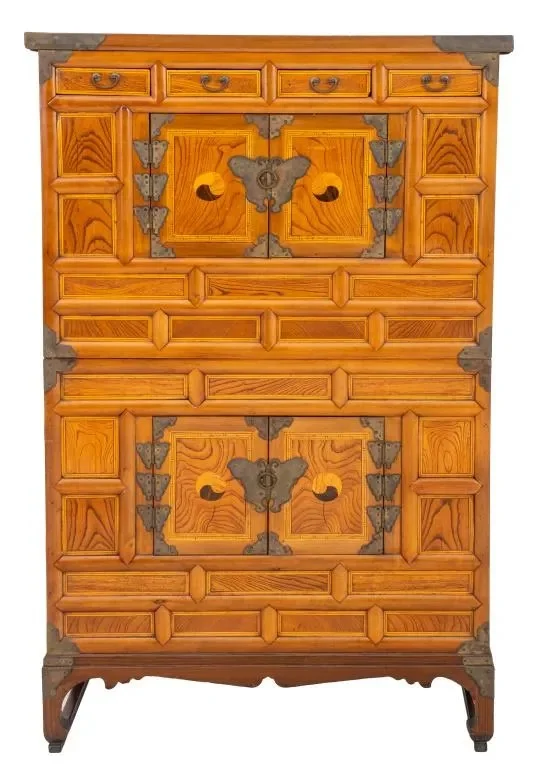
58.5″ H x 38″ W x 17.5″ D. August. 2023.
Estimate: $ 800 – 1,200.- Starting bid: $ 100.- SOLD for $ 650.- NOTE: Erroneously labeled as a Bandaji, this two-tiered piece of furniture seems to originate from the late 20th century. It’s a classic elm and pine model with newly installed hinges.
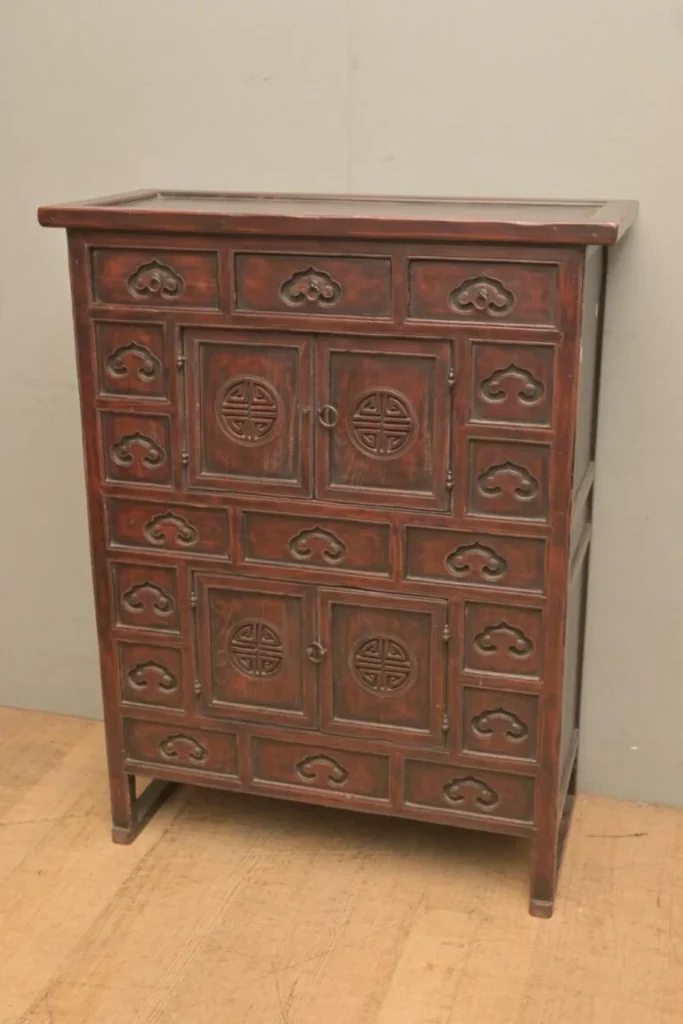
(119H X 93W X 42D CM). September, 2023.
Estimate: AU$ 500 – 700.-
Starting bid: AU$ 440.- UNSOLD.
NOTE: Reproduction of a bookcase
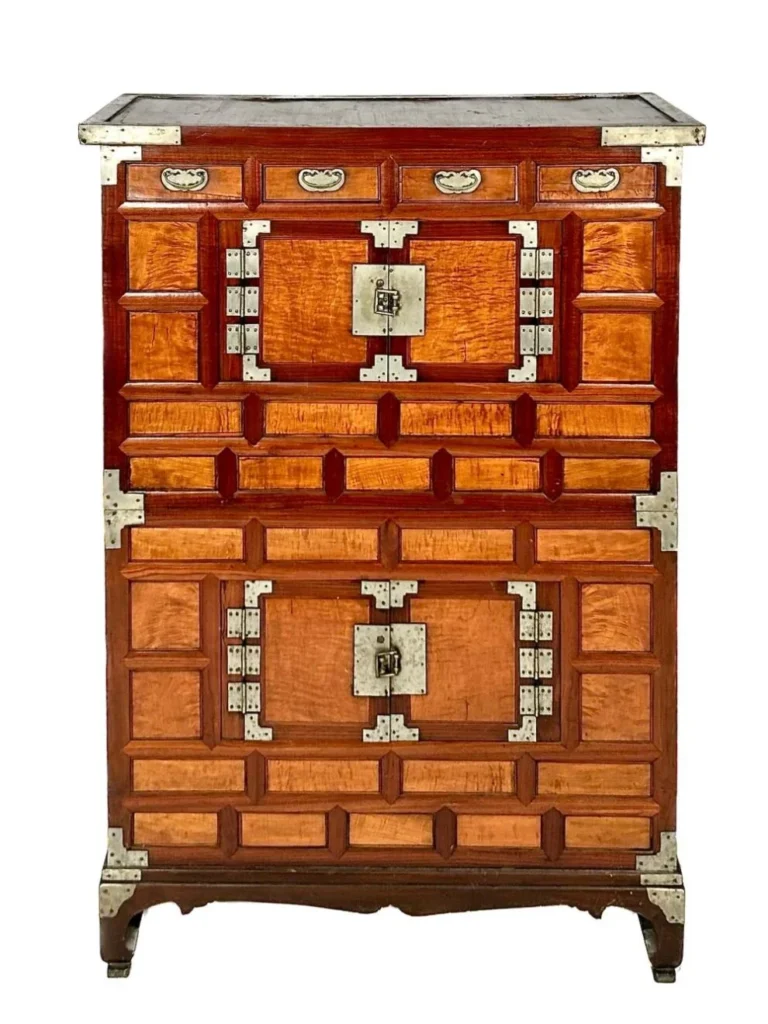
Early 20th Century
In figured elmwood. Upper section with four side-by-side drawers over two paneled doors. Lower section with two paneled doors and a shaped bracket base. Brass hardware and bindings. Paper-lined interior.
Dimensions
Height 56.5″. Width 39.5″. Depth 17″. February, 2024.
Estimate: $ 500 – 800.- Starting bid: $ 250.- UNSOLD.

Measurements: Height: 50 in. x Width: 40 1/4 in. x Depth: 12 1/8 in. February, 2024. Estimate: $ 600 – 800.- Starting bid: $ 350.-
SOLD for $ 500.-
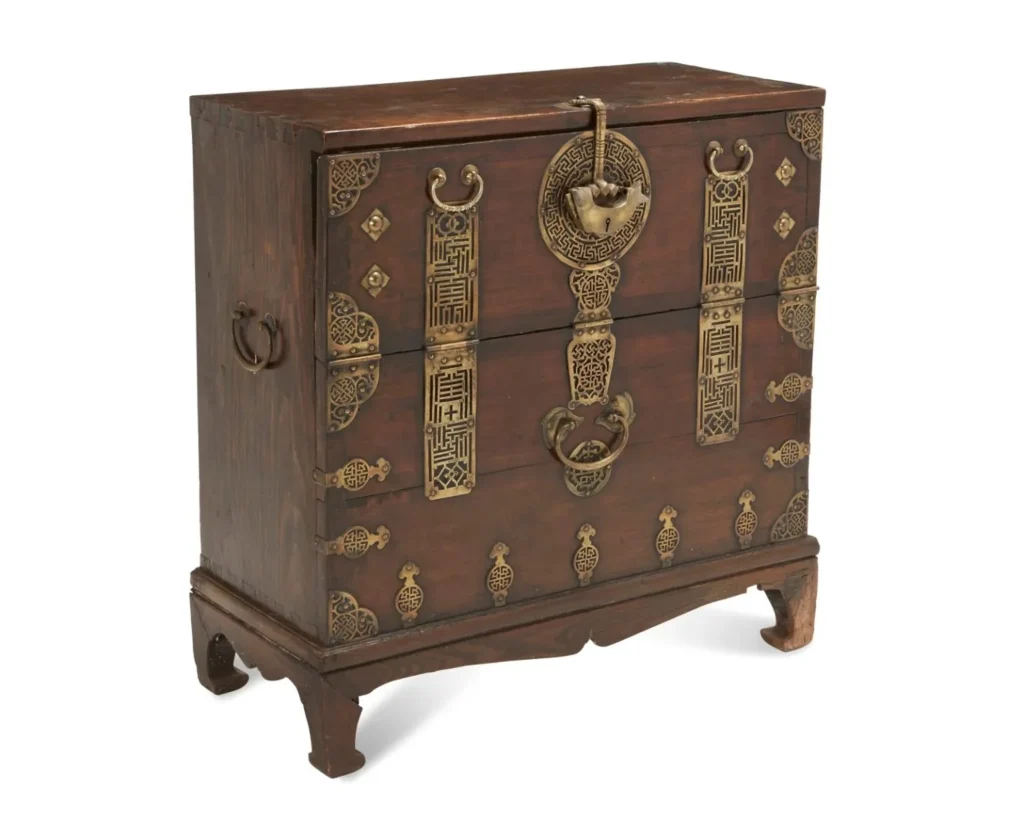
20th century
The tall, dark wood blanket chest drop-front top door, paper-lined interior, and fitted with reticulated brass hardware and opposed handles, raised on four bracket feet
38.25″ H x 36.25″ W x 17″ D. February, 2024.
Estimate: $ 300 – 400.- Starting bid: $ 150.- SOLD for $ 150.-
NOTE: Its design suggests that this bandaji originates from Gyeonggi Province. If authentic, such a piece would typically be crafted from elm or fine-grained red pine. However, the hinges are modern. Gyeonggi bandajis, highly sought-after by collectors, are known for their meticulous craftsmanship.
OLDER PIECES. LATE 19th EARLY 20th CENTURY.
The pieces presented here are older and have generally not undergone any alterations, aside from simple cleaning, at least. The hinges appear to be original. However, estimates are relatively low, reflecting a limited demand.

Chung Chon province.
H. 60cm, L. 88cm, D. 42,5cm.
19th century. Korea
May – Early June 2021
Estimate: W. 3,000.000 – 6,000.000
Starting bid: W 3,000.000 UNSOLD.
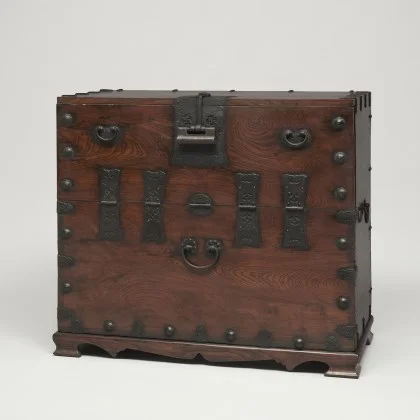
Zelkova wood,
109cm x 53cm x 100cm (H). 19th century.
August 2021.
Estimate: KRW 3,000,000 – 5,000,000.-
Starting Bid: KRW. 2,500,000.-
SOLD: KRW. 2,600,000.-
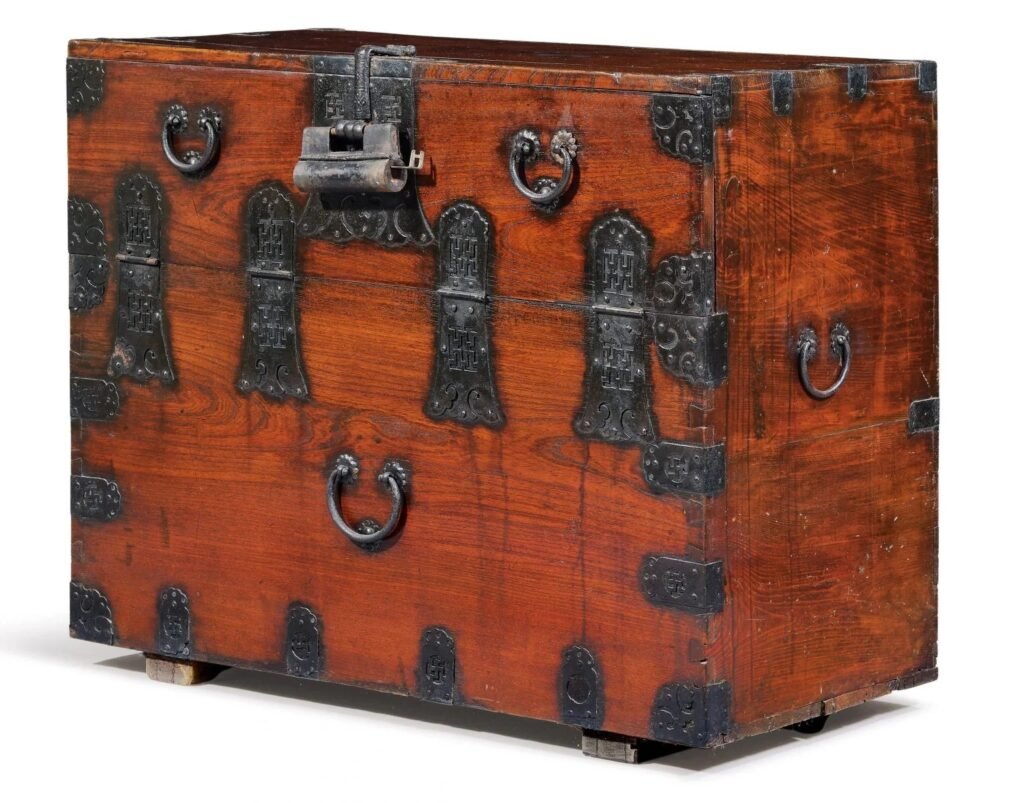
99 × 47 × 80 cm.
Trunk with a drop-front door hinged at midsection and iron mountings and lock. At upper interior three small drawers. Some signs of usage.
November, 2022,
Estimate: CHF 800 -1,200.-
Starting bid: CHF 800.-
SOLD for CHF 650.-

Estimate: $ 100 – 200.-
Starting bid: $ 50.- SOLD for $ 400.-

28cm x 22cm.
February, 2022,
Estimate: BP. 80 – 120.-
Starting bid: BP. 60.-.
SOLD for BP 60 – $ 78.-
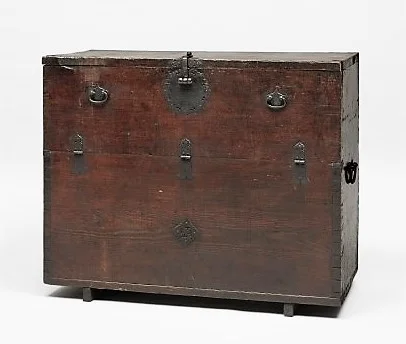
Pine tree,
H. 85,7cm, L. 105cm, D. 46,5cm.
June, 2021
Estimate: Korean Won 1,500,000 – 3,000,000.
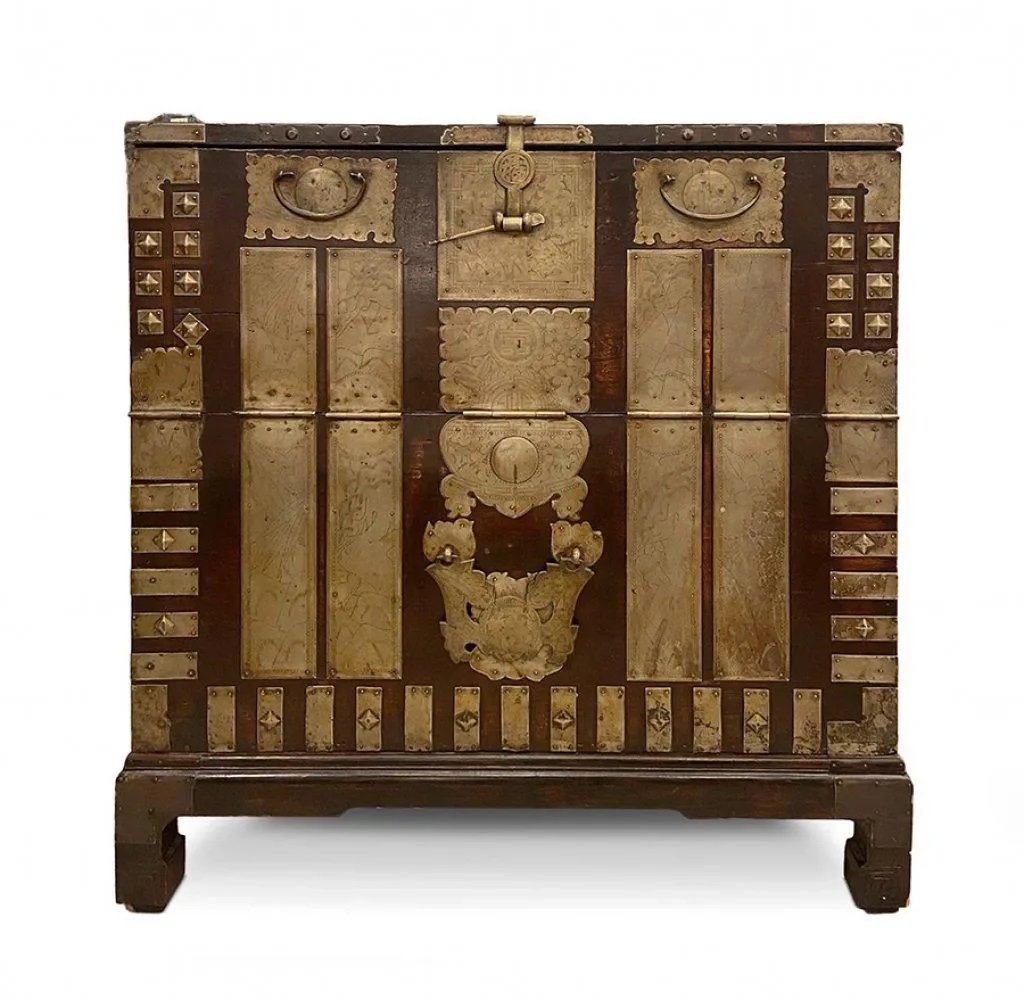
Solid black wood and exquisite metal fittings.
Measurements: 99 x 94 x 48 cm.
January, 2023.
Estimate: Euros. 2,200 – 2,500.-
Starting bid: Euros. 1,200.- UNSOLD
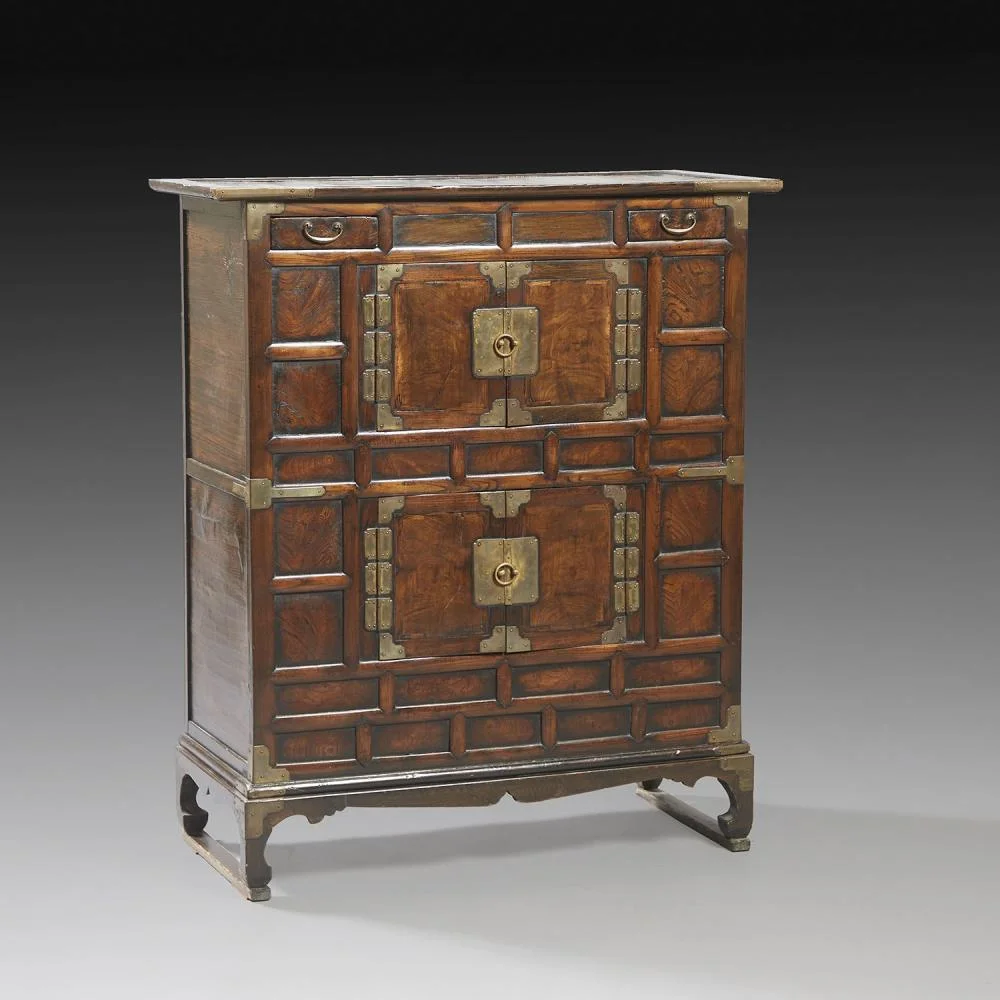
HAUT. 119 CM (46 7/8 IN.) – LARG. 101 CM (39 ¾ IN.) – PROF. 44 CM (17 5/16 IN.) June, 2023. Estimate: Euros 1,000 – 1,500.-
Starting bid: Euros 900.- UNSOLD
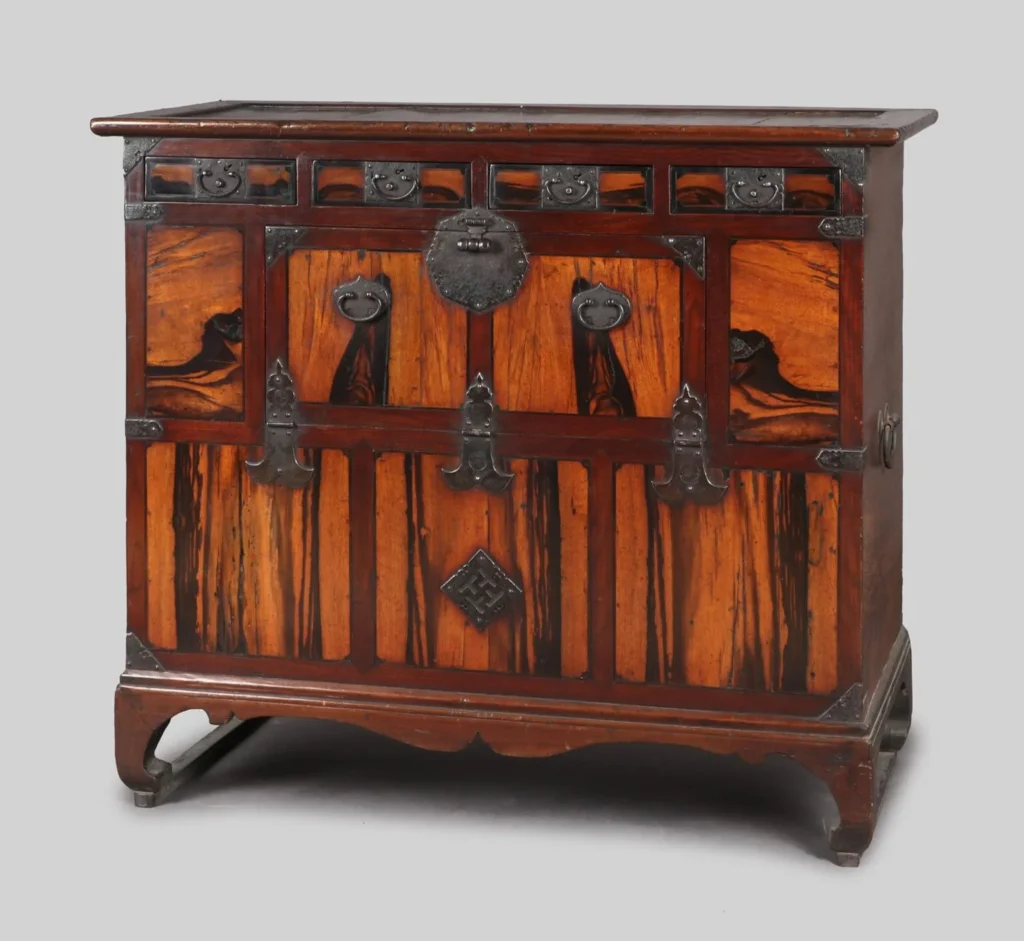
November, 2023.
Starting bid: Euros. 200.-
SOLD for: €1,400 EUR
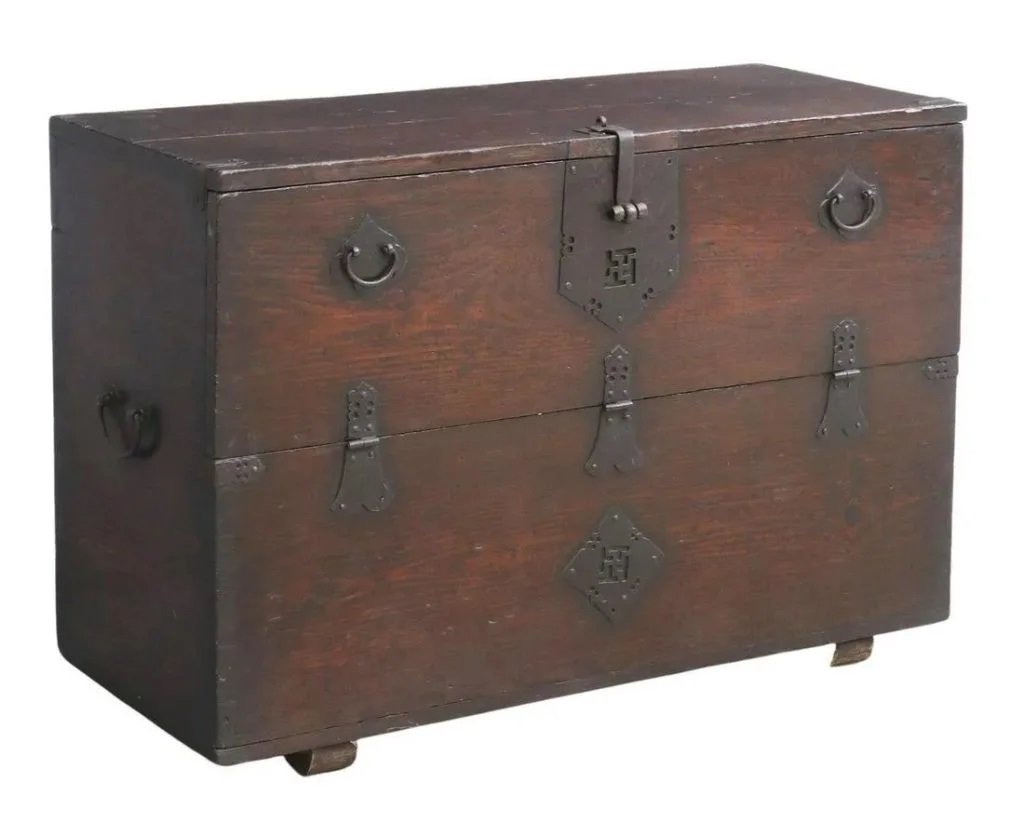
Estimate:$ 300 – 500.-
Starting bid: $ 250.- SOLD for $ 300.-

Joseon dynasty, hardwood construction with iron latch and fittings, 21-1/2 x 38 x 17-1/2 in.
Provenance: Collection from a West Point Graduate who lived in Korea in 1962 and 1974. April, 2023,
Estimate: $ 200 – 400.-
Starting bid: S 100.- SOLD for $ 400.–

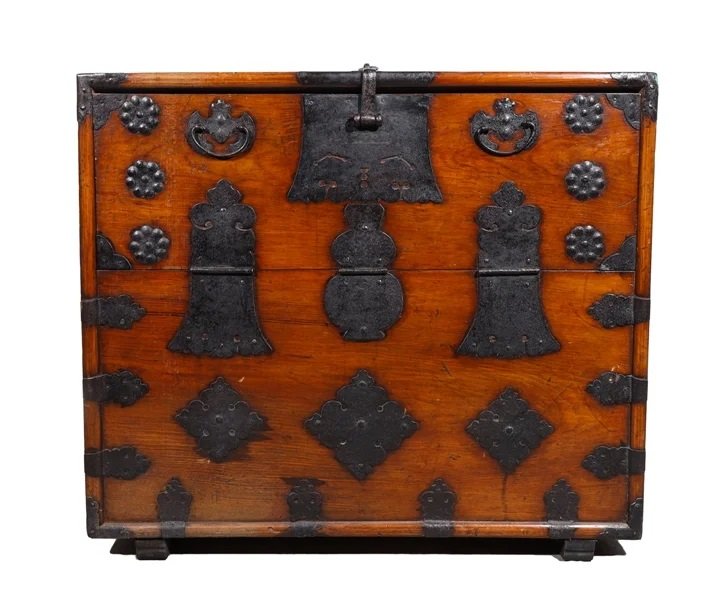
Rectangular body on curved feet under a curved frame. At the front wing doors, five drawers in different sizes and blind cassettes. Handles in the shape of Ruyi, decorated with brass appliqués in the shape of rosettes and bats. HxWxD: 109x122x51 cm PROVENANCE: Private collection of a shipping clerk at Norddeutscher Lloyd, who was employed in East Asia business in Shanghai and Yokohama until 1940.
NOTE: This morijang exhibits all the hallmarks of early 20th-century furniture exported to the West by the first foreign visitors to Korea.
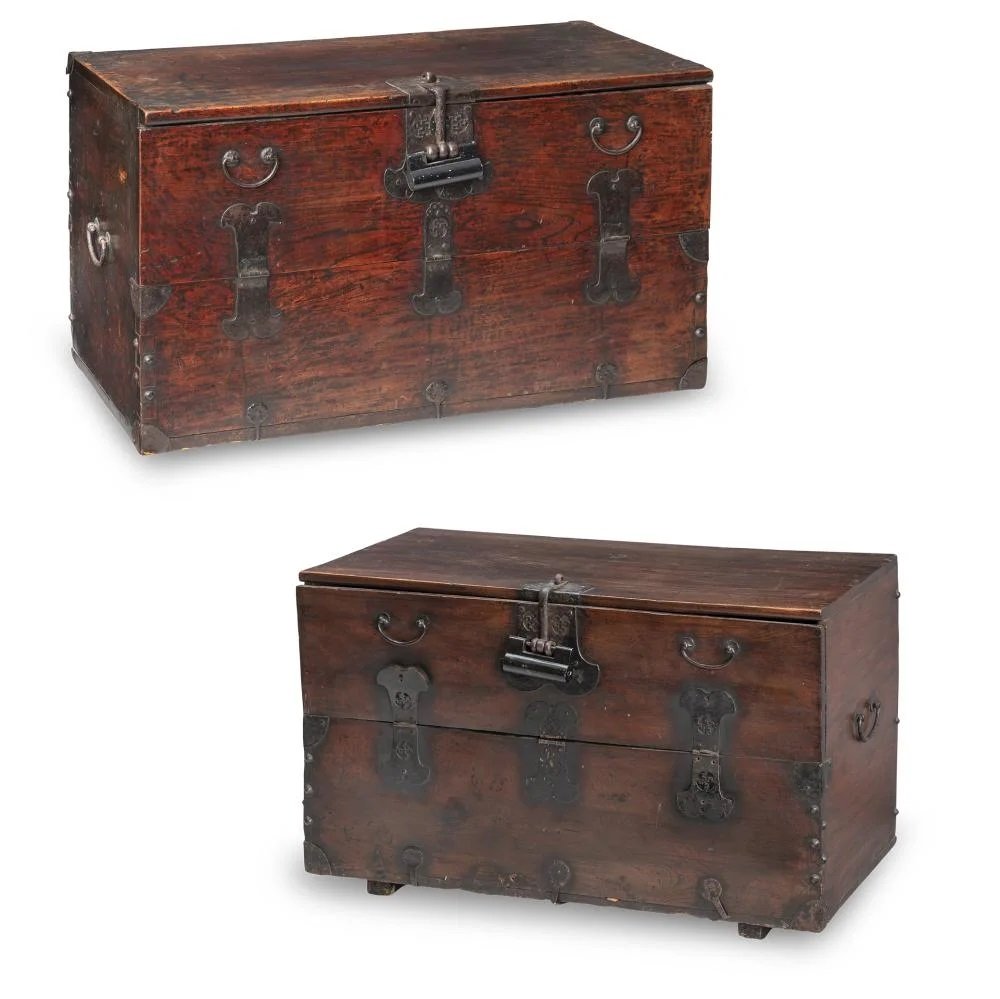
From the estate of Korean studies professor Dr. Dieter Eikemeier (1938-2022), mostly assembled between the 1970s and 90s.
June, 2023,
Estimate: Euros 400 – 600.-
Starting bid: Euros 400.-
SOLD for Euros 450.-
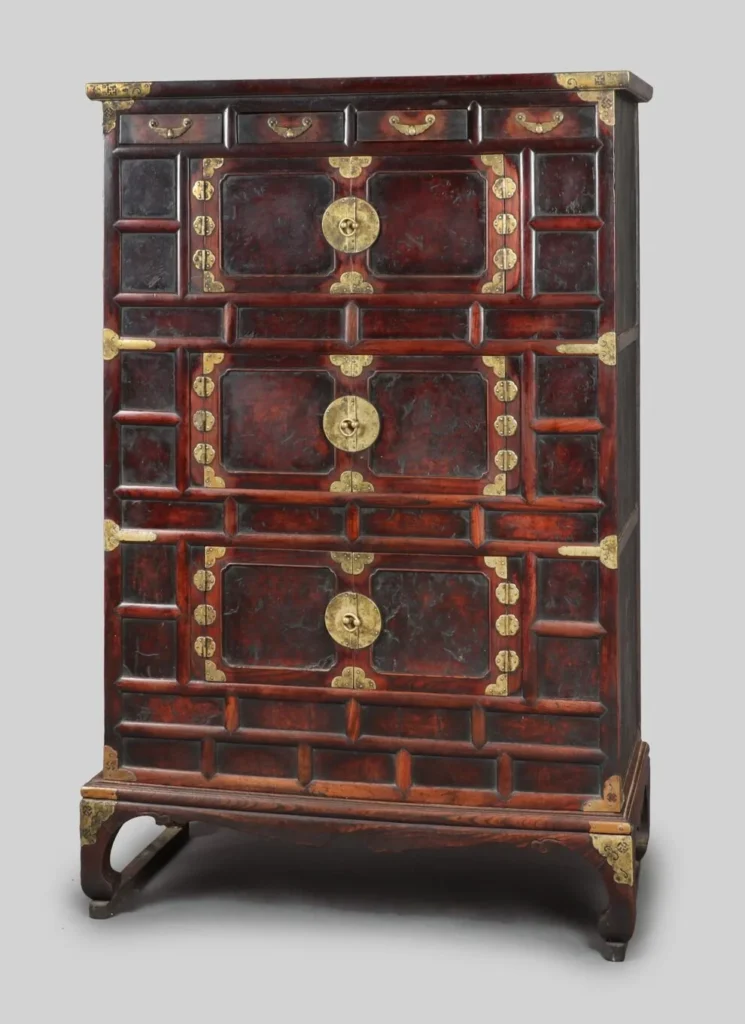
Starting bid: Euros. 300.-
SOLD for: €300 EUR
L 37″ W 15 1/2″ H 32 1/2″ (Approx.)
June, 2023.
Estimate: $500 – 700.- Starting bid: $250.– SOLD for $ 250.-

Starting bid: Euros. 200.-
SOLD for: €550 EUR
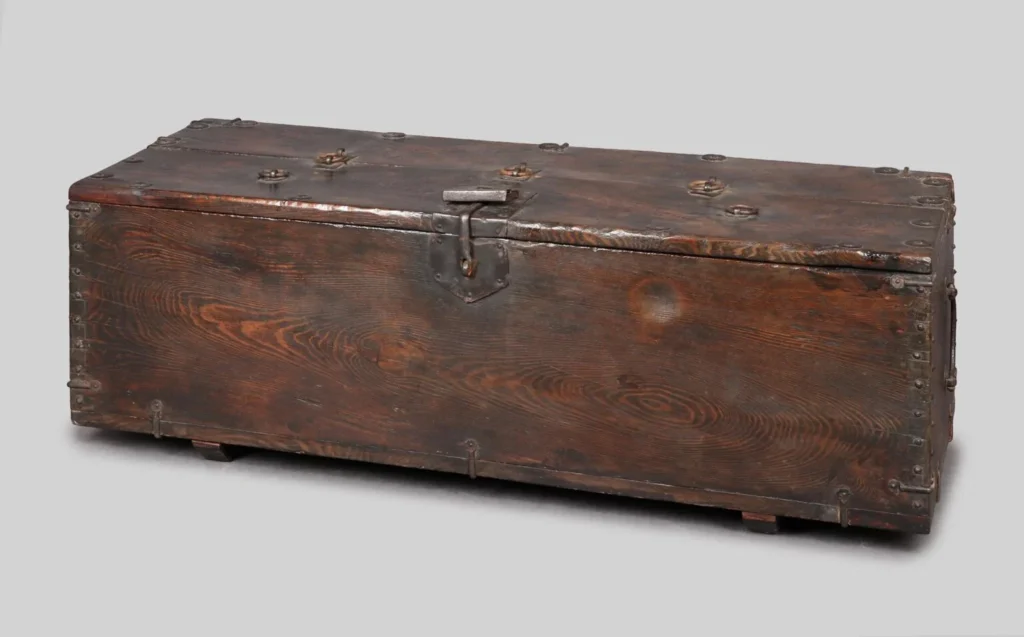
SOLD for Euros. 1100.-
COLLECTOR PIECES.
Most of the pieces on display are scholar’s items, small lacquered boxes, as well as furniture that is hard to find these days, either related to religious rites or adorned with exquisite materials such as mother-of-pearl or stingray. They are dated 18th to 19th century. Exceptional pieces with provenance or unique features have commanded premium prices, indicating a willingness among buyers to invest in top-quality items. Authenticity and condition remain crucial factors driving value.
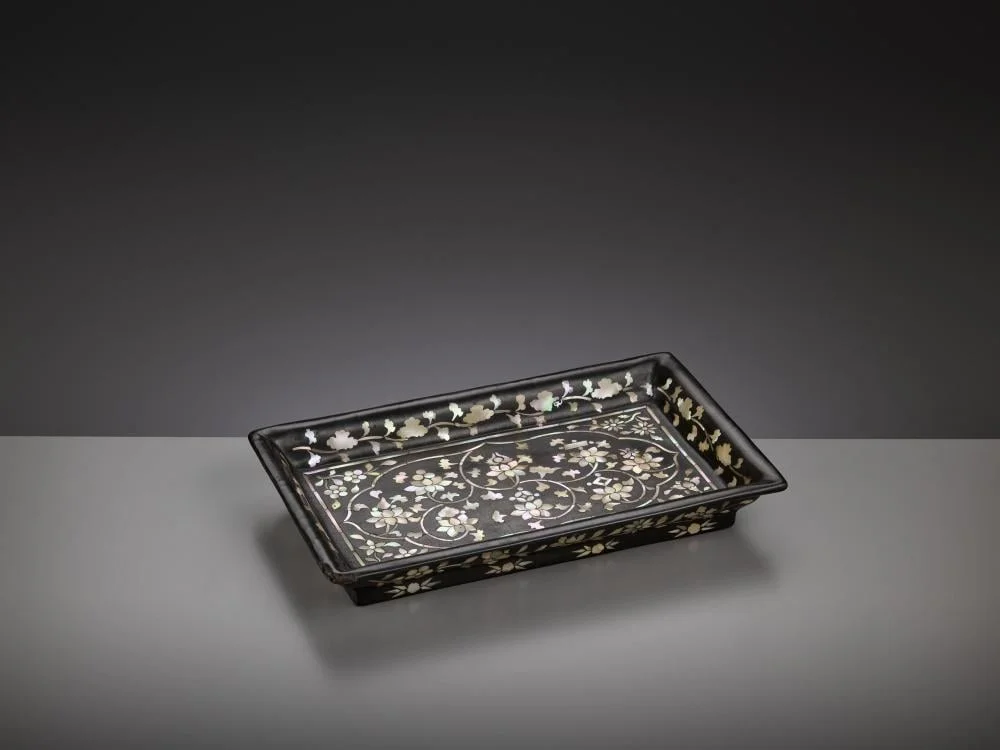
A MOTHER-OF-PEARL-INLAID BLACK LACQUER RECTANGULAR TRAY, JOSEON DYNASTY
Korea, 16th-17th century. With a wide flaring rim, superbly decorated with stylized lotus flowers on scrolling vines, to the interior with stylized auspicious symbols topping each flower, the base lacquered cinnabar red.
October, 2021.
Estimate: Euros. 1,500 – 3,000.-
Starting bid: Euros 1,500.- UNSOLD.
SOLD for Euros. 5,000.- June 29, 2022
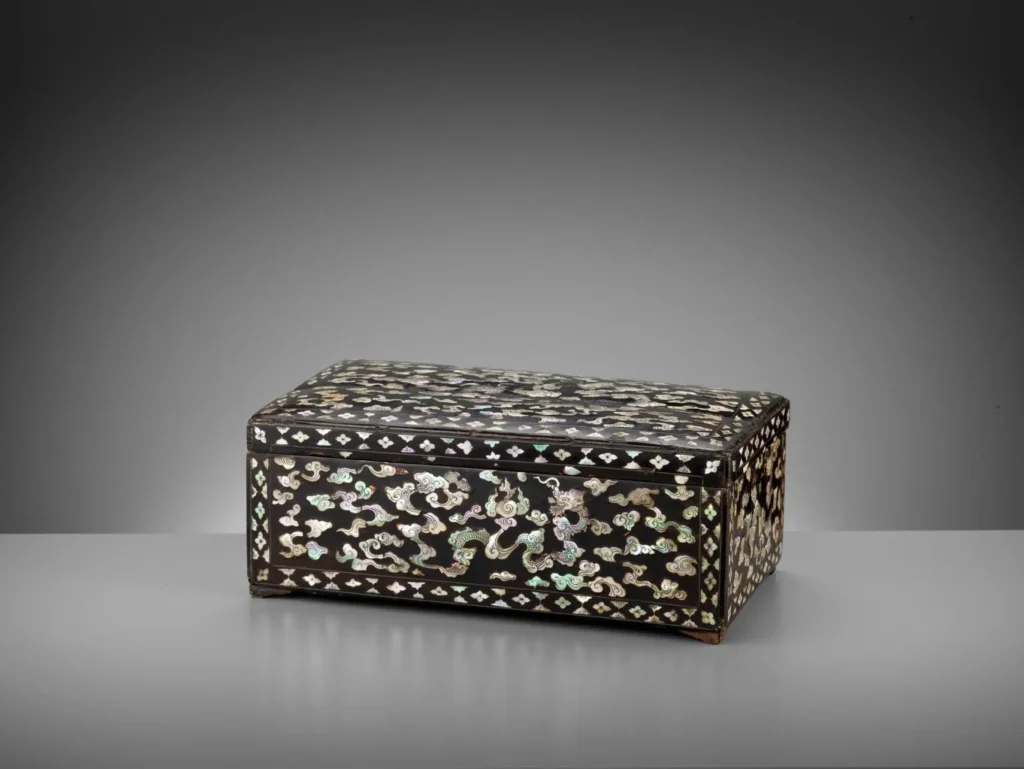
A SILVER AND MOTHER-OF-PEARL INLAID BLACK LACQUER STATIONARY BOX, JOSEON DYNASTY
Korea, 17 th to 18 th century. The exterior with a chocolate-brown coating, the interior and underside of the cover lacquered red. The mother-of-pearl inlays neatly incised and forming the image of two confronting dragons flanking a flaming jewel with a backdrop of scalloped clouds, on the cover and all four sides, framed by inlaid floral and thin silver borders. The red-lacquered interior tray is removable.
October, 2021.
Estimate: Euros. 1,000 – 2,000.-
Starting bid: Euros 1,000.-
SOLD for Euros. 6,320.-
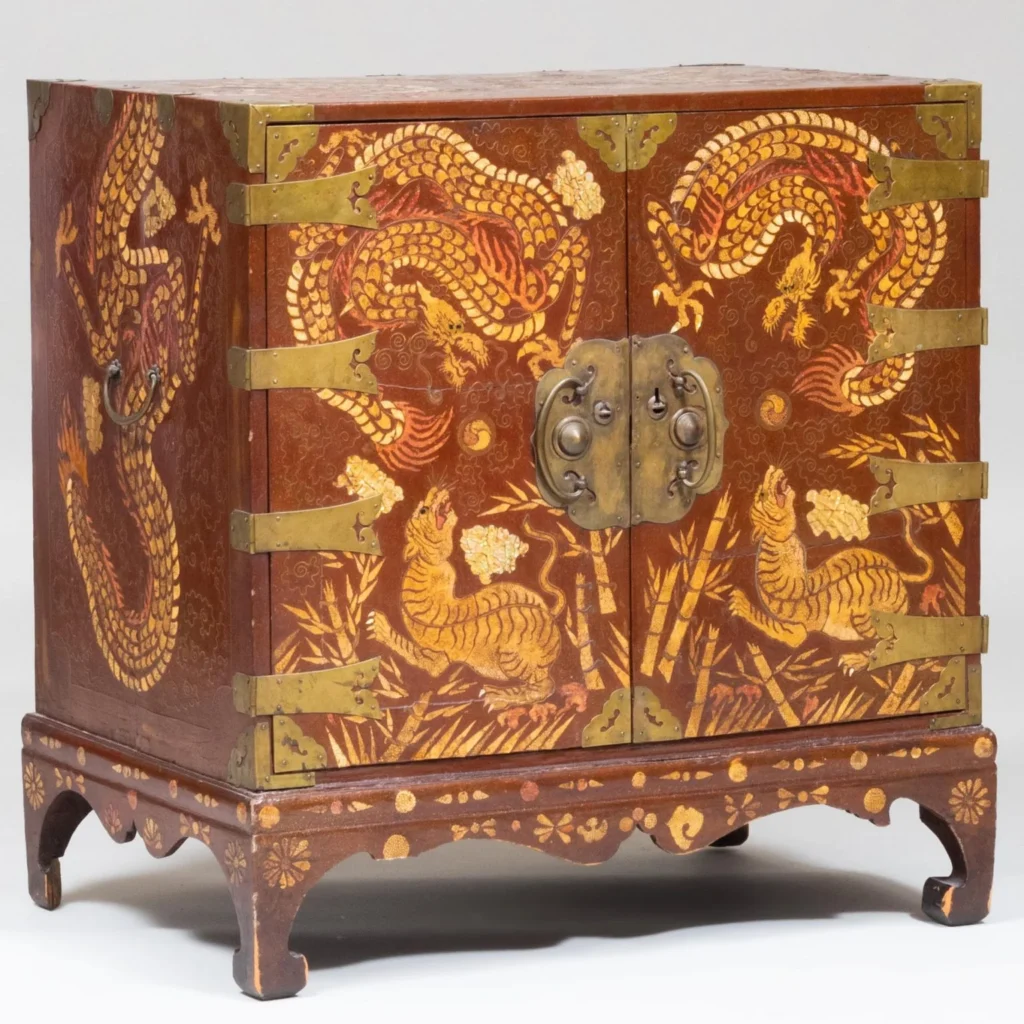
Fitted with interior drawers.
28 1/4 x 26 3/4 x 17 3/4 in.
October, 2021
Estimate: $ 800 – 1,200.-
Starting bid: $ 400.- SOLD for $ 4,800.-
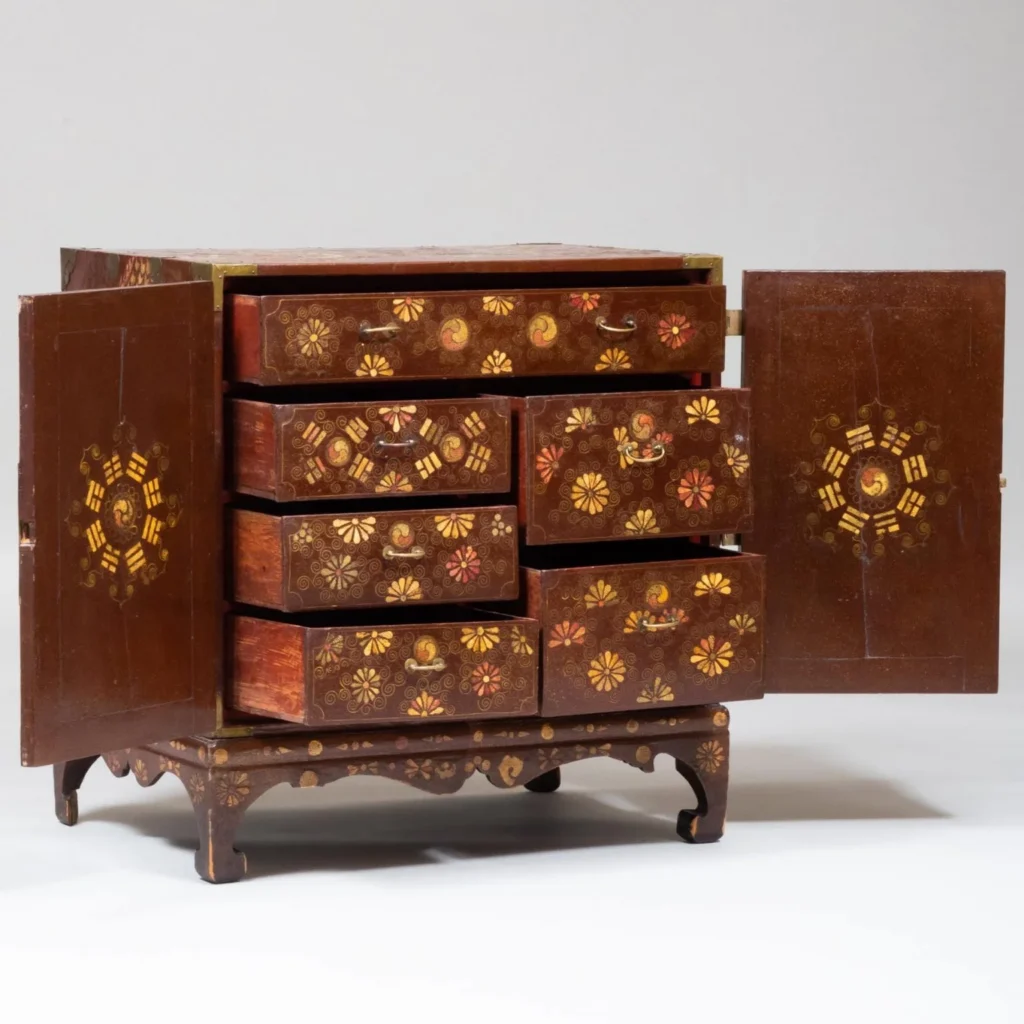

The rectangular box with a hinged cover, decorated in inlaid iridescent shell against a black-lacquer ground sprinkled with flecks of shell, the upper surface of the cover with roundels containing the characters Bog (Fuku) and Su (Kotobuki), the sides with larger roundels containing birds, flowering plum trees, and bamboo, and dragonflies and grape vines, the interior lined with fabric, with a circular gilt-brass lock plate
8 x 15 1/4 x 5 1/2in (20.3 x 38.7 x 14cm)


Estimate: $ 3,000 – 4,000.- UNSOLD.
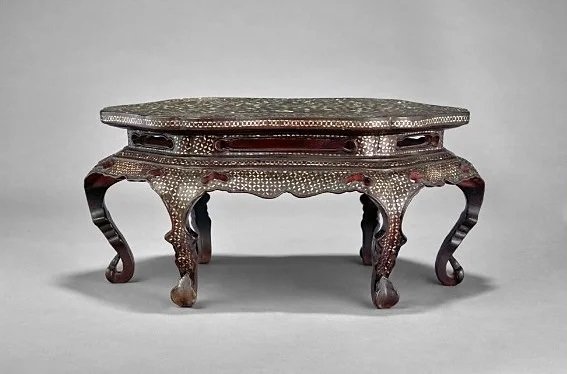
Estimate: $ 6,000 – 9,000.-
SOLD for $ 113,400.-
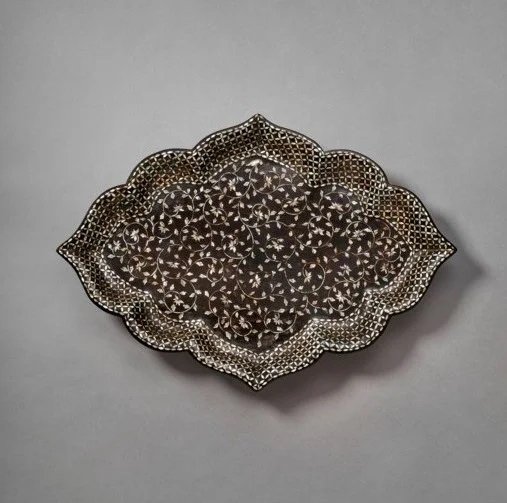
March, 2022.
Estimate: $ 20,000 – 30,000.-
SOLD for $ 226,800.-
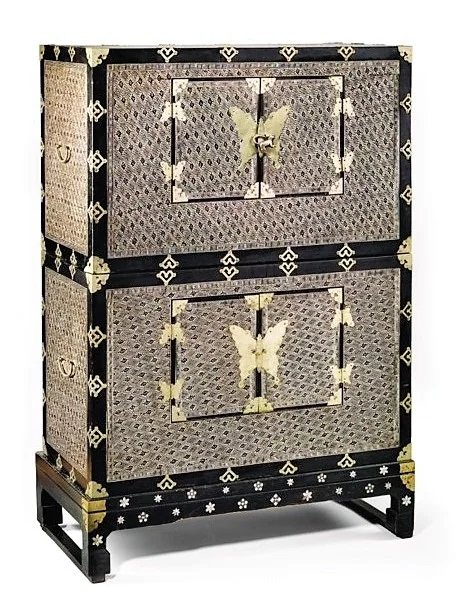
December, 2020. Estimate: Euros: 6,000 – 8,000.-
SOLD for Euros: 32,500.-
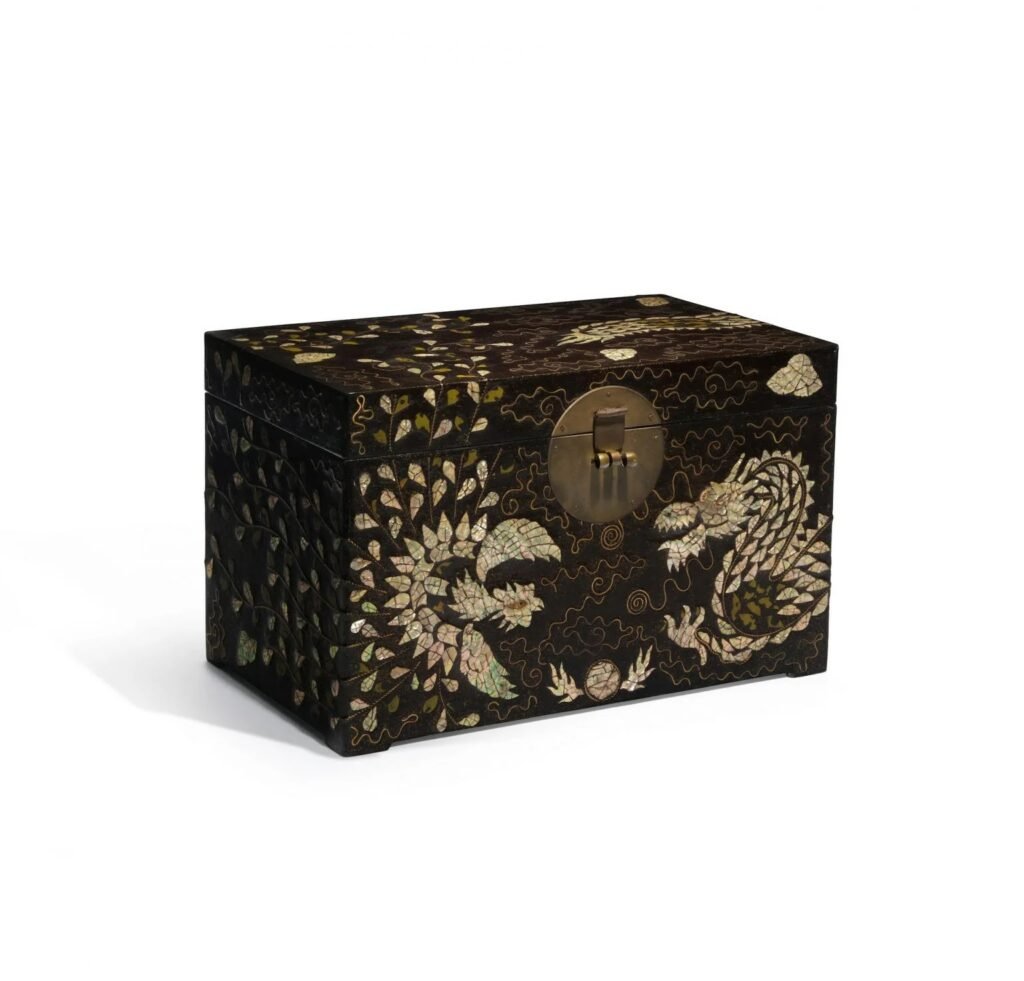
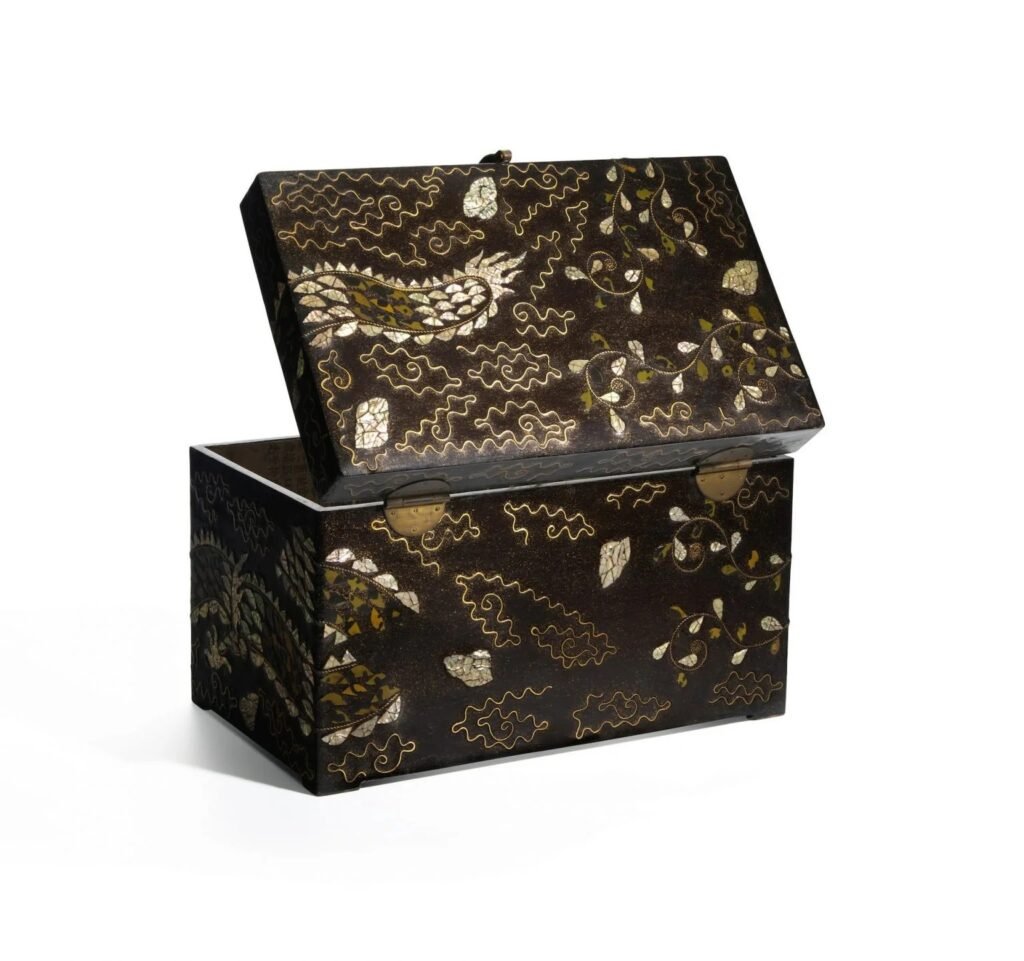
Rectangular, with a hinged cover decorated with a dragon and a phoenix among scrolling vines in inlaid wire, the outline of the dragon and the shaft of the feathers further enhanced with inlaid twisted wire, applied with a circular brass lock plate, the interior lined with paper 9 1/4 x 15 x 9in (23.5 x 38.1 x 22.8cm).
September, 2022.
Estimate: $ 4,000 – 5,000.-
Starting Bid: $ 4,000.- SOLD for $ 4,080.-

H. 134cm, W. 74.6cm, D. 33.3 cm.
September, 2022.
Estimate: $ 5,000 – 7,000.-
Starting bid: $ 5,000.- SOLD for $ 9,450.-
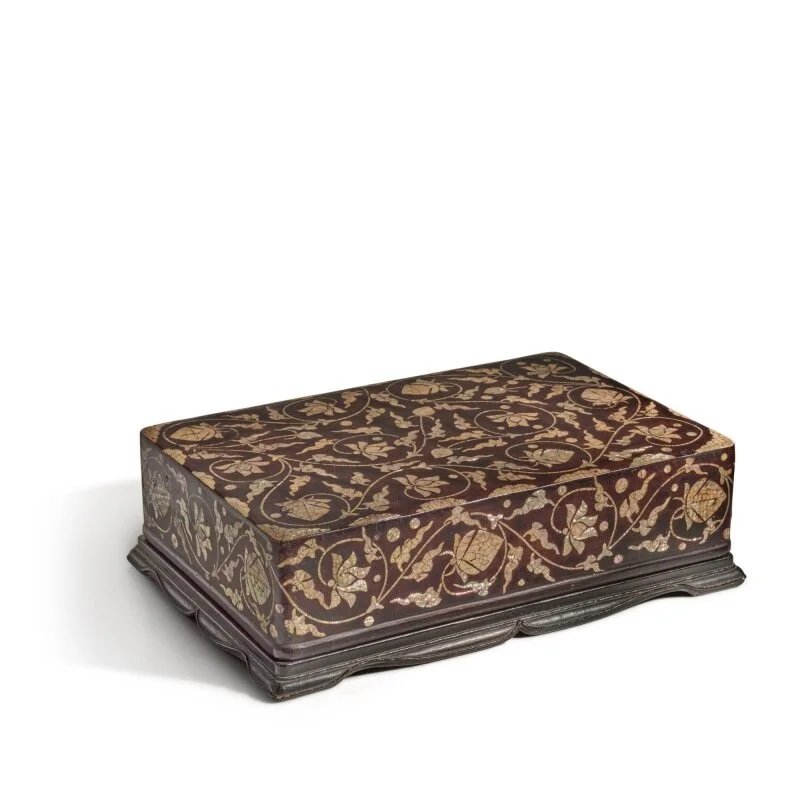
Height 5¼ in., 13.4 cm; Width 18 in., 46 cm; Depth 12¼ in., 31 cm.
September, 2022.
Estimate:80,000 – 120,000 USD.
Starting bid: $ 70,000.
SOLD for $ 107,100.-

HAUT. 28 CM (11 IN.)-DIAM. 40,3 CM (15 7/8 IN.)
Septembre, 2022.
Estimate: Euros 2,000 – 4,000.-
SOLD for Euros. 4,592.-
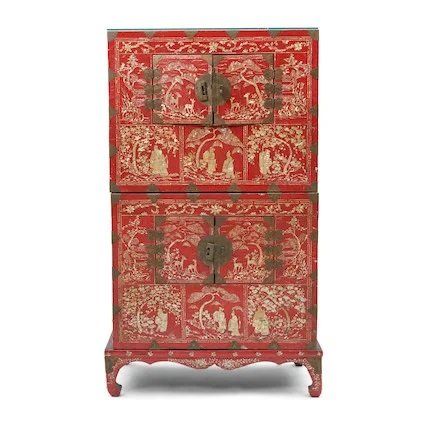
March, 2023,
Estimate: US$800 – US$1,200
SOLD for US$ 10,200.-

Meiji period (1868-1912)
Tansu with a flap made of red lacquered inaki wood with applied decoration of blackened and chiseled iron with stylized geometrical motifs.
March, 2023,
Estimate: Euros 800 – 1,200.-
Starting bid: Euros 800.-.
SOLD for Euros 2,340.-
Note: This chest is definitely not Japanese but a Korean bandaji.
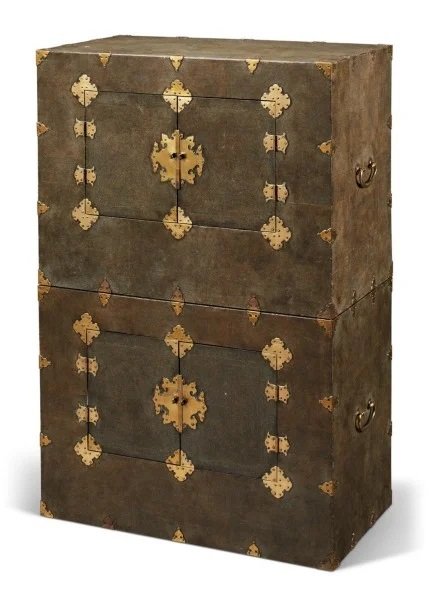
JOSEON DYNASTY (19TH CENTURY)
Each section fitted with two doors and brass escutcheons, hinges and brackets
17 1/2 in. (44.5 cm.) high.
October, 2022,
SOLD for USD 21,420.-
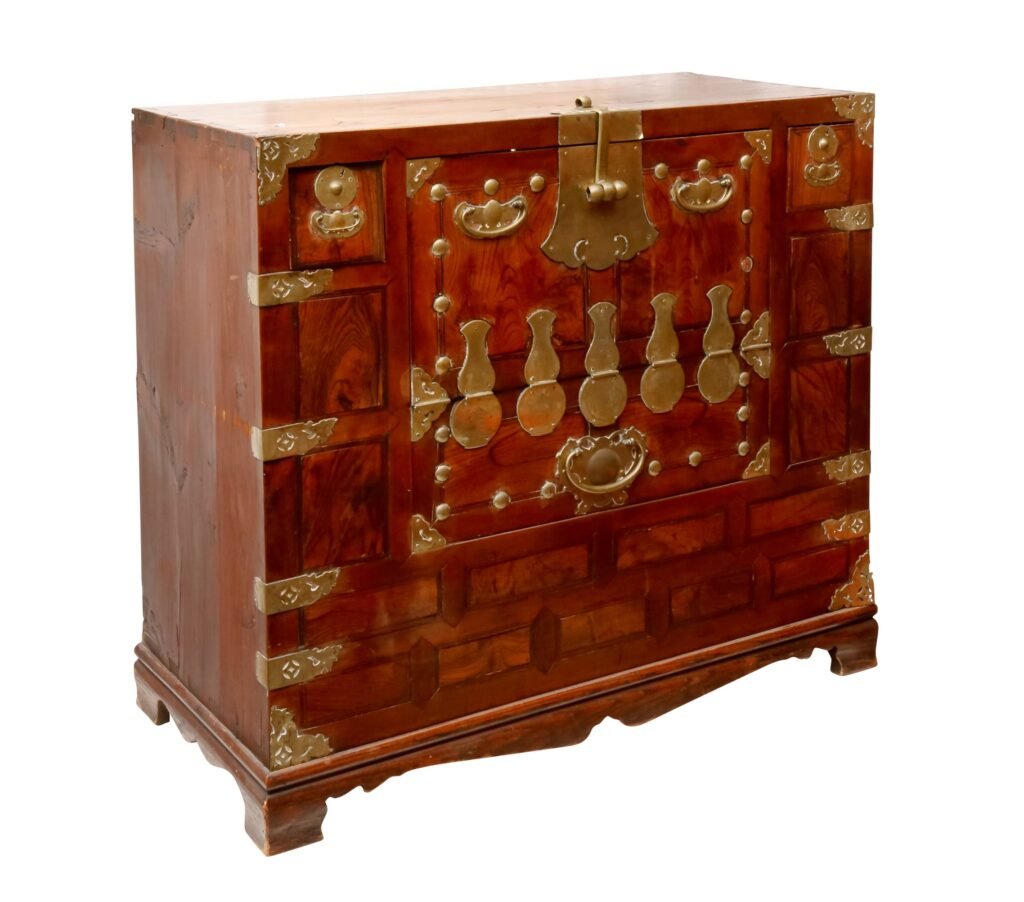
Joseon Dynasty, 19th Century
Raised atop four short feet, the front of the chest with brass fixtures decorated with character marks, flowerheads, birds perched amongst foliage, bats and clouds, the drop-front door opening to reveal a single large interior space, the top corners with two small square-shaped drawers,
approx. 87cm high, 95.5cm wide, 44cm deep.

May, 2023,
Estimated at £400 – £600.- UNDSOLD
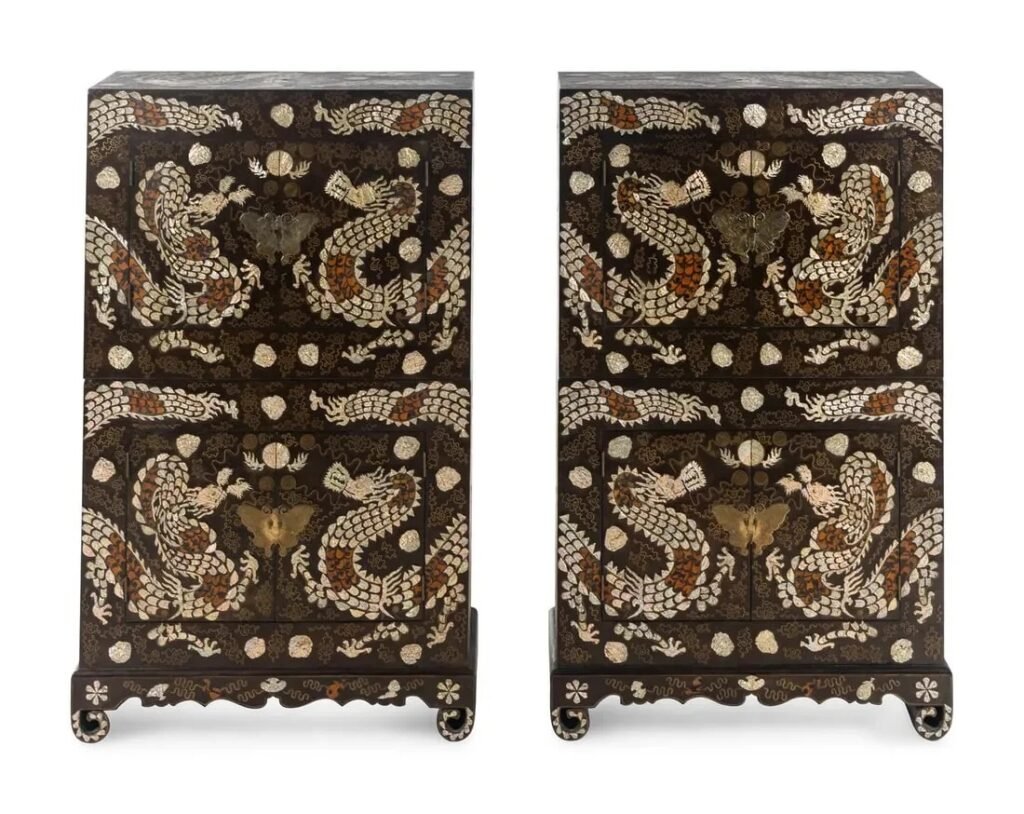
Joseon Period (late 19th Century)
朝鮮李朝 黑漆嵌螺鈿云龍紋櫃一對四組
each section fitted with a pair of single panel doors beautifully and symmetrically depicting two four-clawed dragons chasing a flaming pearl situated above the butterfly lock, throughout the front are clouds of copper and brass. The two sides and top each inlaid with an additional dragon chasing the flaming pearl with the body of the dragon wrapping on the top corners. The bottom cabinets rising from a stand with aprons decorated with further floral patterns of mother-of-pearl inlays and wirework. The interior is neatly repainted.
Height of each overall 53 x width 31 3/4 x depth 14 3/4 in., 134.6 x 80.6 x 37.5 cm. September, 2023.
Estimate: $ 6,000 – 8,000.- Starting bid : $ 3,000.- SOLD for $ 7,000.-
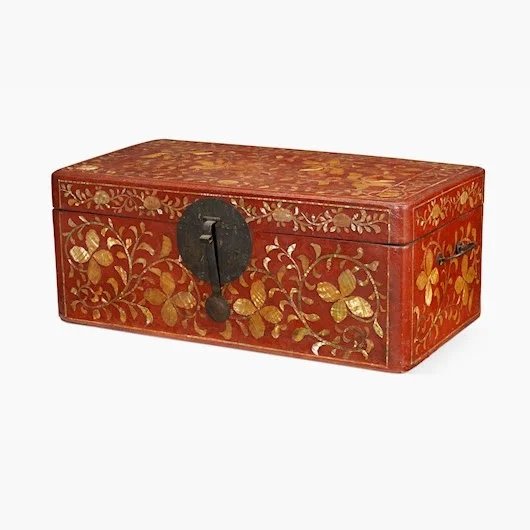
JOSEON DYNASTY (19TH-20TH CENTURY)
Of rectangular shape set on four feet, decorated in inlaid mother-of-pearl with floral scrolls; applied with bronze fitting; interior painted in red
14 3/8 x 26 ¾ x 10 7/8 in. (36.5 x 67.9 x 27.6 cm.) October, 2023. Estimate: $ 3,000 – 4,000.-
SOLD for $ 3,780.-
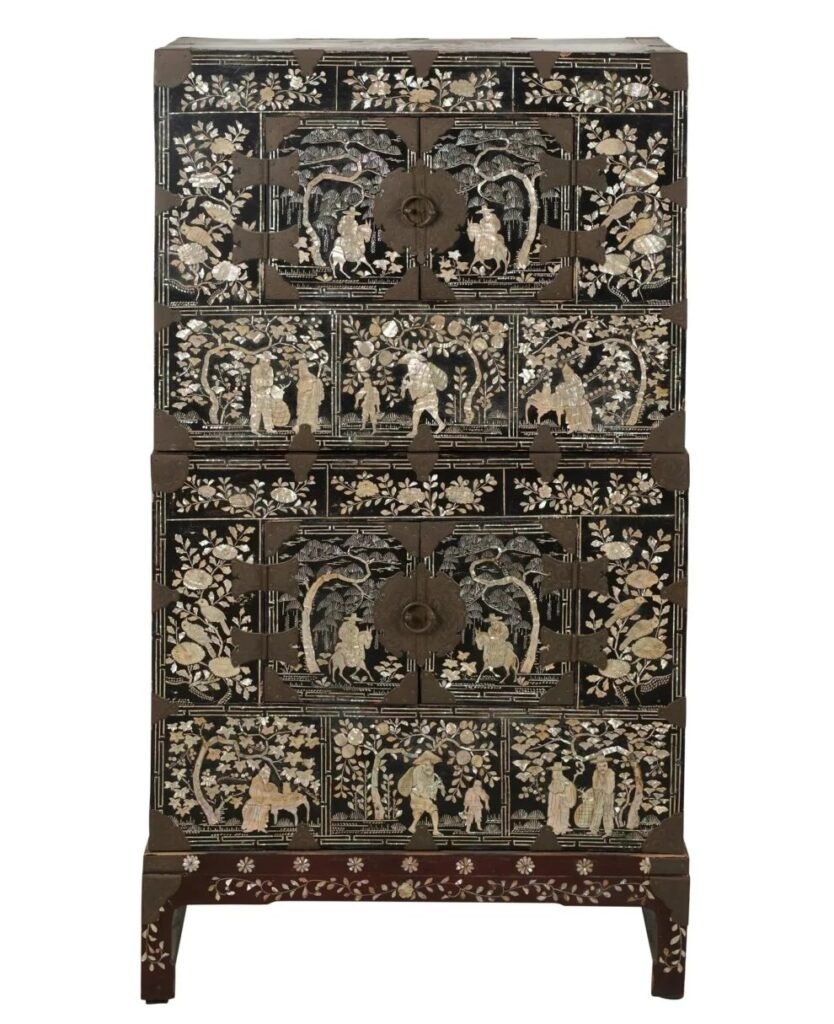
Estimate: $ 1,000 – 1,500.-
Starting bid: $ 500.- SOLD for $ 11,000.-
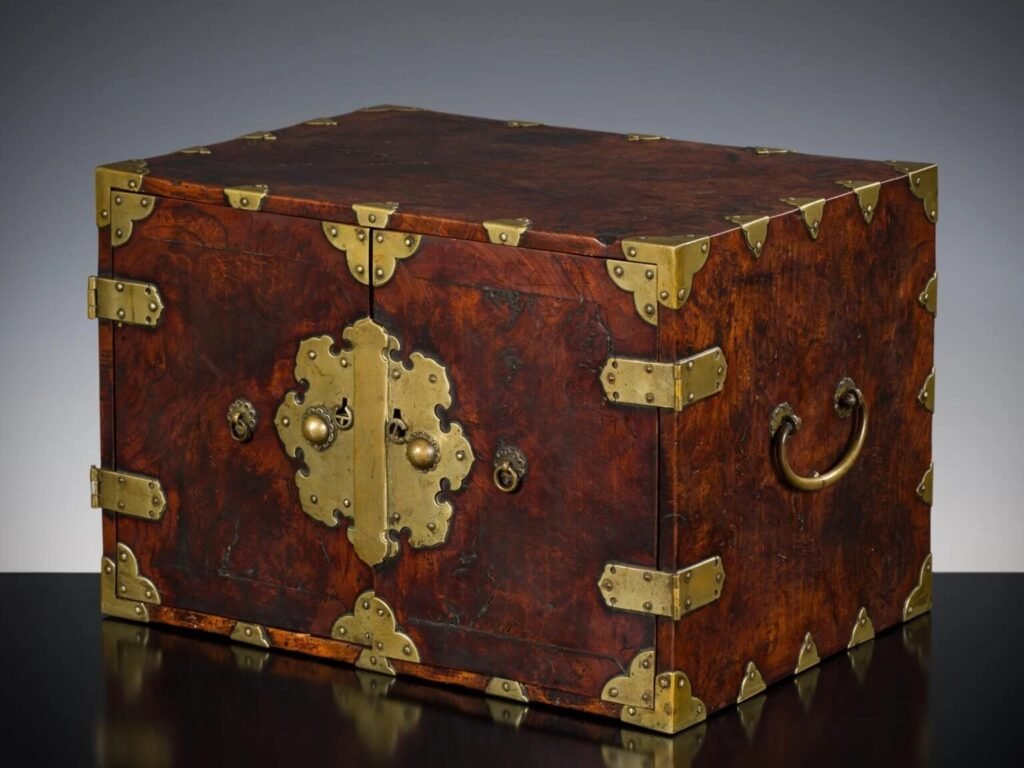
Korea, 18th-19th century. Of rectangular form, with fine brass mounts on every corner and three to each edge, with chrysanthemum-form fittings suspending loose handles to the short sides. The two doors with elaborate mounts and lock plates with two floral fittings suspending small loose rings, opening to reveal three drawers with similar mounts with lock plates. The zelkova wood of an attractive, rich grain and with a fine, naturally grown patina overall.
Weight: 6,713 g
Dimensions: Width 40.7 cm, Height 27 cm, Depth 28 cm.
October, 2023.
Estimation: €1,000 EUR – €2,000 EUR
Starting bid: €1,000 EUR. SOLD for € 1,300 EUR

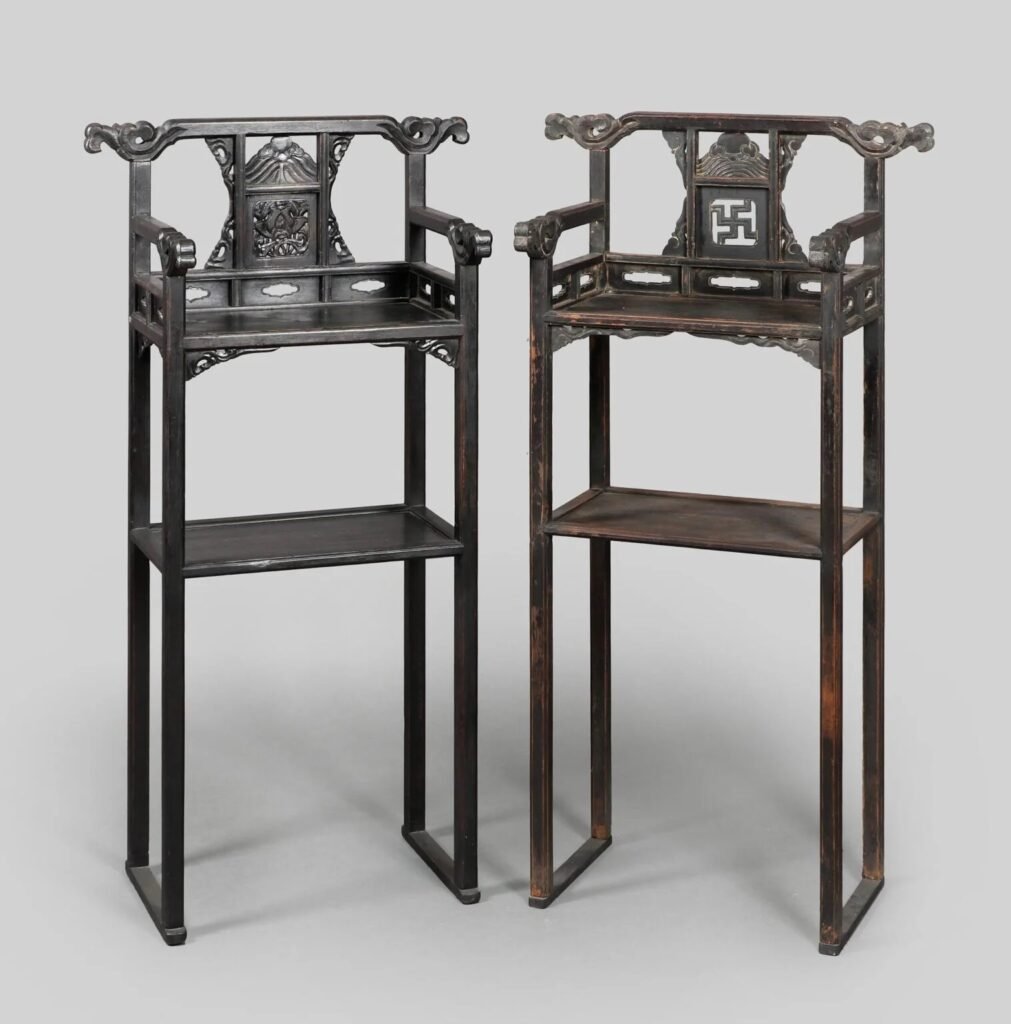
Starting bid: Euros. 200.-
SOLD for: €1,800 EUR
An informative site – thank you. I have what I believe is an early Korean table-top cabinet of small dimensions covered in hand-cut and engraved brass mounts on Zelkova wood. Two doors open to reveal three drawers of plain appearance. I would like to send you photos for your opinion.
Dear David, You can send me photos by email to: tortuebangkok@gmail.com Best regards Yves
Hello Yves. Thank you for the information provided here. I found it very formative as well. I have several pieces of furniture that I am told our Korean and three beautiful room screens, one which is red, which I was told are Korean as well. Would it be acceptable to email more information and photos to the website you provided to the previous person who commented?
Dear Desiree,
If you are looking for more information about your pieces, email us photos at: tortuebangkok@gmail.com
Best regards
Yves Pintaud
Hi – I have several pieces of Korean furniture and accessories that I believe range from the 18-19th c, and which I purchased at dealers in Seoul in the early 1990s. Would you be able to assist me with understanding current valuations?
Thanks.