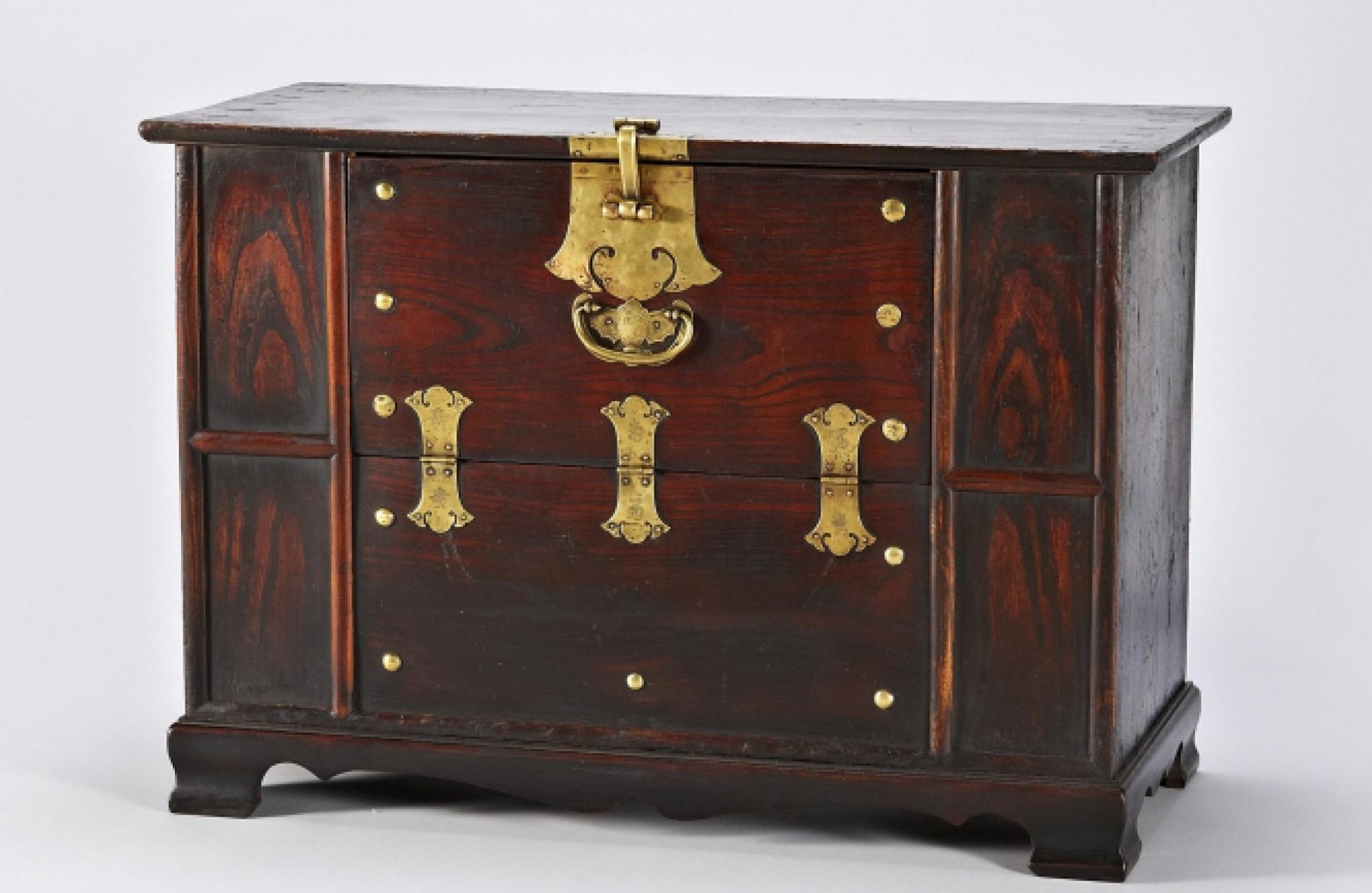
Traditional Korean Gyeonggi-do bandaji chest with dark reddish wood, brass locking plate, three decorative brass hinges and raised wooden base.

GYEONGGI DO BANDAJI – 경기도 반닫이

Featured image at the top of this post: Gyeonggi Do Bandaji from the National Museum of Korea. Gyeonggi Do province or Kyonggi Do, where the capital city of Seoul is located, lies in the northern western part of the peninsula. The north, south and eastern part of the province are covered by mountains. Bandaji chests, […]
ANTIQUE FURNITURE COLLECTIONS IN KOREA.

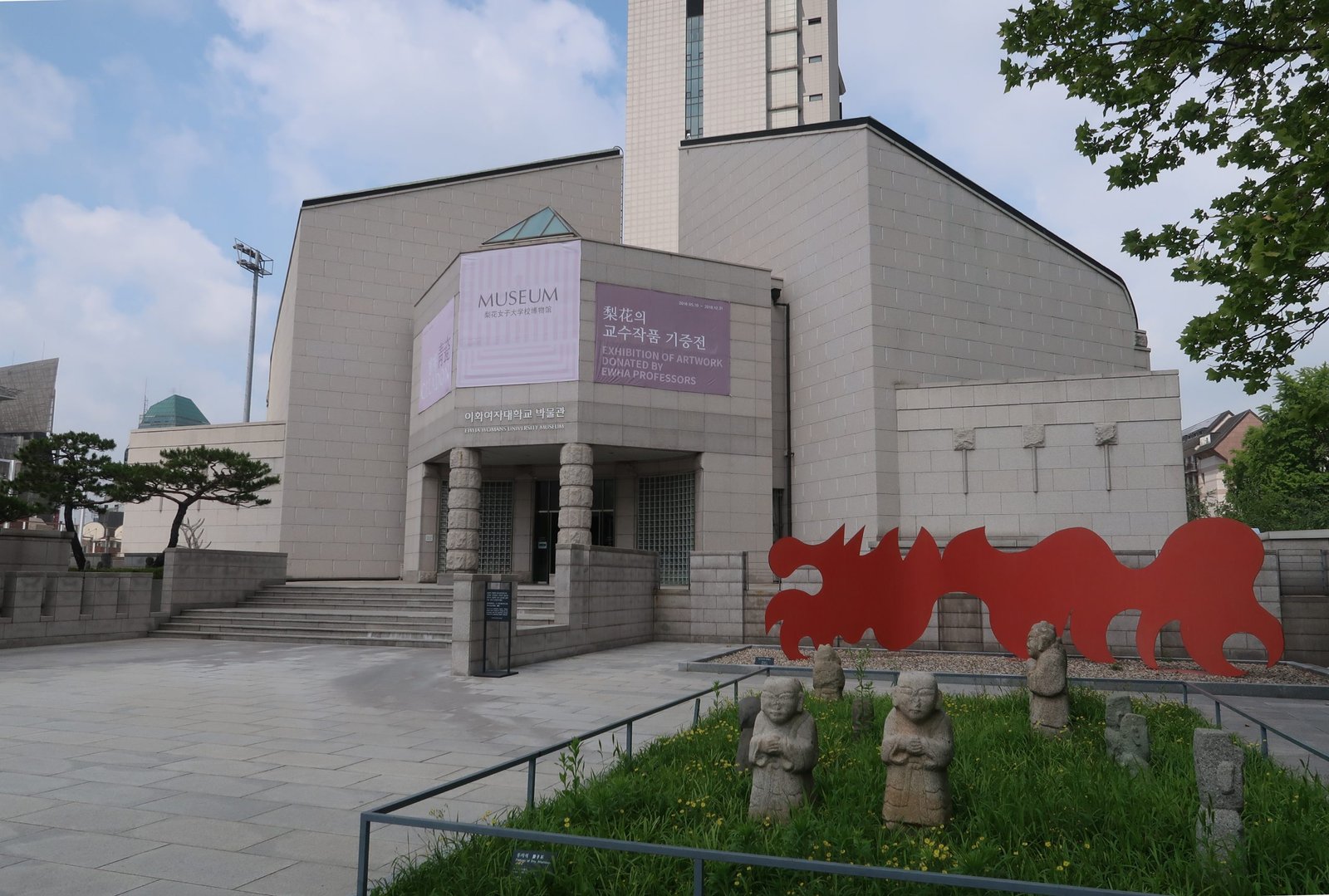
EWHA WOMAN’S UNIVERSITY. SEOUL. Korean Furniture Collection. More than 500 pieces are featured in the collection of the Ewha Woman’s University Museum in Seoul, Korea. Woman’s University Museum in Seoul, Korea. The museum was open on April 6, 1935, as part of the university’s efforts to preserve Korea’s rich cultural heritage. HO-AM ART MUSEUM. SEOUL. […]

Northern Korean bandaji chest attributed to Pyongan-do, with dark iron hinges, a central lock plate, and a large decorative front handle.

FURNITURE FROM THE NORTHERN PROVINCES. PYONGAN DO.

At present from a historical point of view, we should call this furniture as furniture of the Northern provinces of Korea because at the time of the “Joseon dynasty”, the country was unified. Korea was separated in two as a result of the war in the middle of the 20th century (1953). Until the late […]

Traditional Korean kitchen interior with a wooden rice storage chest, earthenware jars, and a clay cooking hearth.

THE RICE CHEST, HEART OF THE HOME (뒤주)

There is not the slightest trace of decoration on the rice chest. Its occasional iron or brass fitting is not meant to make it more attractive, these fittings enhance the chests qualities of gravity and durability. The structure of the rice chest, constructed from solid piece of pine tree, is depicted in bold, straight lines. […]