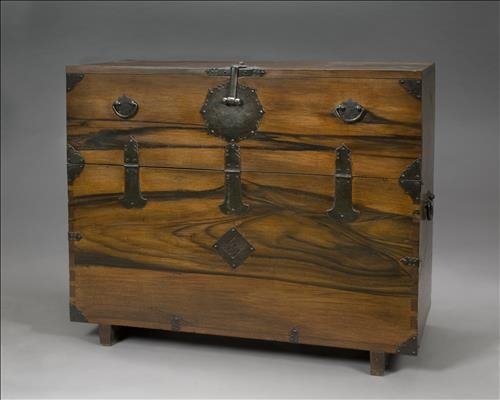
CHUNGCHEONG DO BANDAJI – 충청도 반닫이

Located in the central western part of South Korea, Chungcheong Do was one of the eight provinces of Korea during the Joseon Dynasty.The name of the province derives from the name of the principal city of Cheongju. It lies between Gyeonggi Province in the north, Jeolla Province in the south, and Gyeongsan and Gangwon Provinces […]

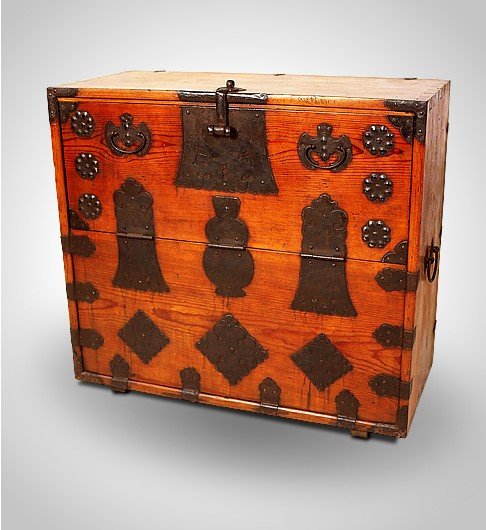
GANGWON DO BANDAJI – 강원도 반닫이

Gangwon Do, also known as Kangwon Province, has Chuncheon as its capital city. Before the division of Korea in 1945, this part of South Korea and its North Korean neighbor constituted a single province, as depicted on the map below. Gangwon Province is bordered to the west by Gyeonggi Province, to the south by the […]

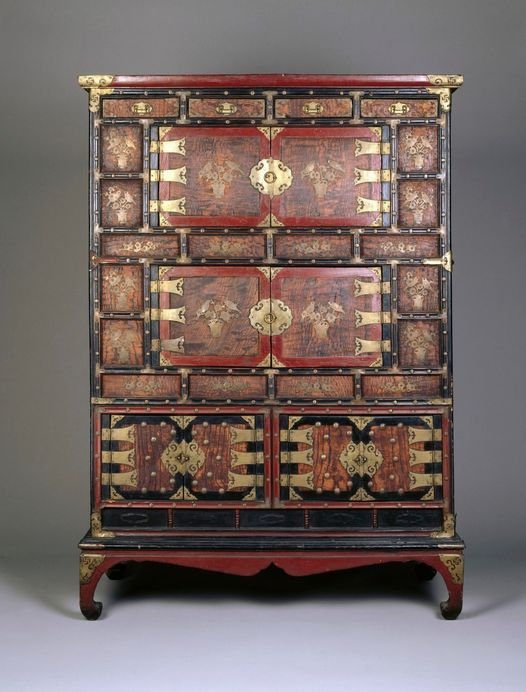
THE WARDROBE – UIGORI JANG 의걸이장

A wardrobe chest (Kwanbok-Jang or Uigori-Jang) has much larger doors than any other type of Jang. This type of wardrobe illustrates the end of the “Hermit Kingdom,” as Korea was known for its isolation. Towards the end of the 19th century and the emergence of economic industrialization, Korea opened its borders, and some Western influence […]

IN SEARCH OF KOREAN TRADITIONAL FURNITURE.

Browsing the internet is a great way to explore various pieces of Korean antique furniture. On display are items sourced from different galleries, auction houses, museums, and private collectors. INTERESTING LINKS: THE SOUL OF 한국 PYONGYANG BANDAJI Elaborately decorated with ornate brass mounts in various geometric forms, some of which have incised landscapes and other […]

JEOLLA DO BANDAJI – 전라도 반닫이

“JEOLLA DO” the southwestern province of the peninsula is divided into two sub-regions; North Jeolla with the city of JEONJU as capital and South Jeolla with GWANGJU as main city. The province, which is partially mountainous, is home to warmer weather on the peninsula. This climate helps produce a large amount of agricultural products. The […]

THE COIN CHEST – 돈궤

Among Korean furniture, the coin chest called “Ton-Kwe” in Korean is quite easy to recognize. With an average size of H. 45cm, L. 100 – 120cm, D. 35 – 45cm, it consist of a low box made of heavy thick bold wooden panels. This sturdy piece of furniture was usually made of elm or pine […]

THE “MANDARIN DUCK” CABINET

Most household items were kept in the women’s quarters, stored within large cabinets and chests. These pieces of furniture were usually the most substantial and expensive in the home, presented to the couple upon their wedding. The tall piece featured here is referred to as a “mandarin duck” cabinet due to its paired openings at […]

THE BEAUTY OF PAULOWNIA WOOD

Paulownia tree is called “Odong namu” in Korean 오동나무. Paulownia coreana, grows primarily in East Asia, with the southern region of Gyeonggi Province in Korea, including Seoul, being a notable area for its growth. Throughout history, it has been highly regarded for its exceptional wood quality and has been a preferred material for crafting furniture. […]

KOREAN COLLECTIONS IN THE US

INTERESTING LISTING OF KOREAN COLLECTIONS IN AMERICAN MUSEUMS: https://www.museum.go.kr/site/eng/exhiForeignMuseum/list/all WEISMAN ART MUSEUM – Minneapolis, MN The collection includes about 200 examples of Joseon dynasty (1392–1910) furniture, 80 Silla dynasty (668–935 B.C.) stoneware pieces, some 150 folk paintings and wooden bowls and utensils, in addition to other folk arts and crafts. The collection came to the […]

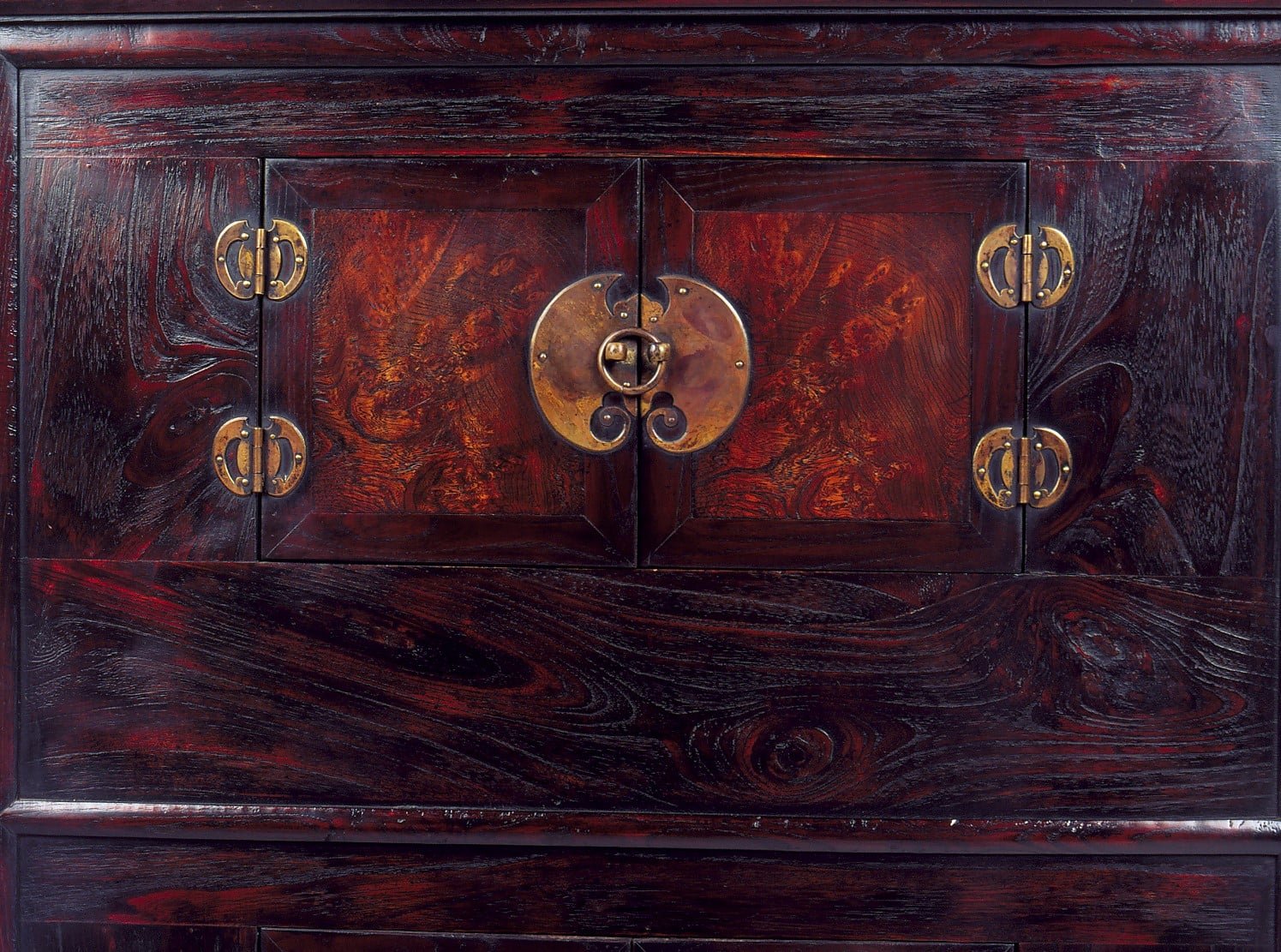
MOTIFS OF DECORATION- THE BAT

The Chinese character for bat is pronounced the same as the character for good fortune (in Korean, “복” or “폭탄”). This similarity led to bat images being embroidered on pillow ends and incorporated into furniture designs and fittings as a symbol of good fortune. As bats were believed to live for a long time, their […]