METHODS OF KOREAN FURNITURE FINISHES.

In this publication, we delve into the technique of wood finishing for Korean furniture during the Joseon Dynasty. To the best of our knowledge, there is a scarcity of studies in English on this subject, necessitating our reliance on publications in Korean. Our hypotheses are formulated based on a thorough examination of numerous pieces, the […]

THE SOBAN – 소반 PART 1

“Soban” (Korean: 소반; Hanja: 小盤) are small tray-like tables, typically crafted from wood and commonly used in Korea for serving and dining. Soban tables were designed to be lightweight, making it convenient for women to carry them along with heavy bronze or thick porcelain bowls of food. The standard dimensions for soban tables are approximately […]

THE SCHOLAR’S CHESTS

Featured photo: The portrait of Yi Chae depicts the renowned scholar of the late Joseon period, clad in a pointed dongpagwan hat and a scholar’s robe, or “simui” (a white hemp robe with black trim). In this half-body portrayal, Yi Chae gazes directly from the canvas while maintaining impeccable posture. It is part of the […]

GYEONGSANG DO BANDAJI- 경상도 반닫이

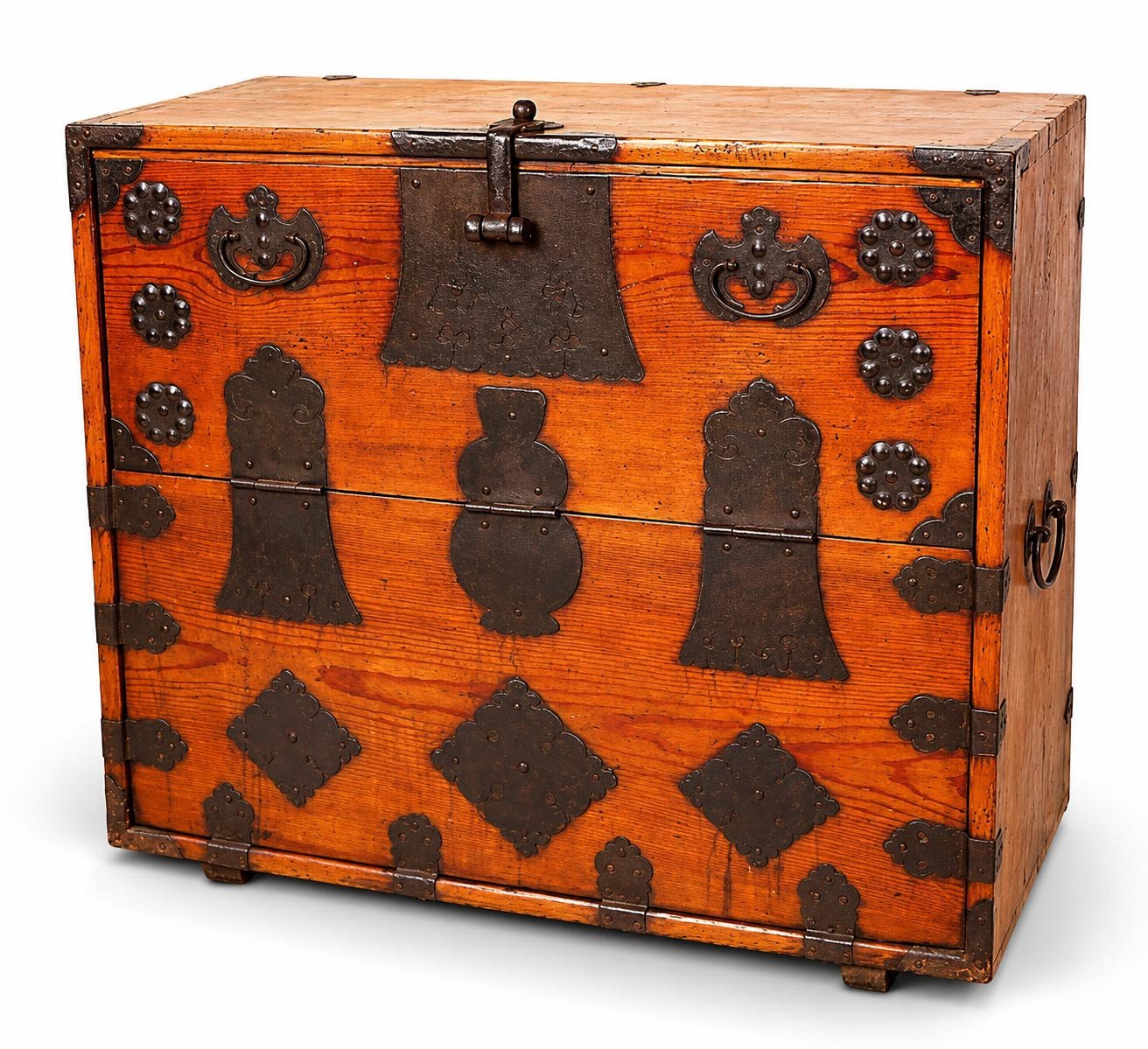
Gyeongsang Do  경상도, also known as Kyongsang-do, was one of the eight provinces of Korea during the Joseon dynasty. This province is located in the southeastern part of the peninsula, with its provincial capital now known as Daegu. The region holds historical significance as the birthplace of the Kingdom of Silla (57 BCE – 935 CE). Gyeongsang-do […]

OUR COLLECTION

COLLECTION “ANTIKASIA” The acquisition of our first piece of Korean furniture dates back to the mid-80s when we lived in Seoul. From the outset, we were captivated by the beauty of the architecture and the extensive use of wood, a crucial material in Korean craftsmanship. Their furniture, often rustic and crafted from a variety of […]

PALANQUIN 신부가마    (新娘轿) 

FEATURED IMAGE: Wedding Palanquin. Collection National Folk Museum of Korea, Seoul. A palanquin is a covered litter, typically designed for a single passenger, and it is carried by an even number of bearers, usually two. The term is derived from the Sanskrit word “palyanka“, which means bed or couch. Palanquins come in various sizes and […]

THE ART OF KOREAN LACQUER

Lacquer, known as “ottchil” (옻칠) in Korean, is a natural paint that has been utilized in Asia since ancient times. Its properties, such as water and insect repellency, enhance the durability of objects while imbuing them with a beautiful luster. The application of lacquer is a time and labor-intensive process. Initially, it takes several months […]

WHEN DRAGON MEETS PHOENIX

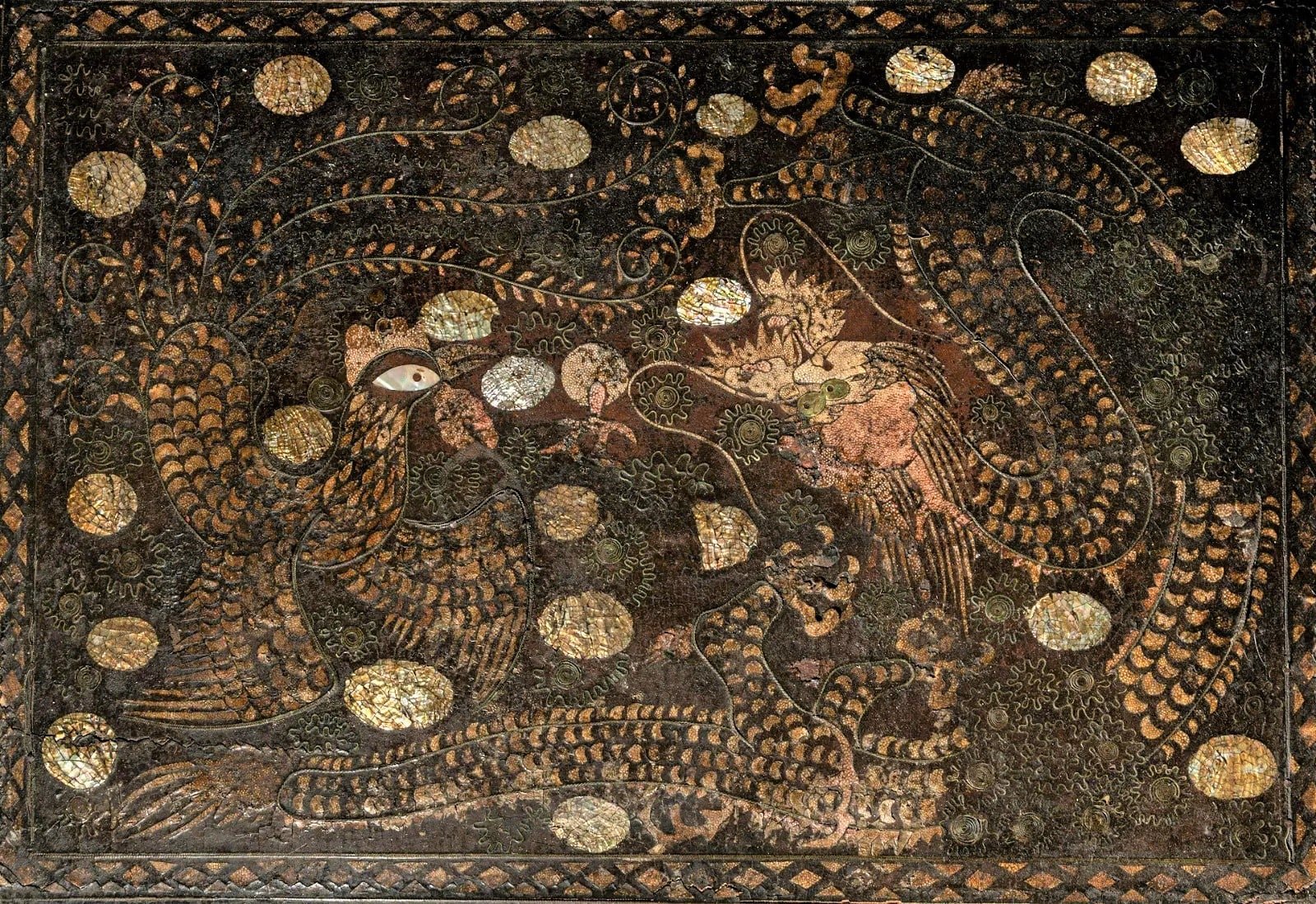
These two emblems were borrowed from Chinese mythology and are occasionally found in Korean art. Korean furniture is often adorned with auspicious motifs, frequently found on hinges or inlays made from materials such as mother of pearl, tortoiseshell, or shagreen. This design is less commonly carved into wood, as is the case with Chinese furniture. […]

LE GALUCHAT – SHAGREEN

Galuchat and shagreen are terms for a highly durable, textured leather made from the hides of sharks or stingrays. Shagreen has been prized since the time of the pharaohs in Egypt and during the Chinese Han Dynasty (202 BC – AD 220). In China, it was used in the construction of bows. In Japan, shagreen has been well-documented […]

A BRIEF INTRODUCTION TO KOREAN FURNITURE FROM THE JOSEON DYNASTY

This brief history of traditional Korean furniture aims to address common questions about its origins and the limited availability of antique pieces in the market. Feature photo at the top of this post: A painting by Shin Yun-bok, who was born around 1758 and passed away after 1813. He was a Korean painter known by […]