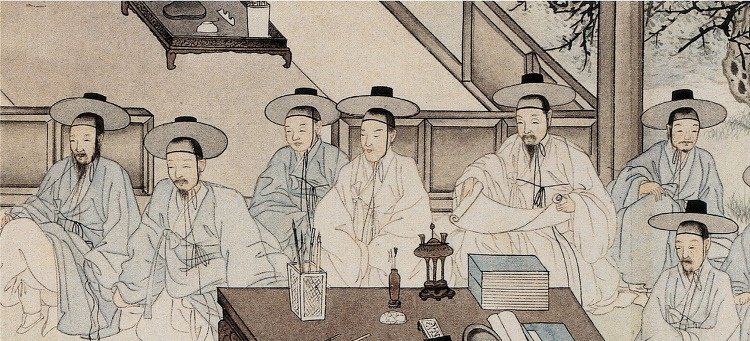
What is Confucianism?
Confucianism is a philosophical and ethical system based on the teachings of Confucius, a Chinese philosopher who lived around 500 BCE. It emphasizes moral values, social harmony, and the importance of personal and governmental morality. Central concepts include filial piety (respect for one’s parents and ancestors), righteousness, loyalty, and the cultivation of virtues such as benevolence, propriety, and sincerity.
Confucianism has had a profound influence on East Asian cultures, particularly in China, Korea, Japan, and Vietnam. It has shaped social relationships, family structure, education systems, and government policies throughout history. Confucian principles emphasize the cultivation of individuals into morally exemplary persons who contribute positively to society through their actions and conduct.
What is Neo-Confucianism?
Neo-Confucianism is a later development of classical Confucianism that emerged during the Tang dynasty (7th–9th century) and was fully formulated during the Song dynasty (960–1279) in China. It eventually spread to Korea, Japan, and Vietnam, becoming especially dominant during the Joseon dynasty (1392–1897) in Korea.
In Korea during the Joseon dynasty It replaced Buddhism as the state ideology. Heavily influenced government, family structure, art, rituals, and even architecture and promoted simplicity, moral purity, and austere aesthetics, values that shaped Korean crafts and furniture (such as the sober and functional designs of late Joseon chests).
Neo-Confucianism emphasized:
- Simplicity
- Restraint
- Rational order
- Moral clarity
- Function over display
These values directly shaped Korean artistic expression, favoring austere elegance over ornate decoration.
Ceramics:
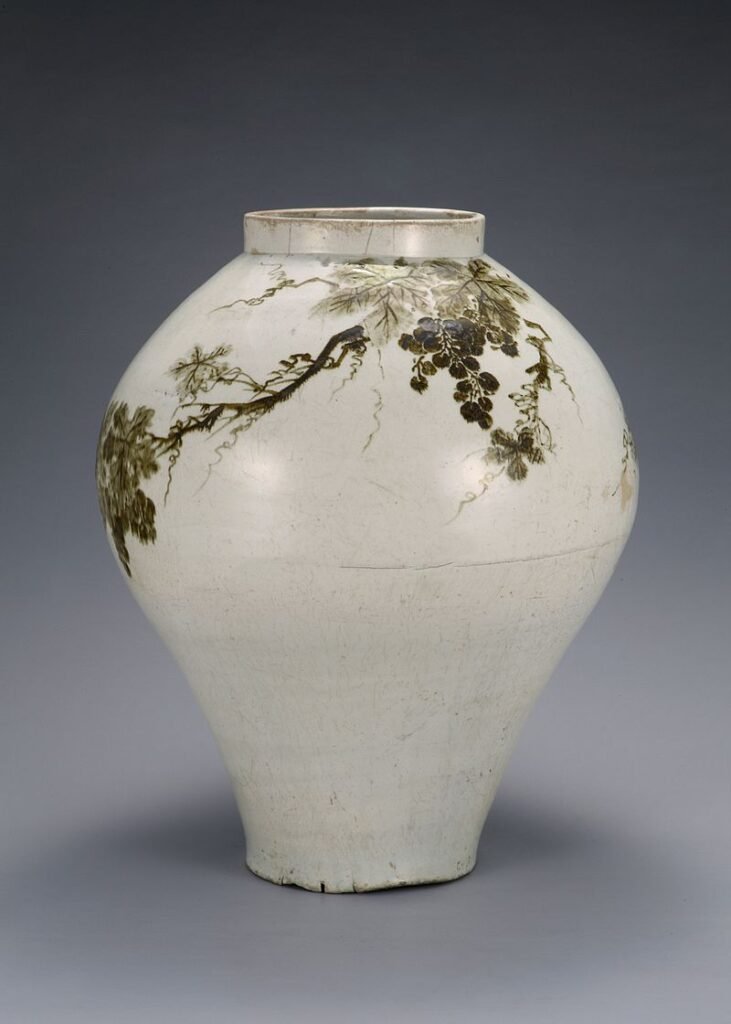
White porcelain (Baekja). It was the dominant ceramic type of Joseon. It reflects purity, modesty, and moral integrity, key Neo-Confucian virtues. Characterized by undecorated or subtly decorated with iron-brown or cobalt-blue designs when permitted.
Architecture & interior space:
Characterized by modest and rational layouts. Houses were divided clearly into men’s (sarangchae) and women’s quarters (anchae), reflecting Confucian family hierarchy. Buildings favored natural materials, low profiles, and balanced symmetry emphasis on emptiness, allowing for reflection and moral clarity.
Furniture & woodcrafts:
Furniture and woodcrafts during this period embraced simplicity and functionality. Examples include bandaji, sarangbang desks, and clothing chests, which prioritized practicality over ornamentation.

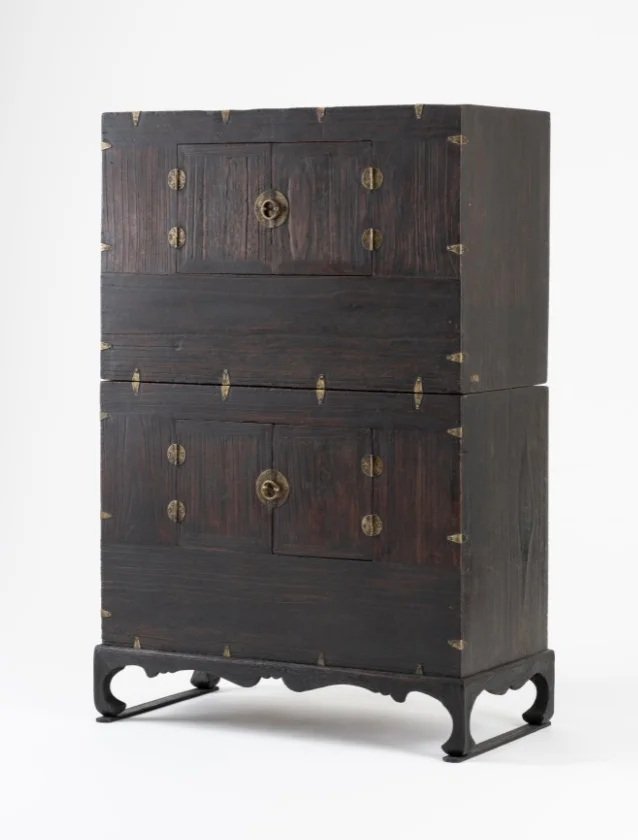
H. 116,5cm, W. 77cm, D. 37cm. Collection: Seoul Museum of Craft Art
Rejecting the flamboyance of Buddhist and Goryeo-era pieces, they favored modest materials such as pine or paulownia for less prominent areas. Highly figured woods like zelkova and persimmon were sparingly used, primarily where visibility warranted. The designs emphasized geometric forms, balanced proportions, and understated metal fittings. Symbolism, such as peonies or phoenixes, was used discreetly to convey virtuous meanings rather than for lavishness.
Contrast with pre-Joseon Art.
| Aspect | Goryeo Dynasty (Buddhist) | Joseon Dynasty (Neo-Confucian) |
|---|---|---|
| Style | Lavish, ornate | Simple, restrained |
| Motifs | Lotus, Avalokiteśvara, dragons | Plum blossom, bamboo, calligraphy |
| Materials | Celadon, gold, elaborate inlays | White porcelain, plain wood |
| Function | Religious, decorative | Moral, functional, scholarly |
Confucianism motifs in decoration often reflect its core values of harmony, respect for elders, and social order. These motifs include symbols of longevity, loyalty, and virtue, often found in art, architecture, and even clothing. Common examples include depictions of the “Three Friends of Winter” (pine, bamboo, and plum blossom), cranes, and mandarin ducks.
Motifs and their meanings:
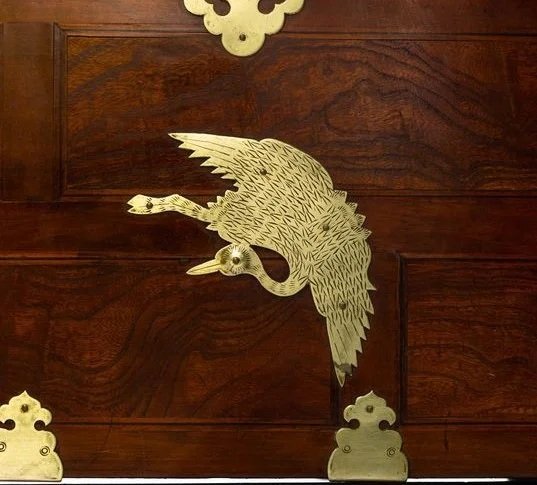
Cranes: Represent longevity, wisdom, and often aspiration for higher office.
Table with phoenix, crane, and peach motif, 1800-1900. Korea, Joseon dynasty (1392-1910). Lacquered wood with inlaid mother-of-pearl. Asian Art Museum
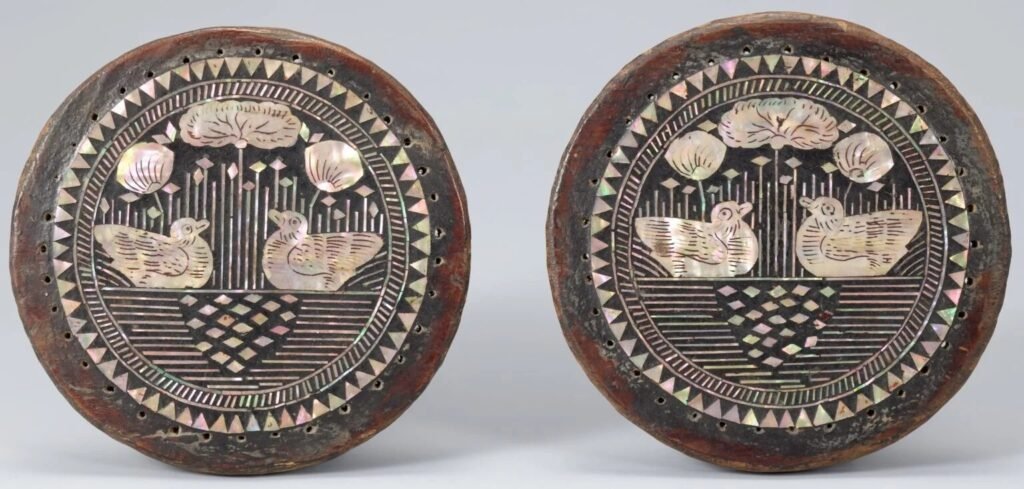
Mandarin Ducks: Symbolize love, fidelity, and marital harmony.
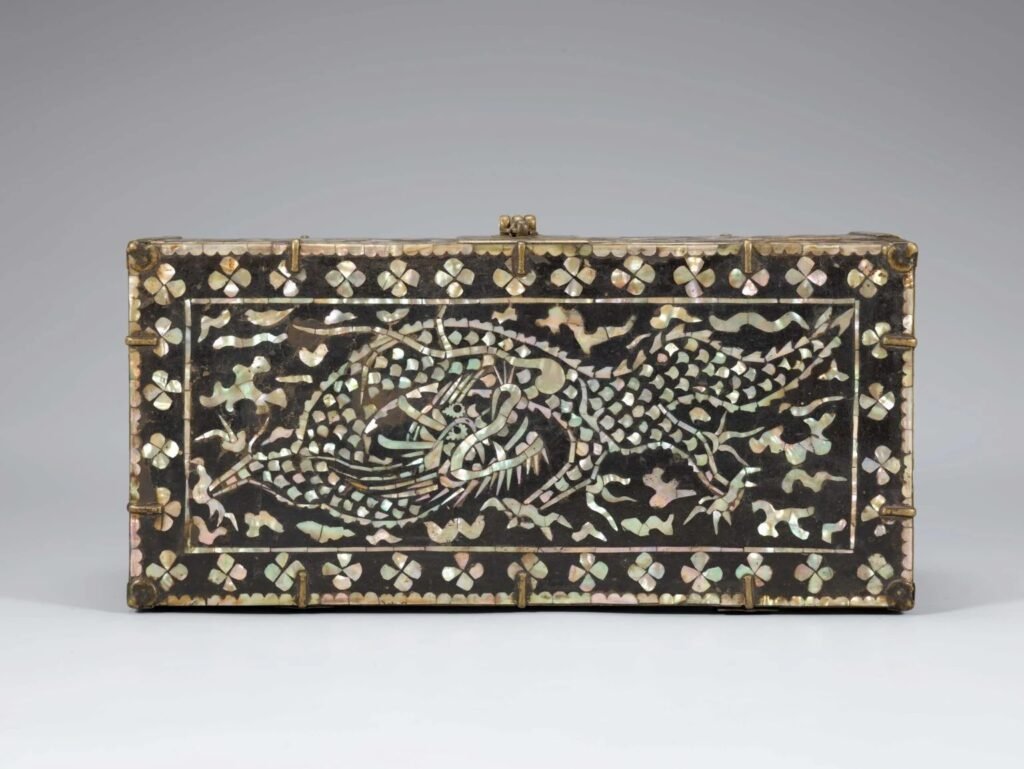
Dragons: In temple art, they symbolize power, authority, and benevolence, traits associated with Confucius as a moral leader.
- The Three Friends of Winter: This trio (pine, bamboo, and plum blossom) symbolizes resilience, perseverance, and enduring virtue, reflecting the scholar-official class’s ideals.
- Peacocks: Represent elegance, dignity, and beauty.
- Pheasants: Can symbolize beauty and happiness.
- Egrets/Herons: Can symbolize a path or route.
- Bamboo, Pine, and Plum Blossoms: These plants, particularly in combination, represent strength, resilience, and unwavering principles.
- Scholarly Rocks: These were part of a tradition that included depictions of prominent Confucian figures, poets, and painters, as well as themes like chess, music, and painting.
- Color Symbolism: Blue and green often dominate decorations to symbolize peace, growth, and harmony.
LINKS:
Confucian Influence on Korean Art
Yangban: The Cultural Life of the Joseon Literati