Like its neighbors, China and Japan, Korea developed regional furniture styles despite the relatively small size of the peninsula. The bandaji provides the best example, owing to its widespread production throughout the country. This chest was used by every level of society, from the aristocracy to the most modest households. Regional differences are, however, much less apparent in other types of clothing storage furniture, such as jang cabinets and nong chests.
Apart from the furniture types discussed above, it is also possible to identify other pieces that display distinctive regional characteristics. Examining these regional features is the purpose of this publication.
The first part (Kitchen chests) of this publication examines regional differences in the overall design of furniture, focusing on variations in structure, form, and dimensions. The second part (Soban) is devoted to regional variations in decorative design, with particular attention to the ornamental elements that distinguish these pieces.
PHOTO ABOVE: Jeju kitchen cupboard. Pine and elm wood. H. 160cm, W. 138cm, D. 63,5cm. Collection: National Folk Museum of Korea.
THE KITCHEN CHEST.
The differences, which mainly concern form and dimensions, appear to be explained by the climate and the architectural layout of houses in the respective provinces.
As a general rule, the kitchen was separated from the other rooms in the traditional Korean house. It contained only a limited amount of furniture, characterized by its simplicity and practical function.
The rice chest, found throughout the Korean peninsula, shows virtually no regional stylistic variation. It was often placed beside simple open shelves used to store kitchen utensils, pots, and dishes.
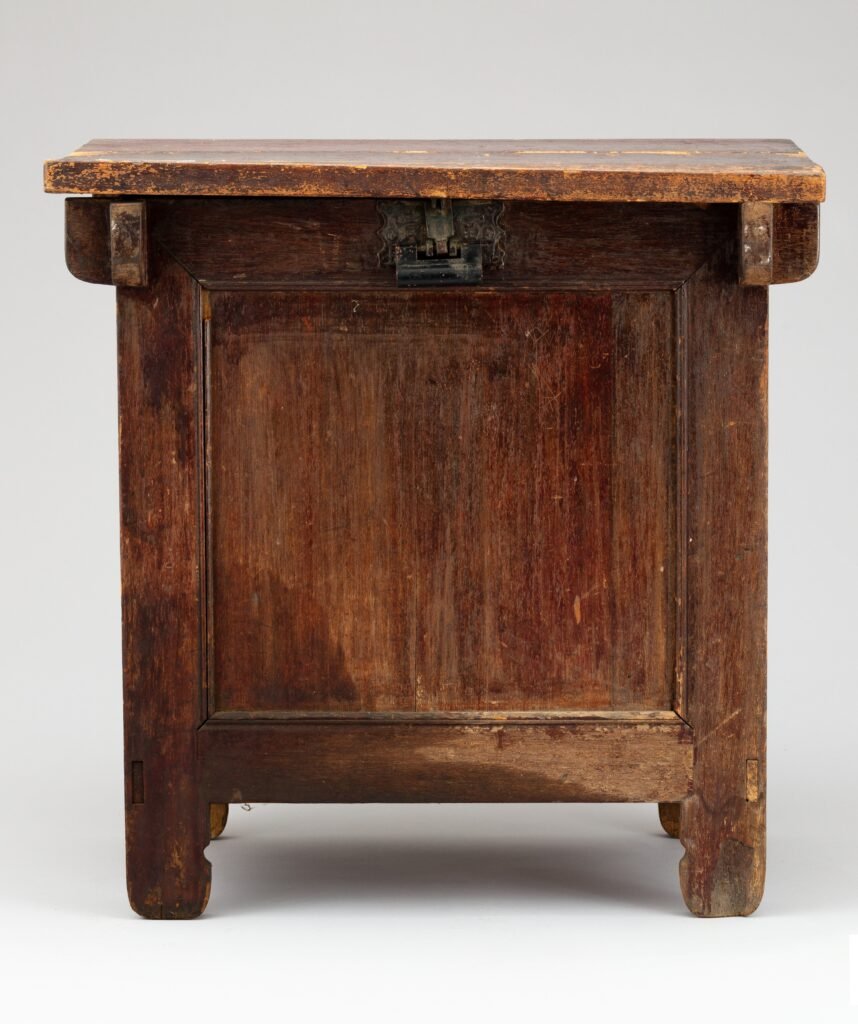
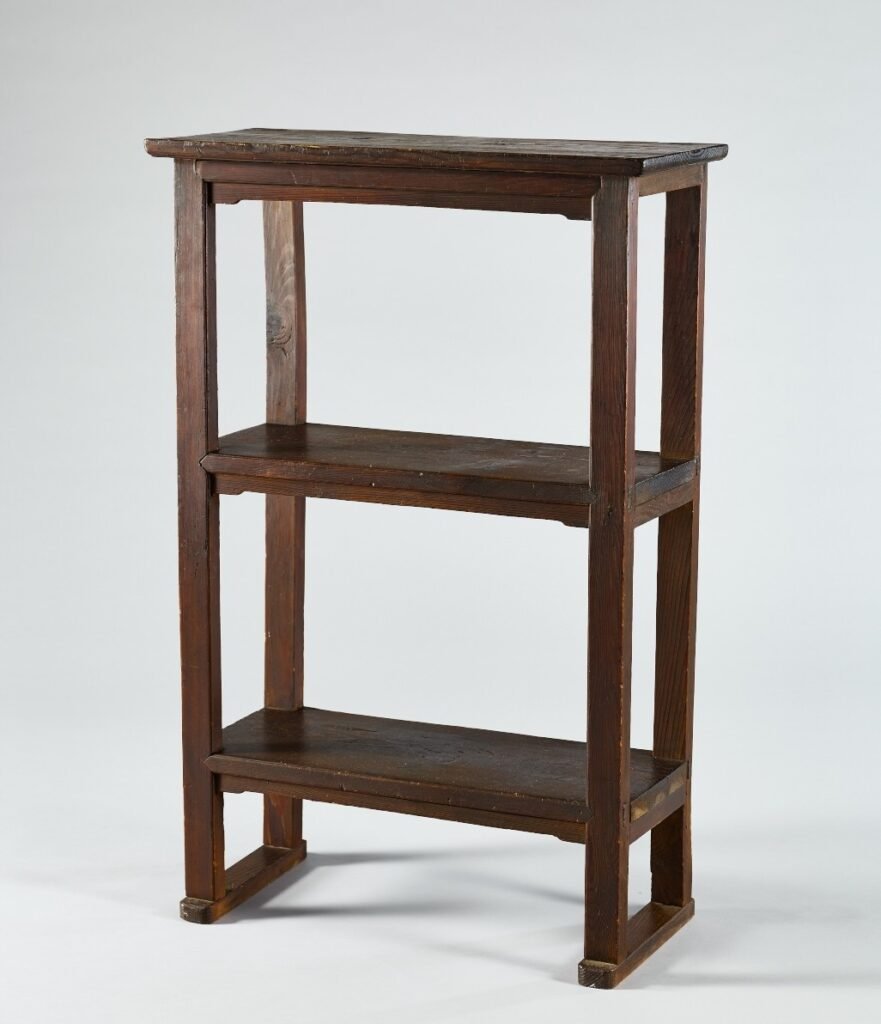
Gyeonggi kitchen chest.
Among wealthier households, another type of kitchen cabinet appeared toward the end of the Joseon dynasty. Built as a tall, multi-tiered piece, it generally consisted of three stacked compartments. Raised on a high base to protect it from ground moisture, each level featured a storage compartment accessed through a pair of hinged doors, while sliding panels occupied the lower section. A row of small drawers was positioned directly beneath the cabinet’s upper sliding panel.
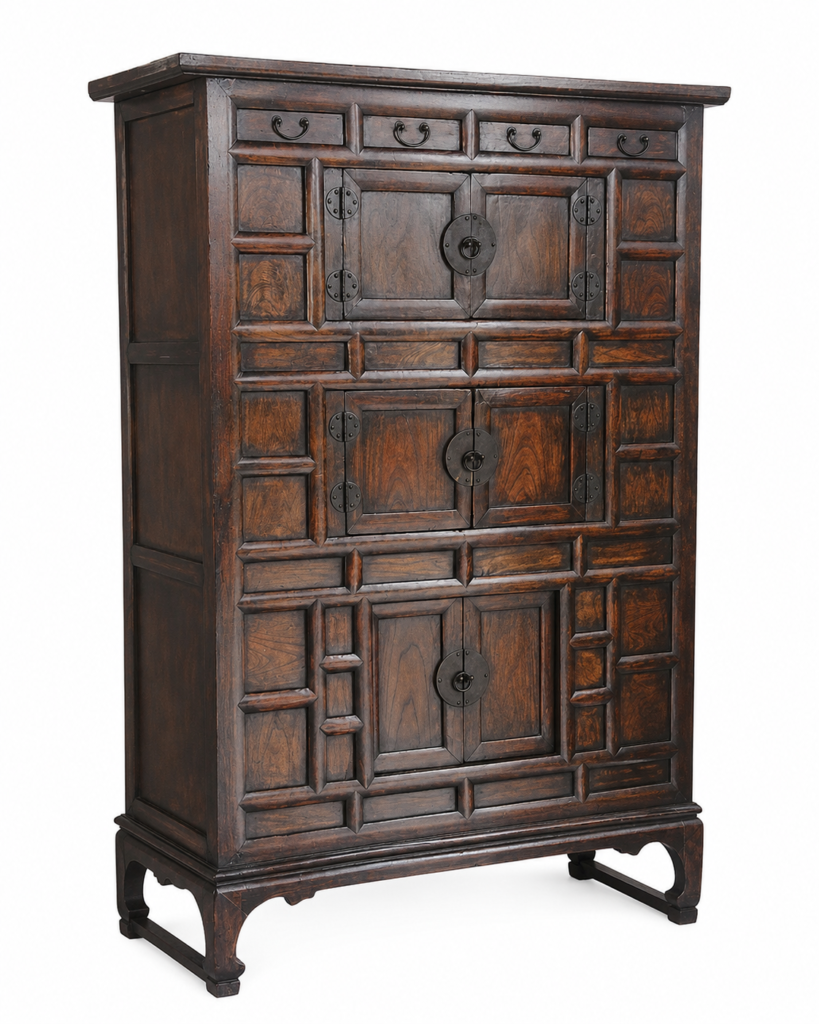
H. 187cm, W. 110cm, D. 50cm. Collection: ANTIKASIA
The structure of multi-level chests was similar to that of wardrobes called “Jang”. Thick posts formed the framework that supported deep shelves for convenient storage. Pine or elm were used for their construction. Decoration was minimal and metal fittings included plain, round cast-iron hinges and bow-shaped handles. In the later period iron was replaced by brass.
These large pieces of furniture first appeared at the end of the 19th century, most of which originated from wealthy households. More elaborate in their design and decoration, they were primarily used to store chinaware, porcelain, and other valuables. They have been widely reproduced during the latter half of the 20th century and into the 21st century.
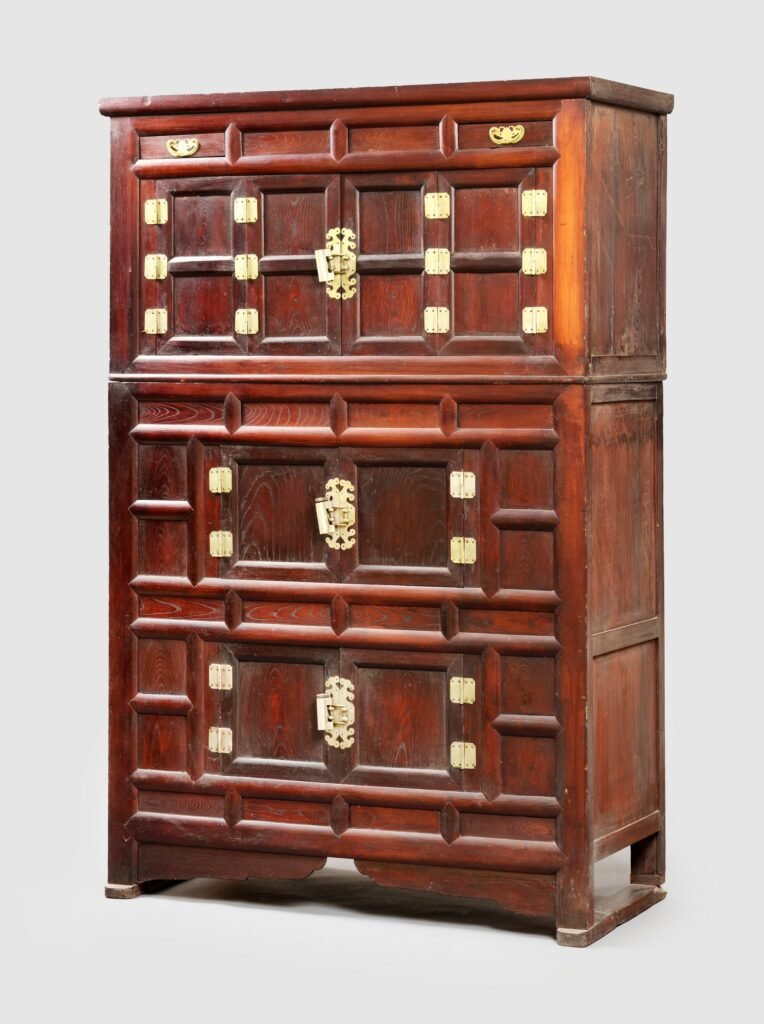
Collection: National Folk Museum of Korea. Seoul.
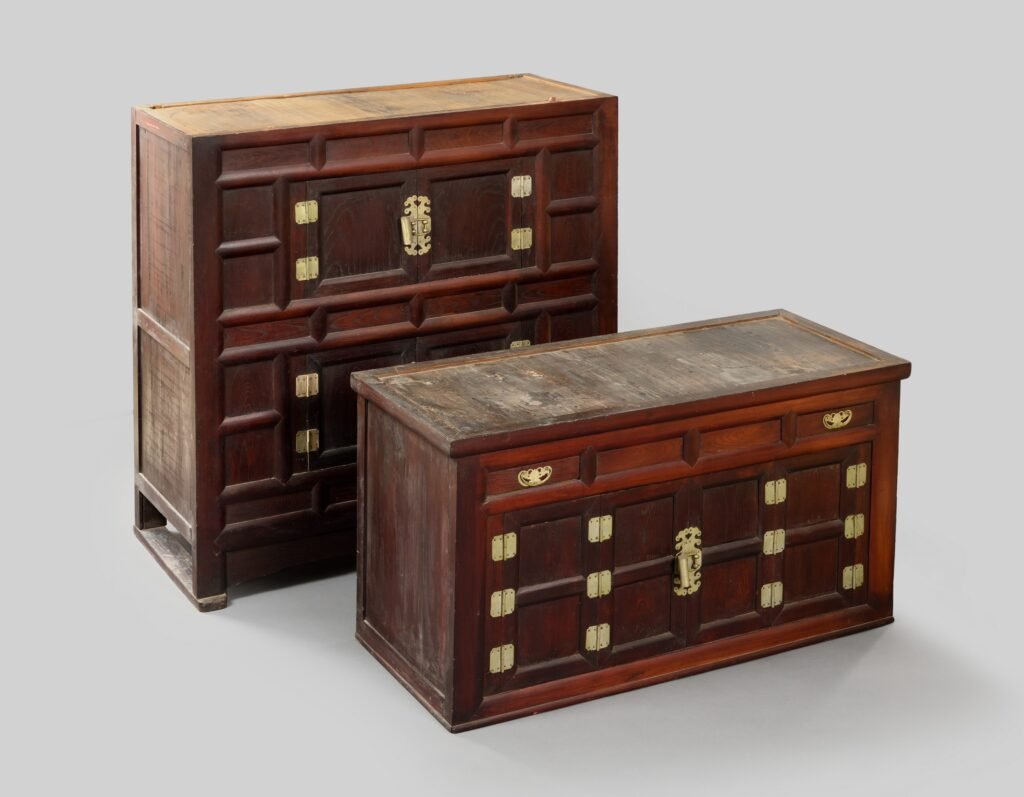
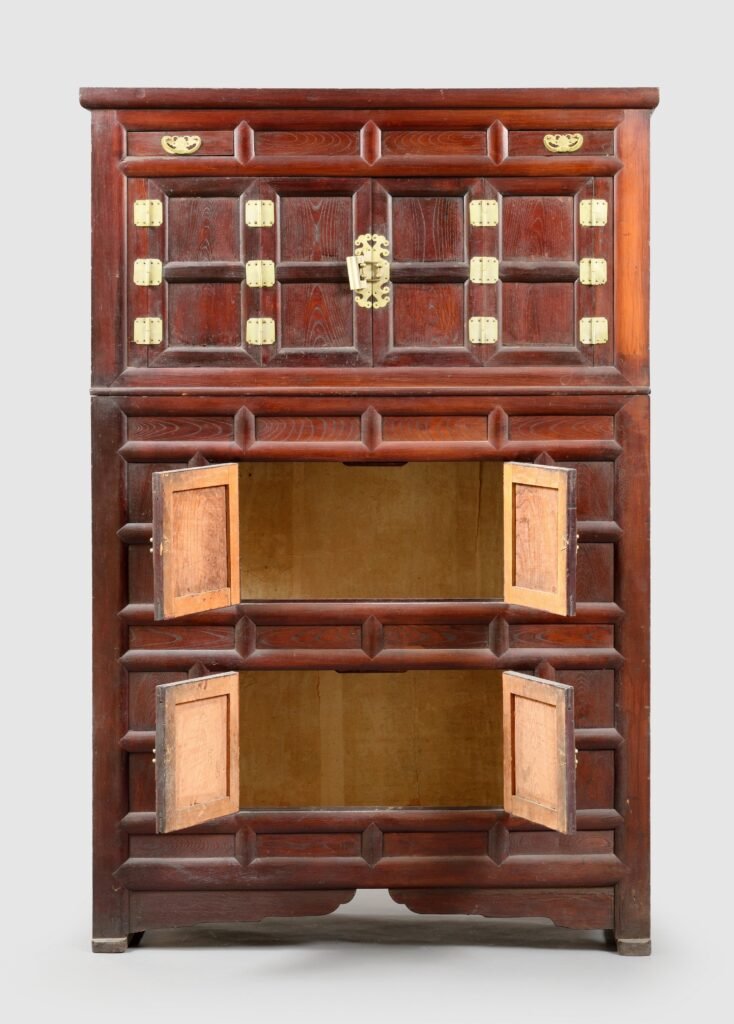
These chests are commonly known as Gyeonggi kitchen chests, as they were primarily produced in Gyeonggi Province, an important furniture-making center and the residence of numerous high-ranking aristocratic households.
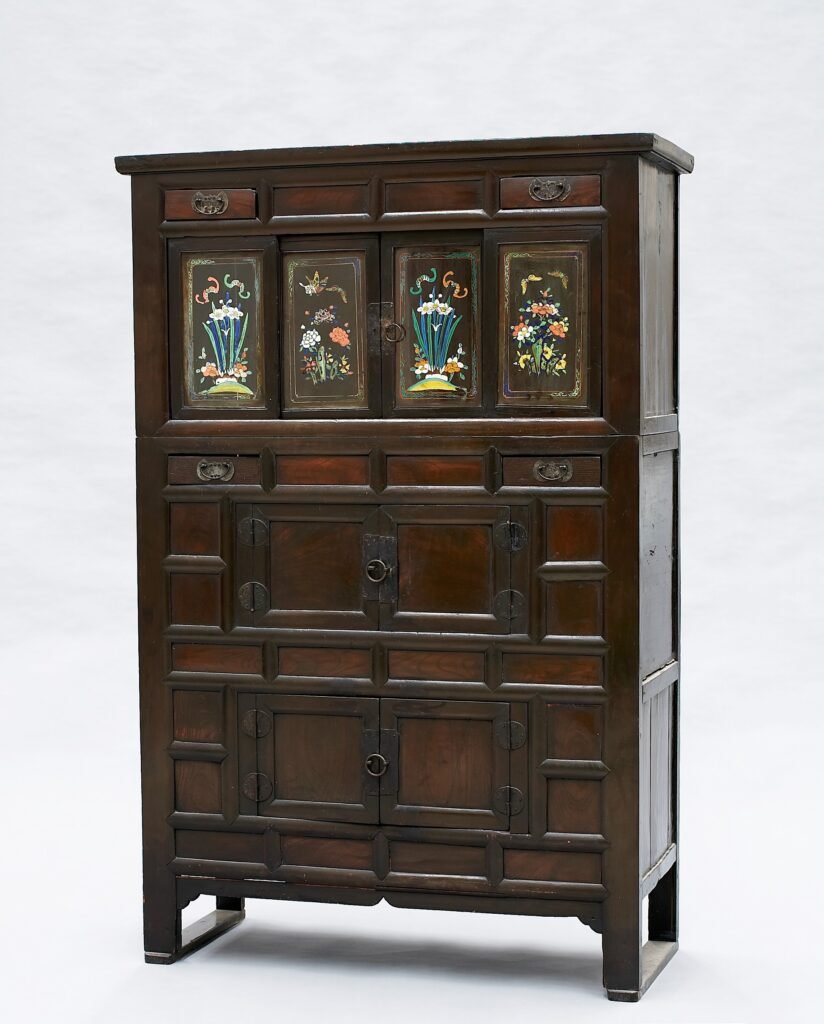
H. 164,5cm, W. 103,5cm, D. 42,8cm.
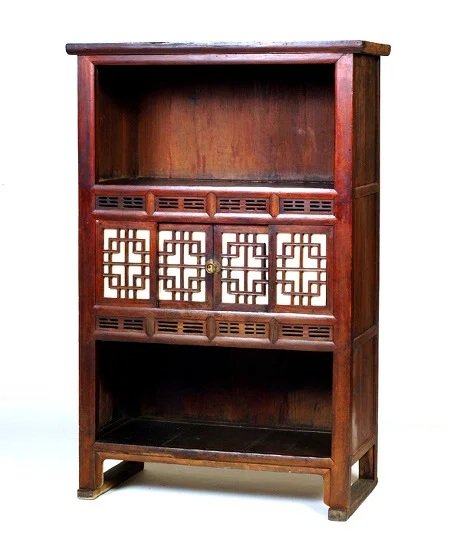
H. 149,2cm, W. 97cm, D. 44,5cm.
Collection: Seoul Museum of History.
Jeju kitchen chest.
Kitchen furniture from Jeju Island differs markedly from the more refined pieces found on mainland Korea. Several factors account for its distinctive proportions and rustic construction.
Traditional Jeju houses differed considerably from those on the mainland. Built of volcanic stone with low thatched roofs designed to withstand the island’s strong winds, they reflected the unique environmental conditions of Jeju. The kitchen was typically a simple workspace with an earthen floor, often damp because of the island’s porous volcanic soil and humid maritime climate.
Unlike the raised wooden floors (maru) common in many mainland houses, the kitchen floor was unsuitable for storing food or utensils directly. As a result, kitchen cabinets were elevated well above the ground. Their unusually long legs served several practical purposes: protecting food and utensils from ground moisture, improving air circulation beneath the cabinet, reducing the risk of mold in the humid climate, and discouraging rodents and insects. The clearance beneath these cabinets often ranges from 50 to 70 cm, considerably higher than that of comparable mainland examples.
Jeju furniture was made almost exclusively for everyday use. Unlike the wardrobes (jang) and wedding chests produced in prosperous regions such as Gyeonggi and Jeolla Provinces, kitchen cabinets remained hidden within the working area of the house and were never intended to impress visitors. Consequently, decoration was kept to a minimum, iron fittings were limited to what was structurally necessary, surfaces were rarely lacquered, and construction emphasized durability rather than refinement.
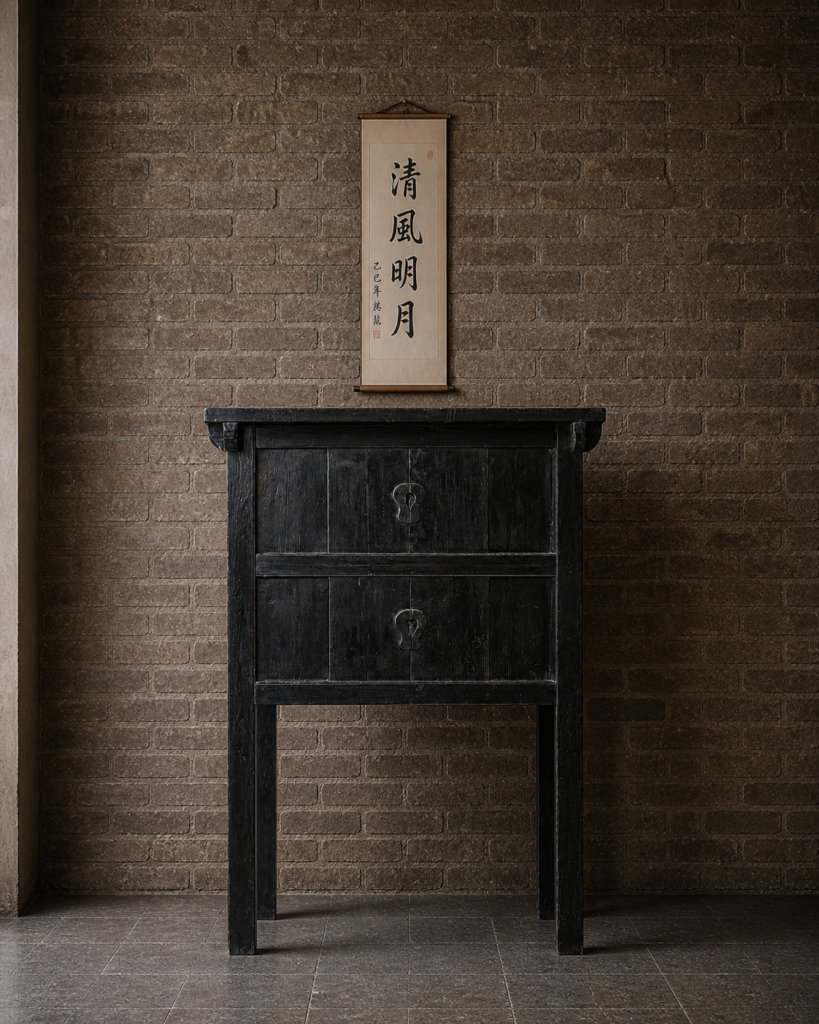
The island also possessed relatively few large hardwood trees suitable for cabinetmaking. Craftsmen therefore relied primarily on locally available timber, including pine and other softwoods, often using whatever boards were readily obtainable. The attractive grain occasionally seen on door panels reflects the careful selection of individual boards rather than the use of costly hardwoods.
The resulting furniture is characterized by thick structural members, broad unadorned panels, and a robust, almost architectural appearance. Jeju’s geographic isolation until the twentieth century also contributed to the development of a distinctive local cabinetmaking tradition, relatively unaffected by the sophisticated woodworking centers of mainland Korea.
One additional feature deserves mention. Unlike the three-tier kitchen chests (samch’ŭng chanjang) of Gyeonggi Province, whose stacked sections could be separated for easier transport, Jeju kitchen cabinets were generally constructed as single, rigid units. Their sturdy, monolithic form further reflects the island’s preference for durability and practicality over portability or elaborate craftsmanship.
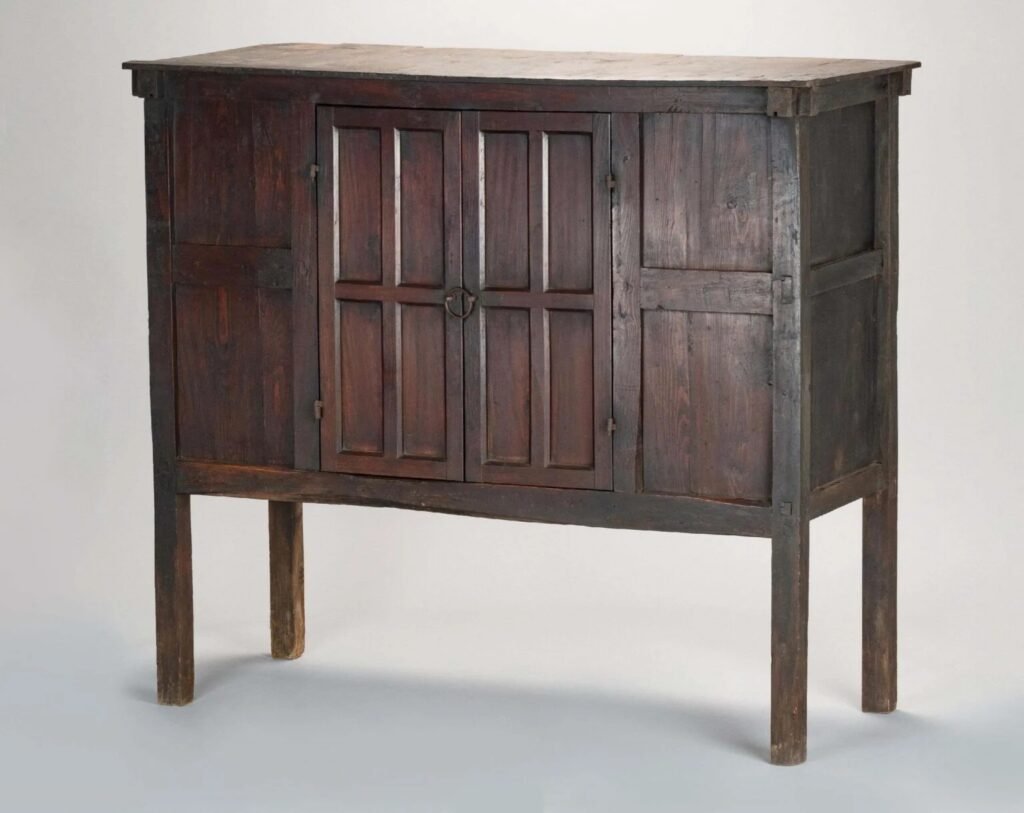
H. 137cm, W. 155cm, D. 63,5cm.
Collection: National Folk Museum, Korea.
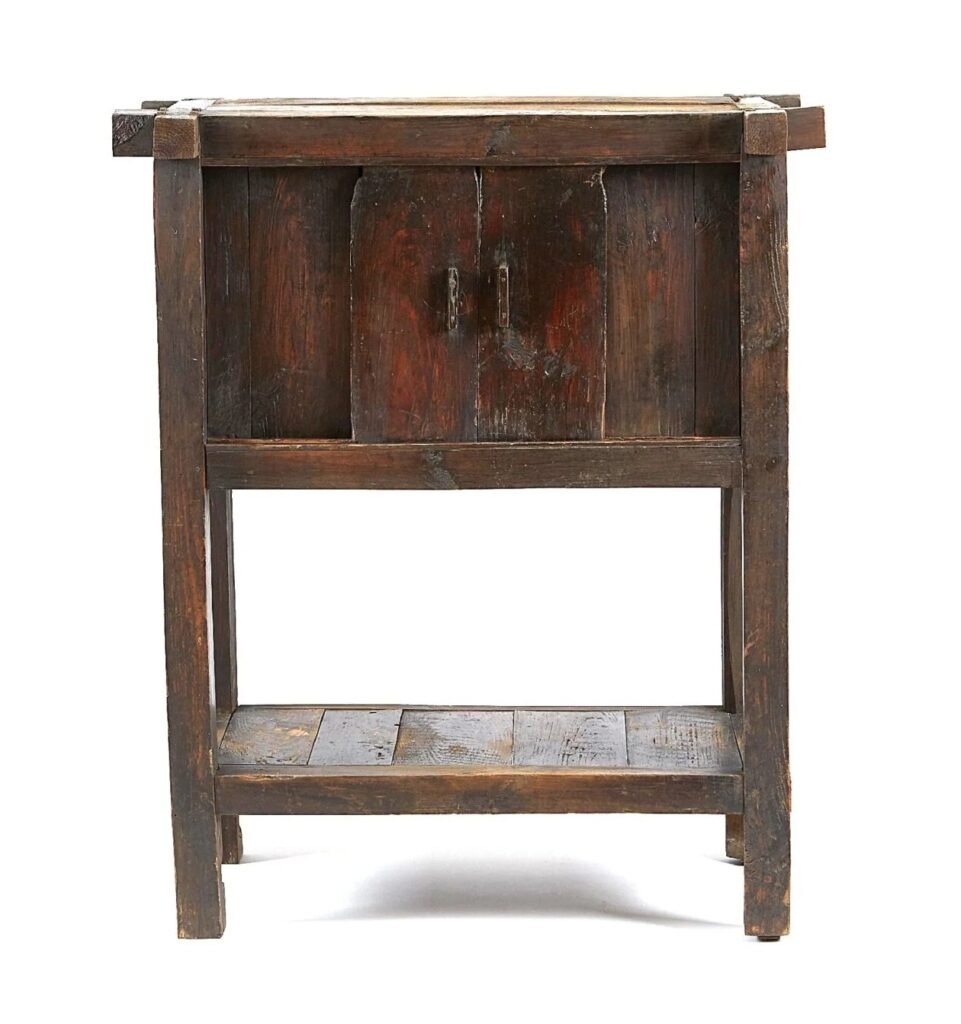
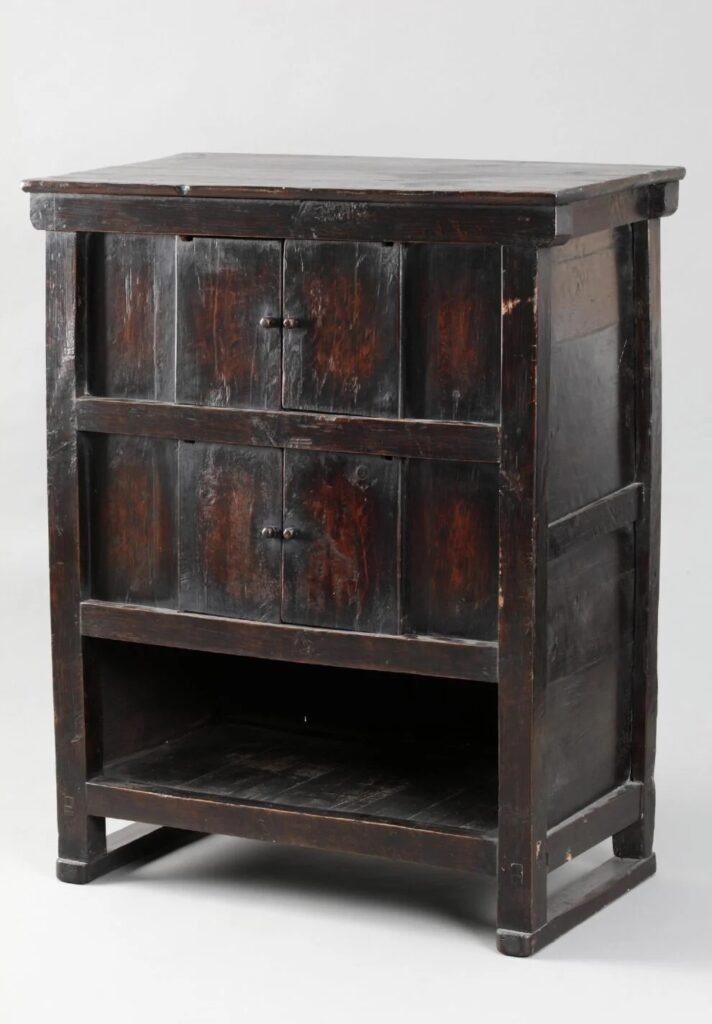
H, 120cm, W. 98cm, D. 53cm.
Collection: National Folk Museum, Korea.
kitchen chests from other provinces.
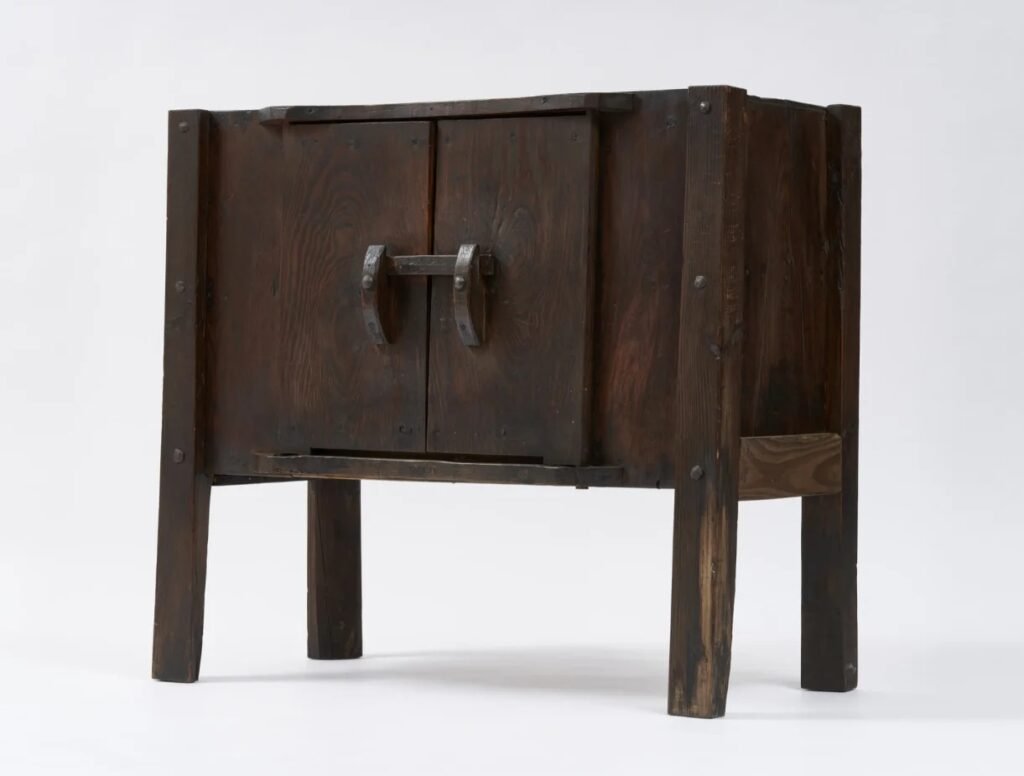
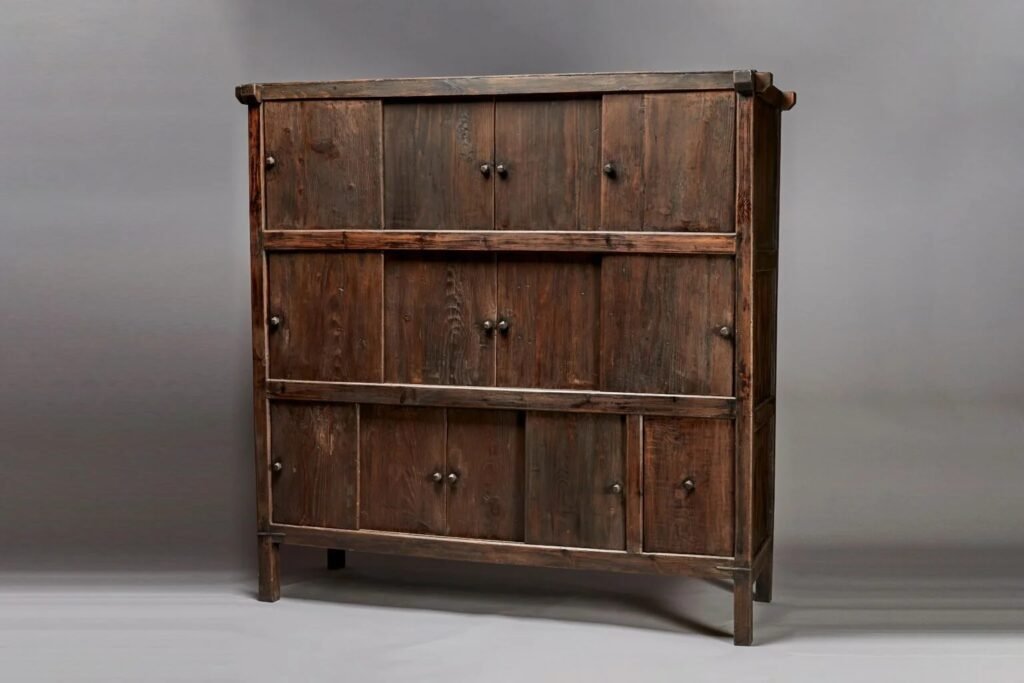
This rustic 19th-century kitchen chest is from Gangwon Province Built from thick pine planks with integrated high legs, it was designed to protect stored food and utensils from moisture and pests. The front panels are made of beautifully figured zelkova wood, contrasting with the sturdy pine frame. Exposed wooden pegs and heavy iron fasteners emphasize durability, while the simple hand-forged iron handles and sliding lock reflect a purely utilitarian design. Over time, the natural finish has developed a rich dark-brown patina.
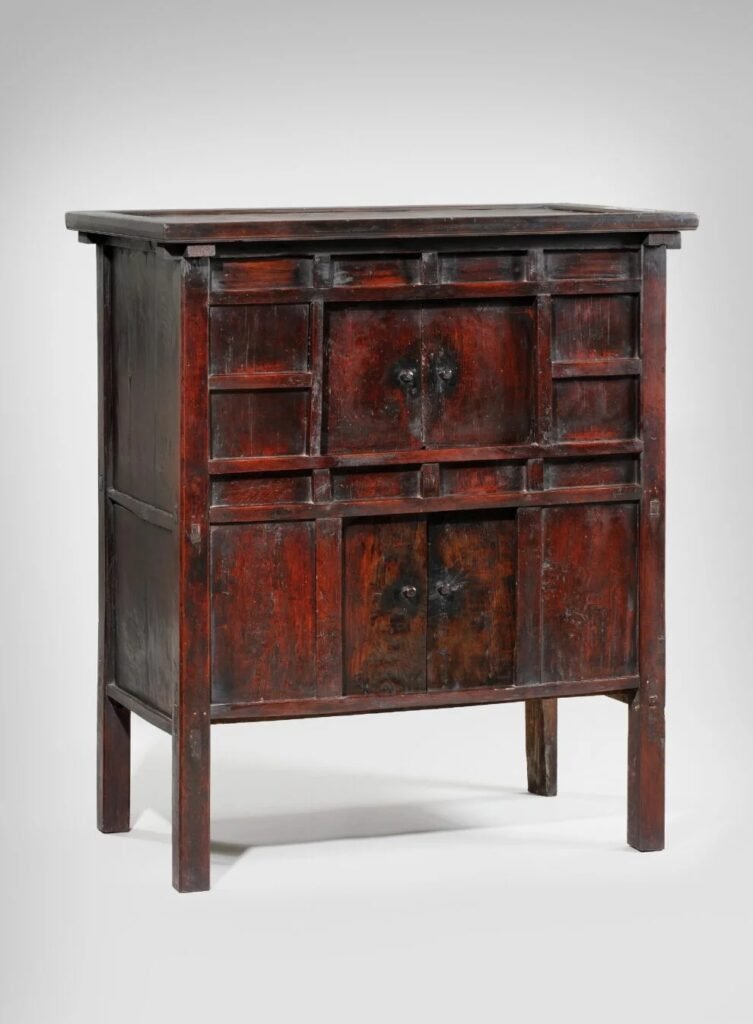
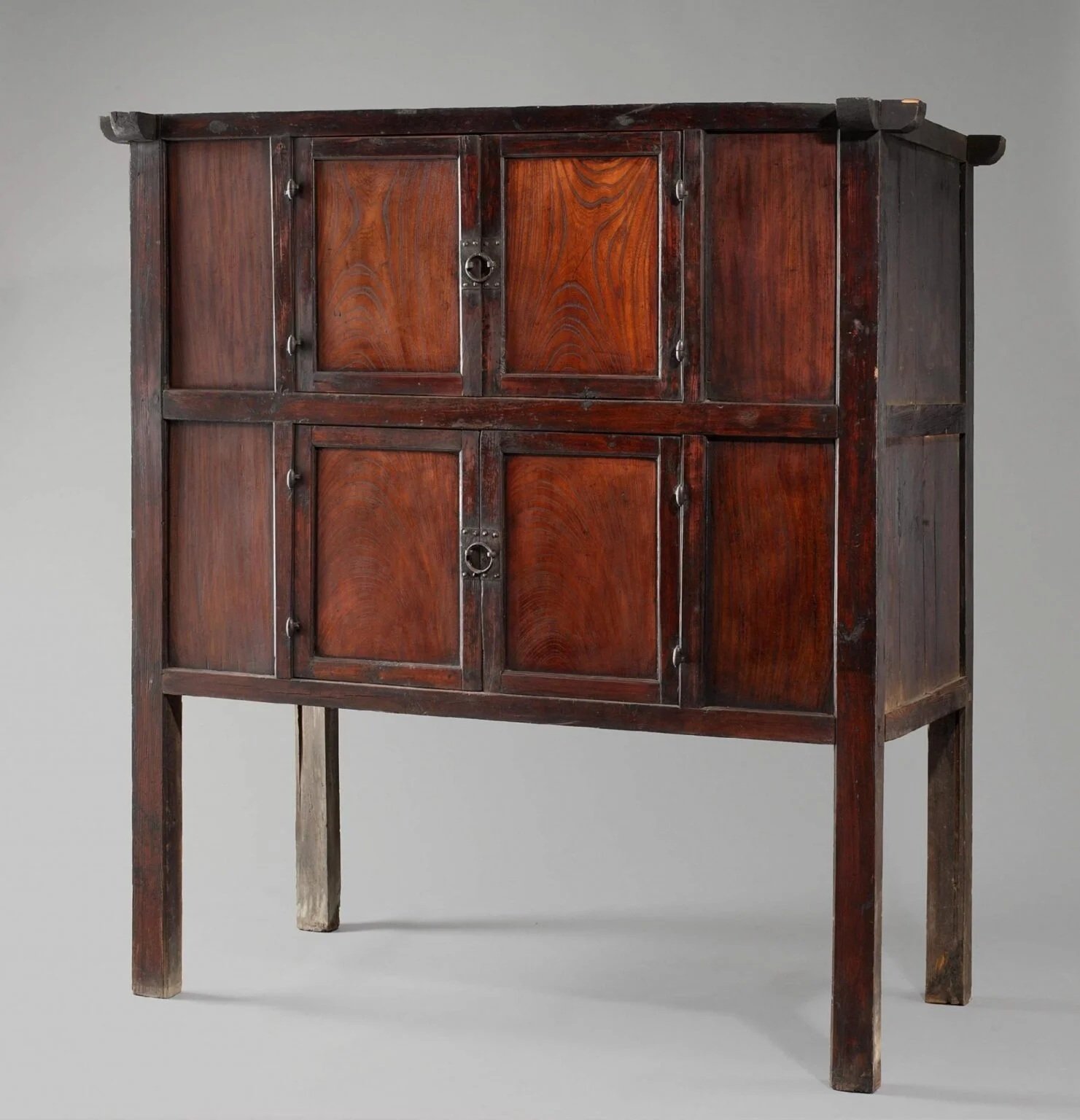
Kitchen chest from Gyeongsang Province, probably dating to the late 19th century. The chest stands on four tall, square legs that raise the cabinet well above the floor. Unlike the heavy, thick-legged kitchen chests of Gangwon Province, the legs and frame are more slender, giving the piece a lighter and more refined appearance.
The façade is organized into two tiers. The upper section contains a pair of central cabinet doors flanked by small square and rectangular compartments, while the lower section is composed of a larger pair of doors framed by broad side panels. Horizontal rails divide the front into well-proportioned sections.
Construction is robust but relatively refined. The frame is made from sturdy pine, while the front panels appear to be of hardwood, possibly zelkova. The hardware is intentionally understated. Small hand-forged iron ring pulls and simple iron fittings provide the only decoration, reflecting the utilitarian purpose of the chest.
THE SOBAN.
The soban (소반, small individual dining tables) has been widely produced all over the Korean peninsula. As the bandaji which has been studied in a publication on this website, soban production became concentrated in regional workshops, each developing characteristic construction methods, proportions, and decorative details. Although more than thirty local styles have been identified, only a dozen represent major production centers.
One interesting aspect of Korean soban is that, unlike blanket chests (bandaji), their regional origin can often be identified with considerable confidence.
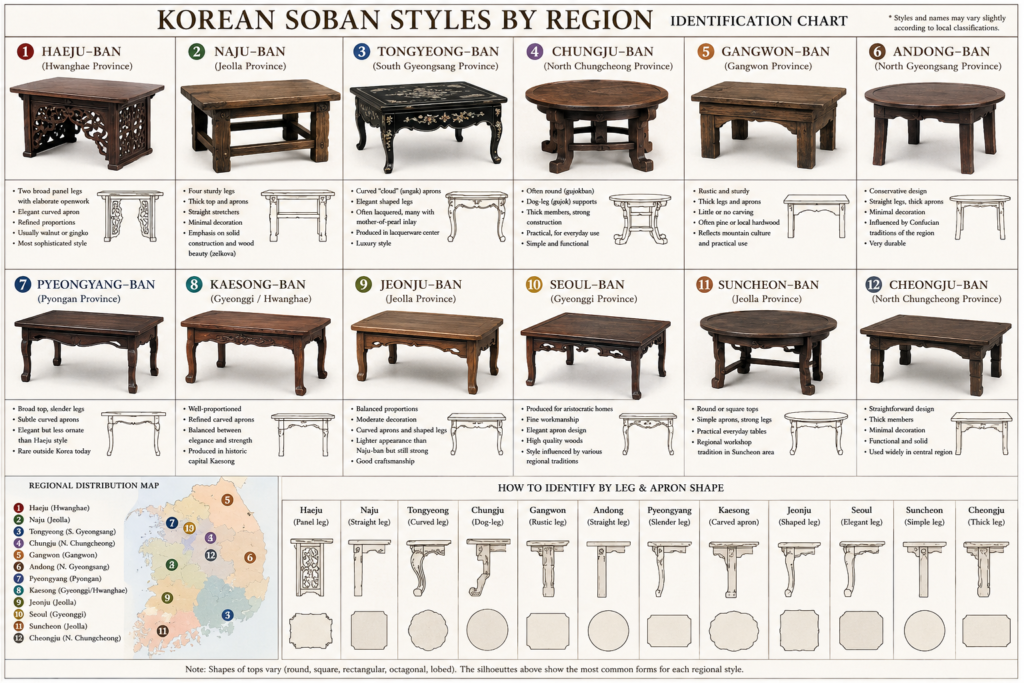
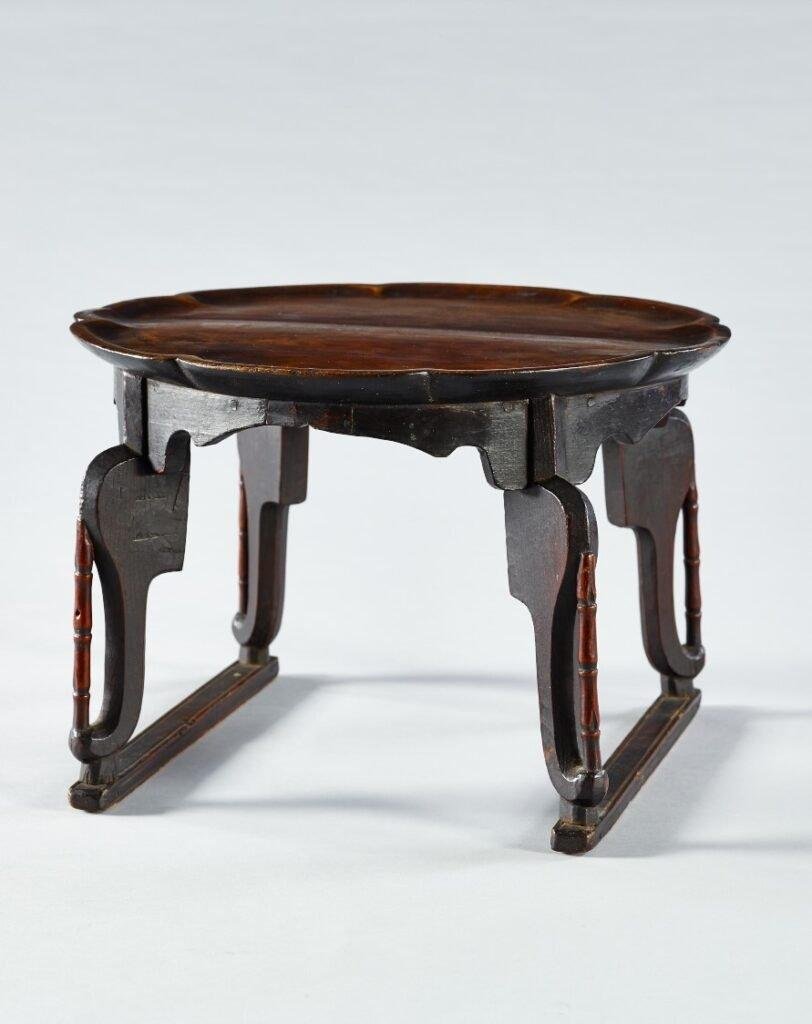
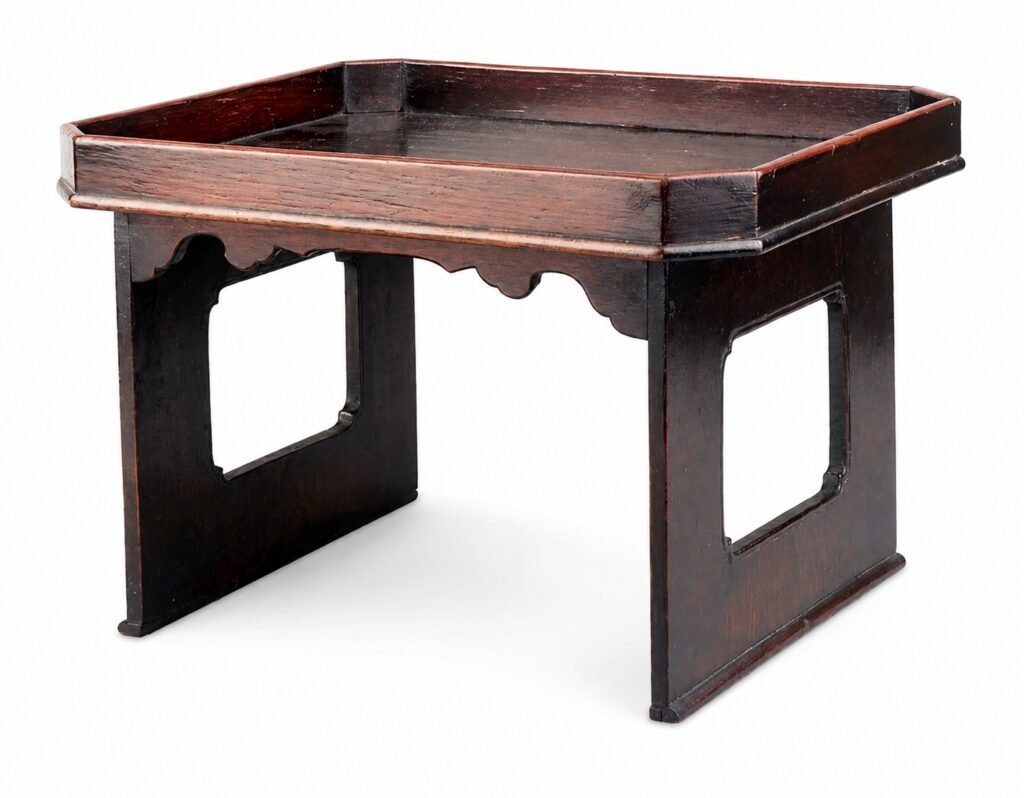
Haeju Soban: Hailing from Hwanghae province in the northern part of the country, the classic Haeju-style dining table ditches the traditional four separate legs. Instead, it features two solid, thick wooden panel side-legs that are heavily carved with open geometric shapes or cutout cloud motifs.
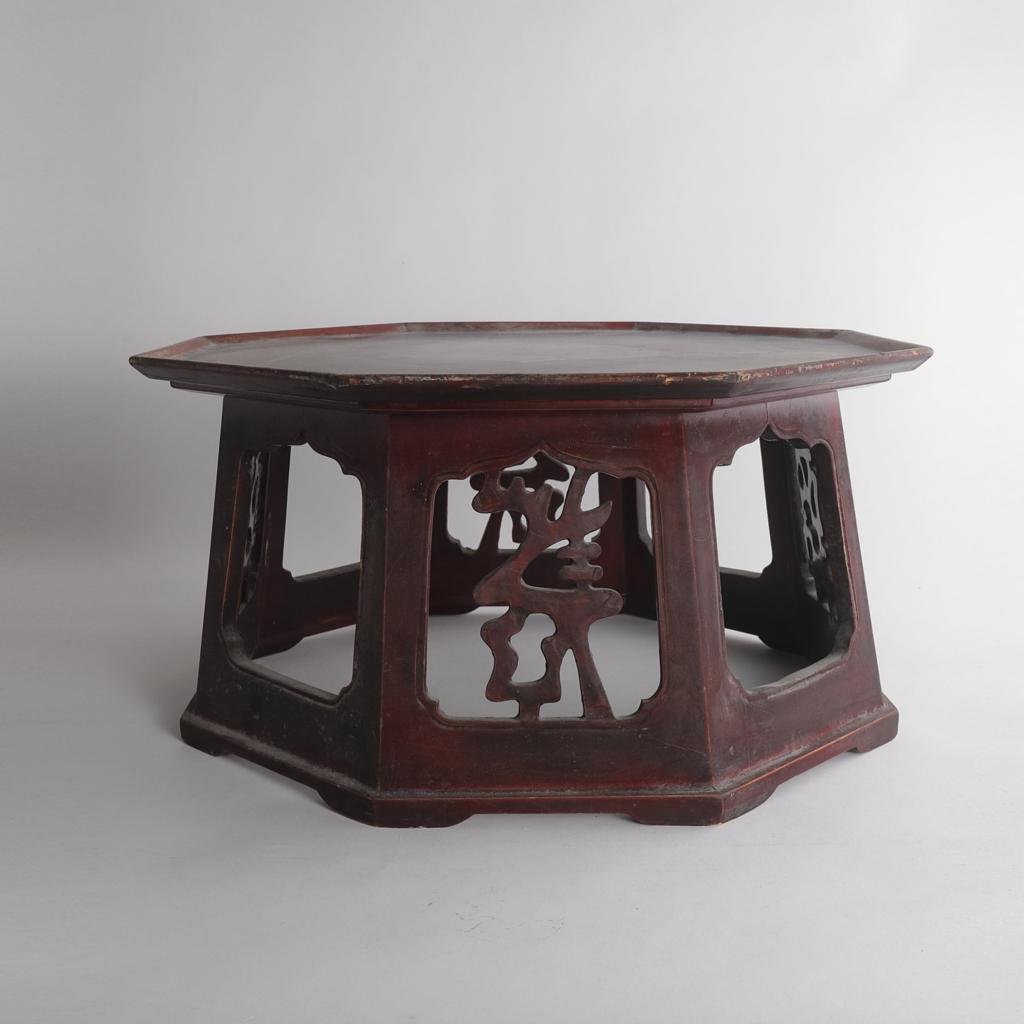
Collection: ROCANIIRU Kyoto Antique Art Gallery.
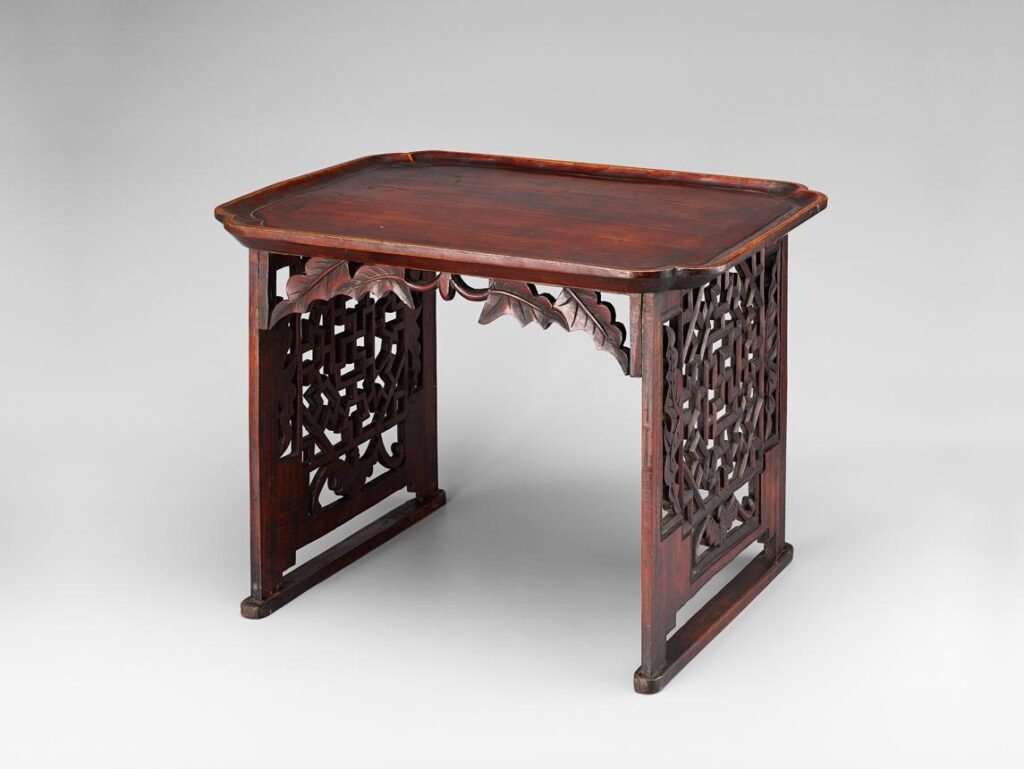
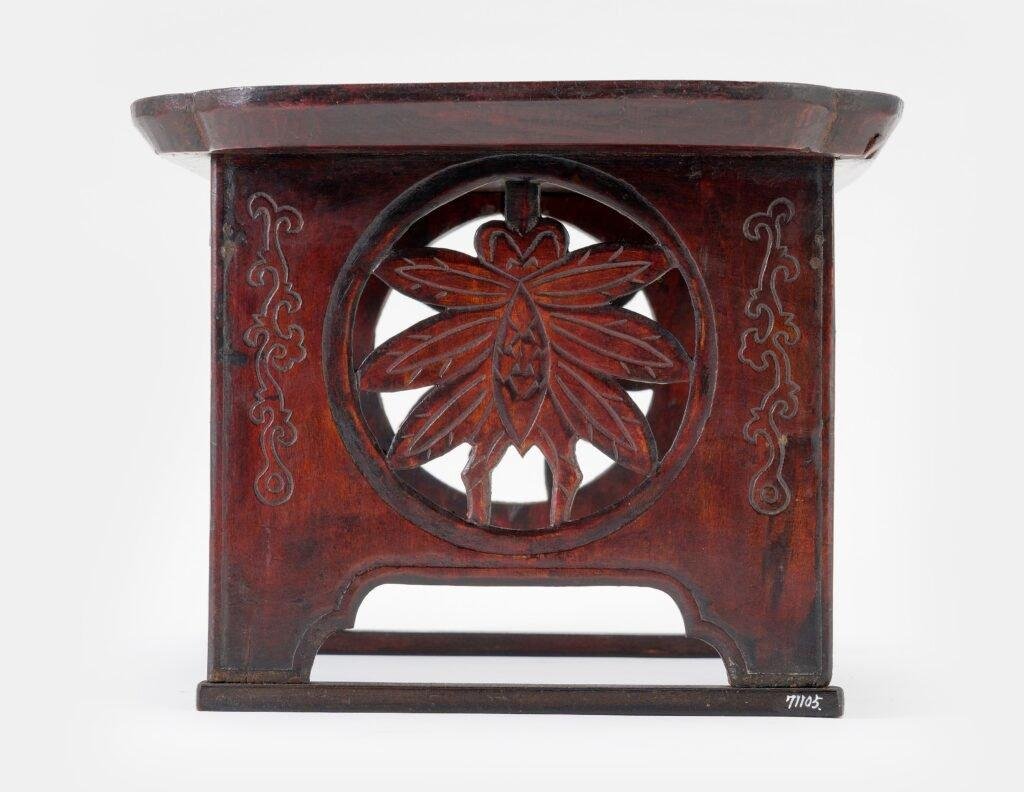
Probably the best-known type. Large rectangular or rounded tops, graceful outward-curving aprons with openwork, elegant proportions, and refined joinery. Often made from elm or zelkova. Considered among the most sophisticated soban.
Naju Soban – Naju area, Jeolla Province: Distinguished by a very thick, solid top and powerful construction. Four sturdy legs joined by stretchers. Minimal decoration emphasizes the beauty of the wood. Often made from zelkova.
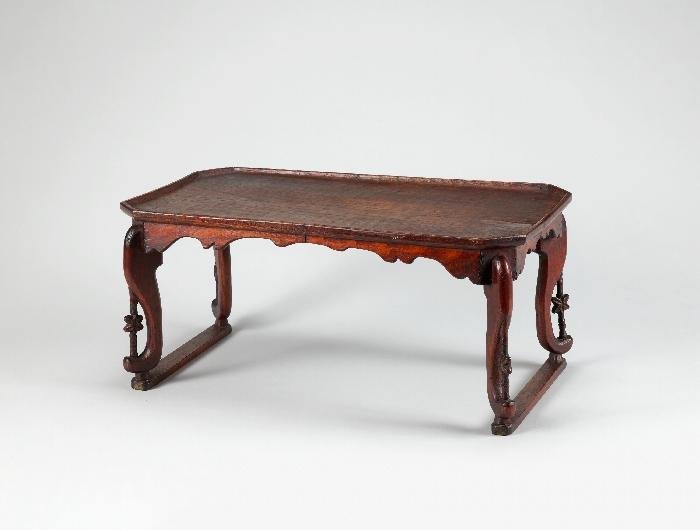
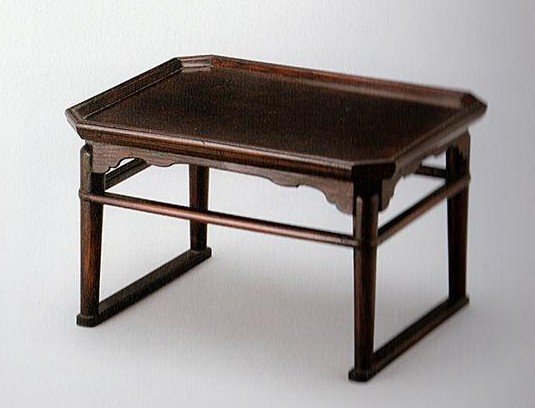
Tongyeong Soban – South Gyeongsang Province : Unlike the panel-legged northern tables, a southern table from Tongyeong features four distinct, elegant legs that curve outwards subtly, often carved to mimic a sleek tiger’s leg (hojokban).
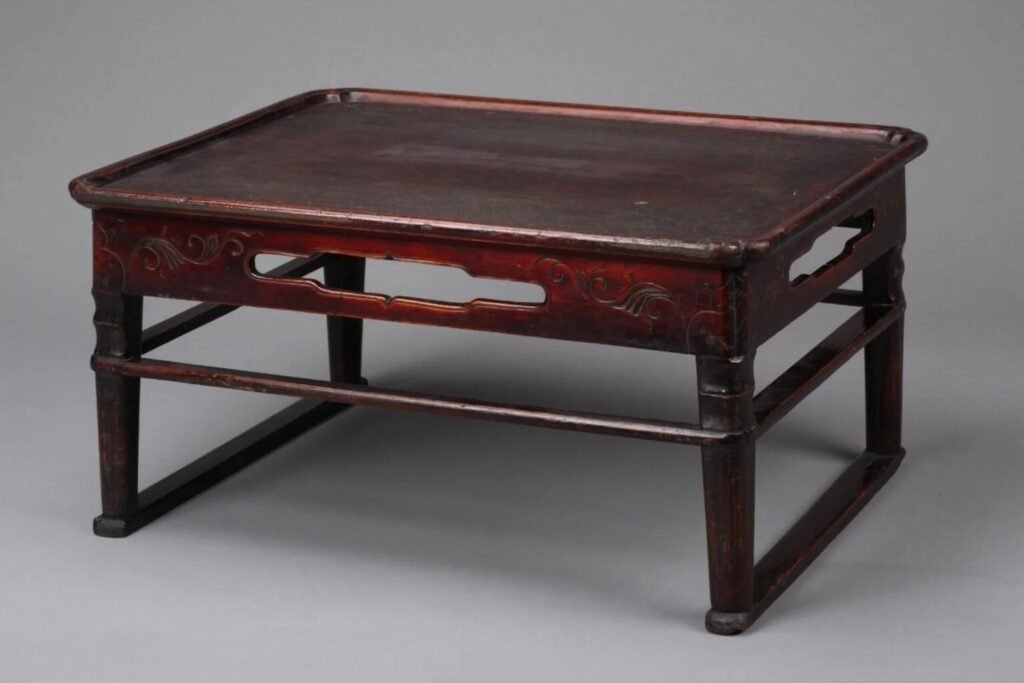
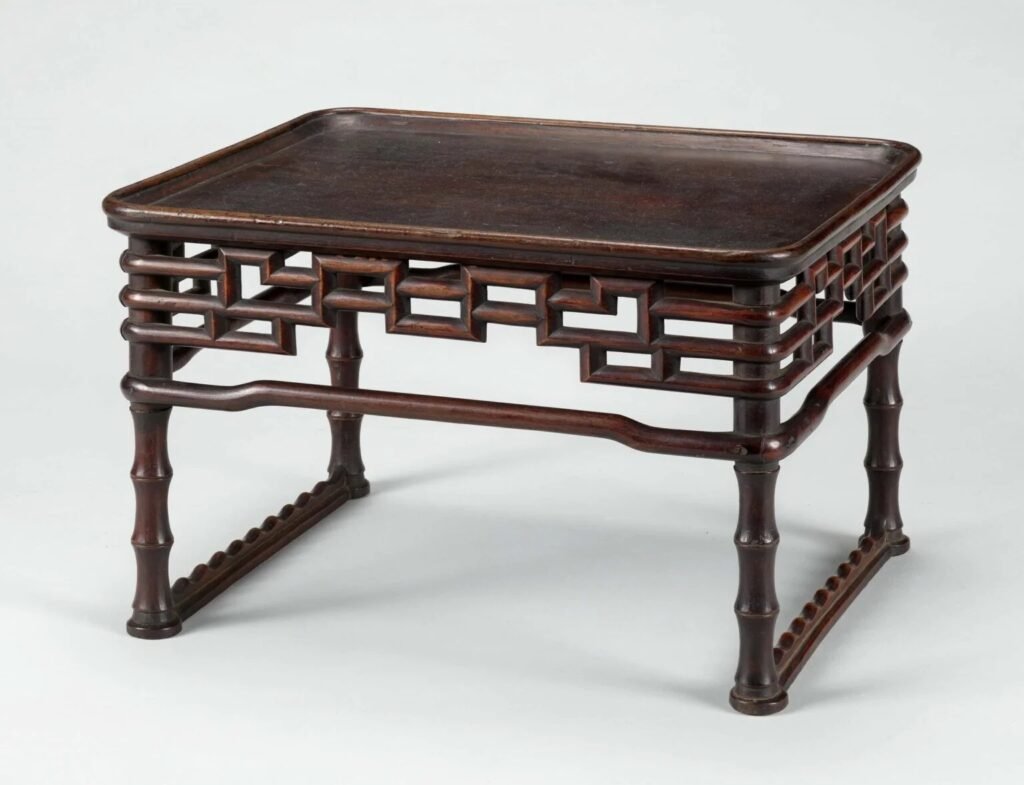
Produced in Korea’s greatest center of lacquerware and mother-of-pearl inlay. Many examples are richly lacquered, with finely shaped legs and elegant openwork aprons. Luxury versions often feature najeon (mother-of-pearl).
Chungju Soban – North Chungcheong Province: Heavy, practical construction with thick legs and restrained decoration. Durable tables intended for everyday use rather than display.
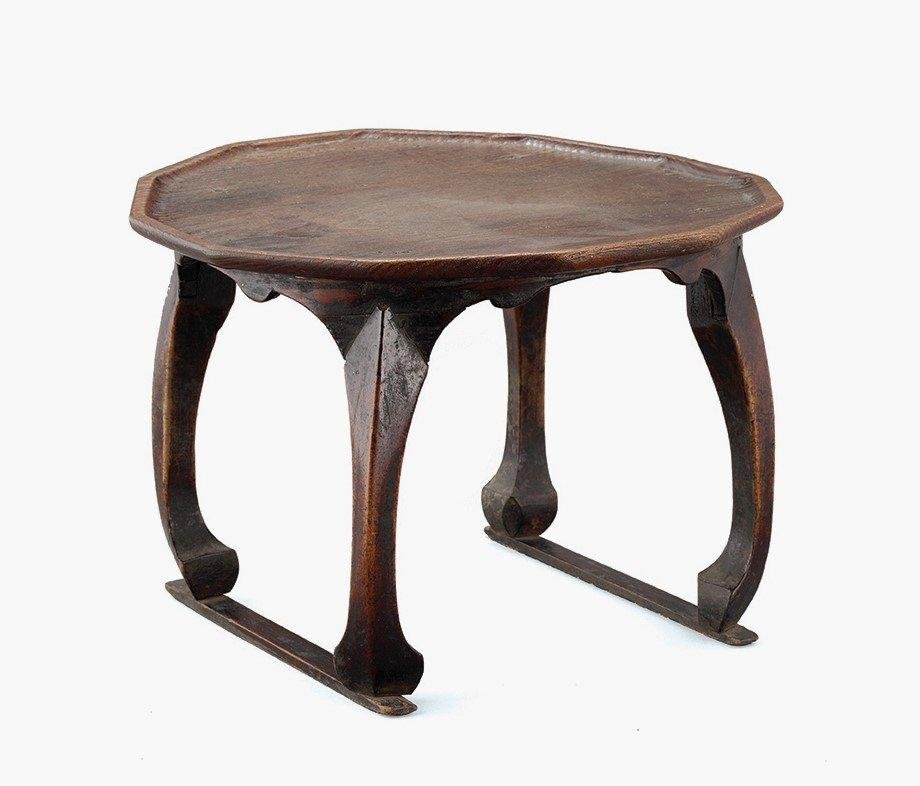
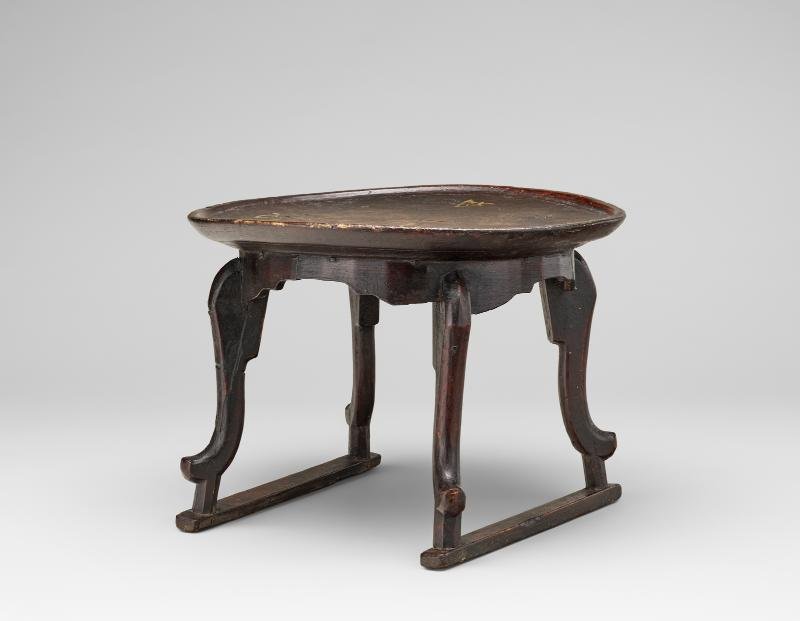
Gangwon Soban – Gangwon Province: Also known as “Gangneung” Soban. Rustic appearance with thicker members, little ornamentation, and emphasis on functionality. Often made from local pine or hardwoods.
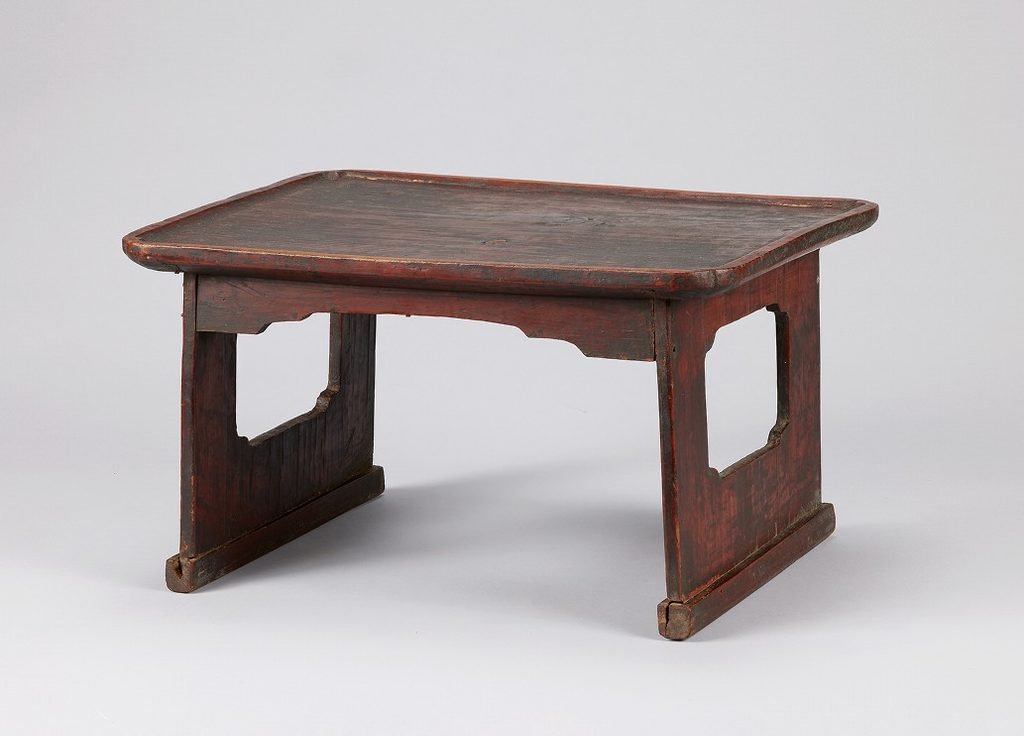
Collection: Chuncheon National Museum.
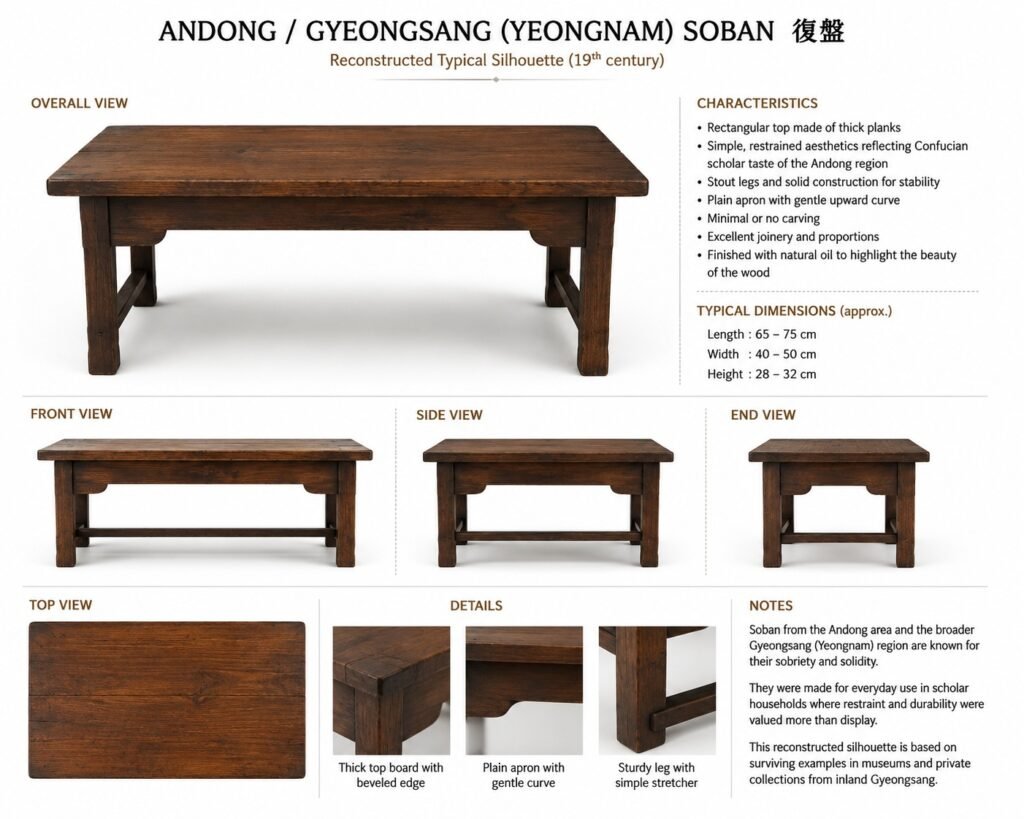
Andong or Yeongnam Soban – North Gyeongsang Province: Conservative design with thick members and simple geometric lines. Reflects the Confucian traditions of the region.
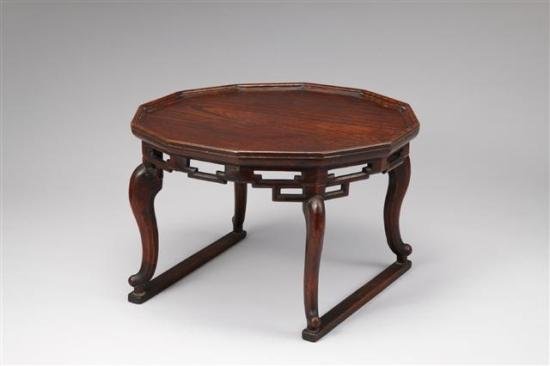
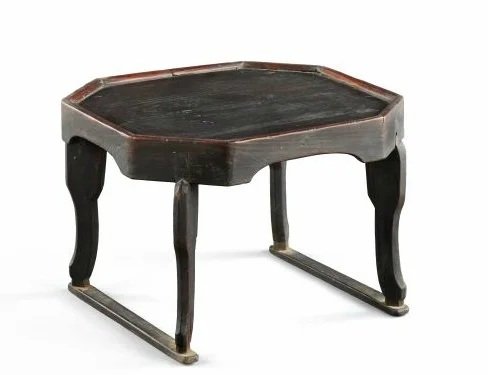
Pyongyang Soban – Pyongan Province: Images that are explicitly identified as Pyongyang (P’yŏngyang) soban are extremely rare. Unlike Haeju, Naju, or Tongyeong soban, Pyongyang was not recognized as a major production center, and surviving examples are seldom labeled by provenance. Most museum collections classify them simply as hojokban (tiger-leg tables) or gujokban, without assigning them to Pyongyang.
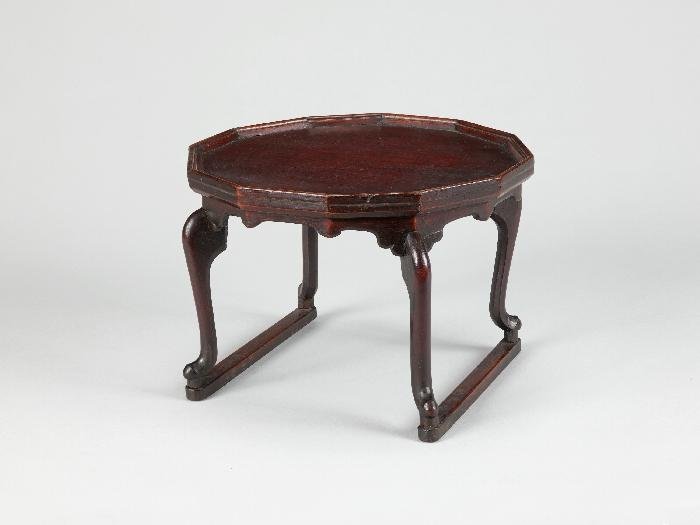
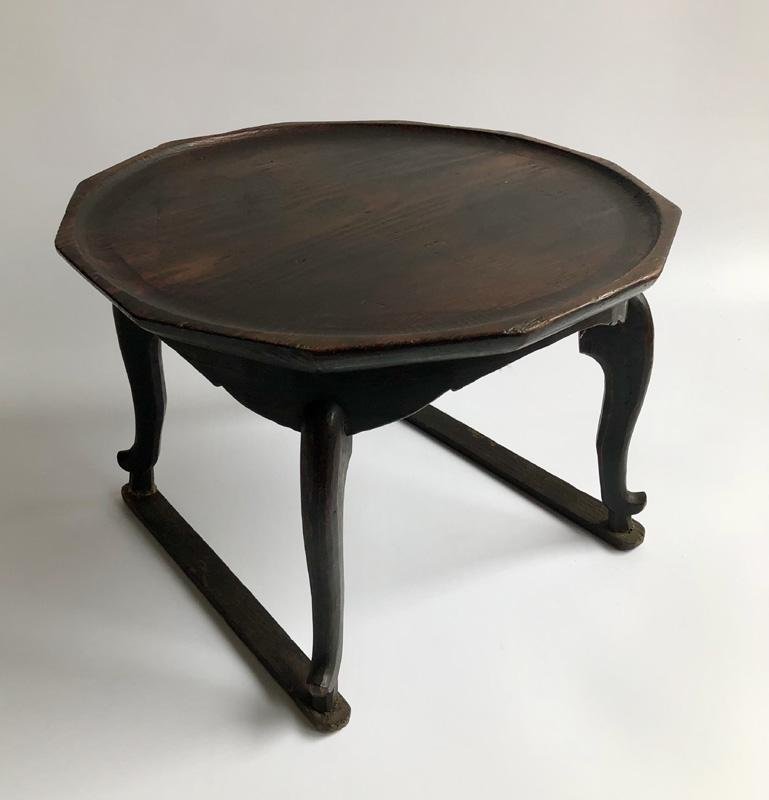
Main characteristics: Broad top supported by relatively slender legs. Elegant but less ornate than “Haeju” types. Rare seen outside Korea today. The twelve-sided (dodecagonal) top is common. Legs tend to be slender and gracefully curved, similar to the hojokban form but less exaggerated than southern examples. Decoration is minimal, with an emphasis on dark lacquer or oil finish. Construction reflects the northern preference for solid, balanced proportions rather than decorative carving. Woods include zelkova, ginkgo, maple, and pine, depending on local availability.
Kaesong Soban – Gyeonggi/Hwanghae border: Well-proportioned tables, sometimes featuring refined carved aprons. Construction reflects the city’s long tradition of luxury craftsmanship.
Jeonju Soban – Jeolla Province: Balanced proportions, moderate decoration, and refined woodworking. Usually lighter than “Naju” examples while retaining sturdy construction.
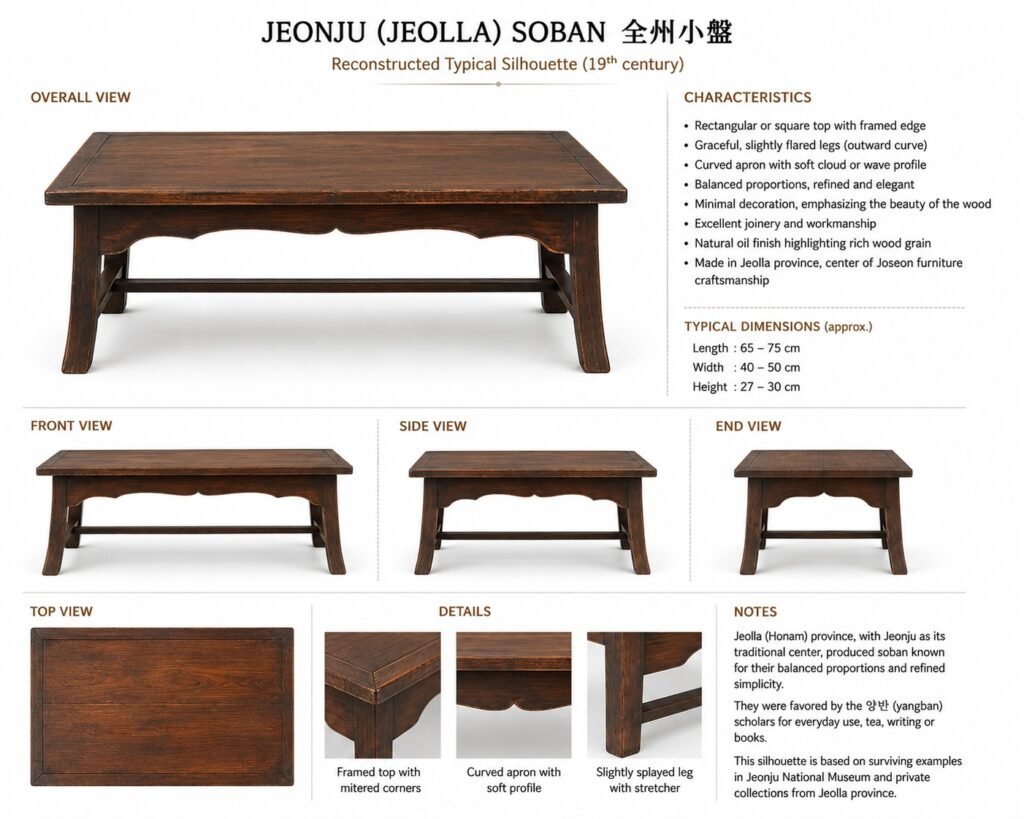
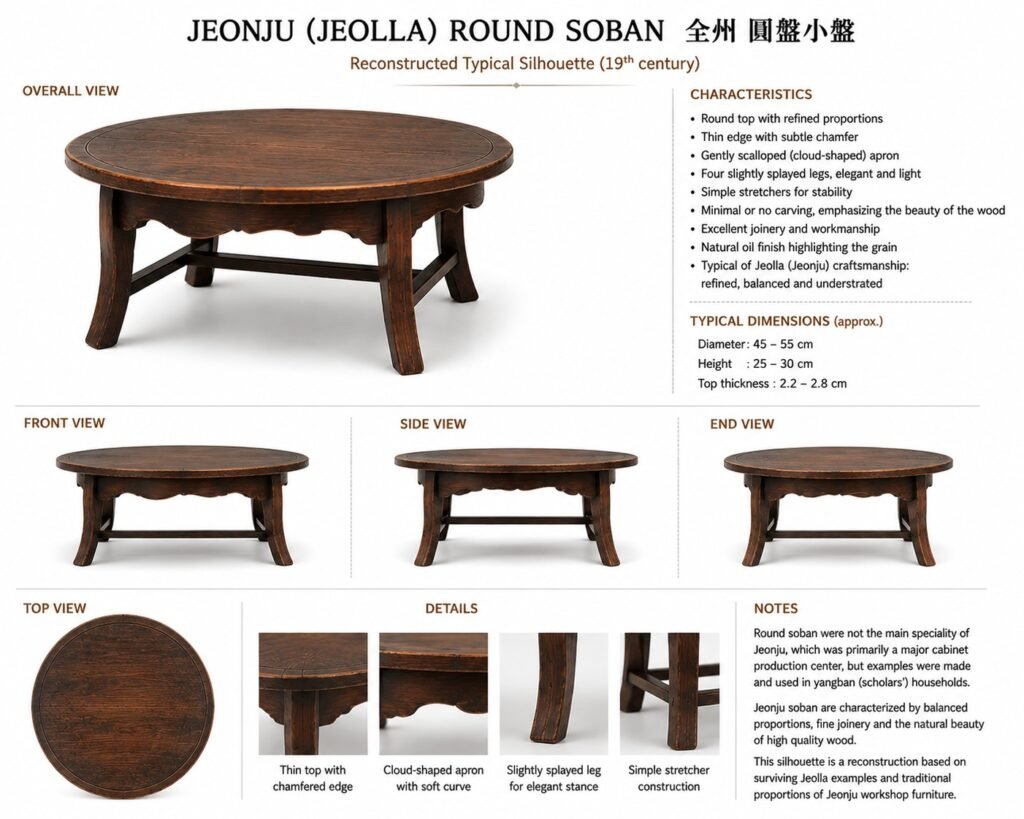
Seoul Soban – Gyeonggi Province: Authentic Seoul (Gyeonggi) soban are among the rarest regional types because Seoul was not a major production center like Haeju, Naju, or Tongyeong. Surviving examples are generally elegant, restrained, and intended for upper-class households. Main characteristics are fine workmanship, balanced proportions, and high-quality woods. Designs often combine characteristics of neighboring regions.
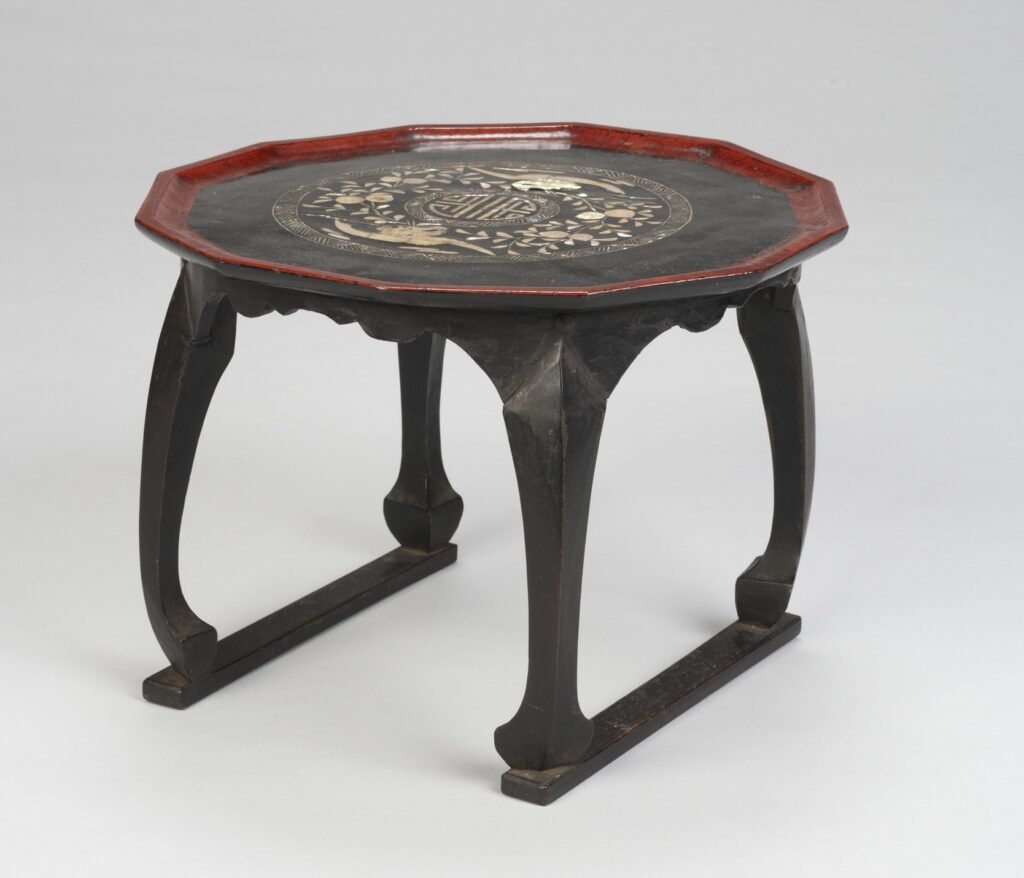
Main characteristics are: Octagonal (팔각반) or rounded polygonal tops are particularly common. Elegant tiger-leg (호족반, Hojokban) supports with gentle curves rather than exaggerated carving. Minimal ornamentation, reflecting the refined taste of the yangban elite. High-quality hardwoods, especially zelkova (느티나무), occasionally walnut or maple. Dark transparent lacquer rather than heavy decoration.