
This bibliography brings together books, museum catalogues, academic studies and online resources relating to traditional Korean furniture. Particular attention is given to furniture types, regional characteristics, materials, construction, metalwork, lacquer techniques and museum collections.
The majority of books and studies on antique Korean furniture have been published in the Korean language, with only a few available in English.
GENERAL
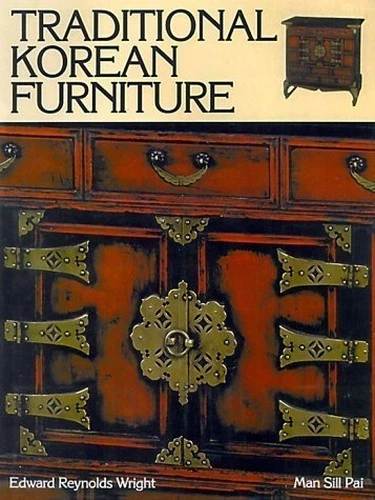
Edward Reynolds Wright – Man Sill Pai.
Tokyo, Kodansha International 1984.
Though there has long been a need for a clear guide to the intricacies of this marvelous furniture, this is the first systematic survey of Korean furniture in any language. The 152 plates depict a wide variety of objects of the highest quality, artless folk as well as flamboyant aristocratic pieces, and set a standard for appreciation and evaluation. The 106 figures illustrate the research of the authors into traditional Korean houses and lifestyles as well as woods, joinery, metal fittings, and woodworker’s tools. This pioneering book provides a grand overview of one of the world’s great furniture traditions.
English language.

An important early reference on traditional Korean wooden and lacquer furniture. This large-format volume illustrates approximately 260 examples, including chests, cabinets, bookcases, tables, soban and lacquer furniture. Particularly valuable for the study of late-Joseon furniture forms, proportions, materials and decorative techniques. Although published in Korean, its extensive photographic documentation makes it a useful visual reference for collectors and researchers. Korean language.

Major reference work documenting 223 examples of traditional Korean wooden furniture from museum collections and field research. Includes detailed photographs, measured drawings, materials and construction, regional classifications of bandaji and metal fittings, jang, nong, soban, woods, joinery, woodworking tools and dendrochronological analysis.


Vol. 11, No4. In Search of Korean Furniture by STEPHEN MARKBREITER. English language.

Traditional Korean Furniture From the Ewha Womans University Museum, Seoul by YULING HUANG and SUNHWA RHA. English language.

Edited by Peter Moss. FormAsia Books Ltd.,
Hong Kong, 2007.
ISBN 978-962-7283-99-7. Approximately 308 pages, large-format hardcover, extensively illustrated in color. There was also a 2007 Thames & Hudson edition, ISBN 978-0-500-51378-1. Language: English. It covers furniture from India, Indonesia, Thailand, China, Tibet, the Philippines, Korea and Japan. The Smithsonian catalogue confirms that the contents include separate geographical sections followed by useful sections on woods and tools. English language.

Jo Sook-Kyung. Publisher Mijinsa, April 30, 2019. ISBN: 9788940805787. 352 pages,
A comprehensive historical study tracing Korean furniture from prehistoric times through the Three Kingdoms, Unified Silla, Balhae, Goryeo and Joseon periods to the Japanese colonial era. Based on surviving objects, archaeological evidence, historical documents and pictorial sources. Includes sections on domestic culture, Goryeo wood and lacquer crafts, Joseon furniture and joinery, with 233 illustrations and construction drawings. Korean language.

Publisher: Seoul Selection, September 2013. Korean Antique Furniture & Accessories introduces the various types of furniture and accessories commonly seen during the Joseon era (1392-1897) and provides the associated historical, social, and cultural background to help see how Korean furniture came to be. Also presented are the tools, wood, and techniques often used by traditional woodworkers. Rich in illustrations and color photographs, this book will help the reader better understand Korean furniture and better appreciate its role and place within Korean culture. English language.


Nam Kyung-sook (남경숙), Kim Ja-kyung (김자경), Park Kyung-ae (박경애) & Lee Han-na (이한나)
Hanyang University Press, Seoul, 2008.
242 pages. ISBN 978-89-7218-343-3. Korean language. Published by Hanyang University Press, Korean Traditional Furniture is an academic and systematic study of traditional Korean furniture, with particular emphasis on the furniture of the Joseon period. The book developed from research undertaken as part of a 2004 Korean cultural-content project and draws upon historical publications as well as furniture preserved in museum collections. Rather than concentrating primarily on individual masterpieces, the authors examine Korean furniture within its architectural, social and technical context. The study begins with traditional Korean domestic space and its relationship to furniture before presenting the principal furniture types. It then examines construction in considerable detail, followed by decoration, materials, finishes and traditional manufacturing processes.

Park Young-gyu, a professor of Media Design at Yongin University’s College of Culture and Arts. It introduces Korean traditional wooden furniture, which has been continuously receiving attention as a representative craft of refined beauty. It was compiled based on accurate measurements to properly inherit and reproduce traditional wooden furniture. It is composed mainly of Sarabang furniture, and bedroom furniture and kitchen furniture are attached. Drawings and details of traditional wooden furniture. Korean language.


Park Young-Kyu (박영규)
Sam Seong Publishing Co., Ltd., Seoul, 1982.
First edition. 367–368 pages. Korean text with English summaries. Published in 1982, Park Young-Kyu’s Korean Wood Furniture is an extensive study of traditional Korean wooden furniture and craftsmanship. The large-format volume combines the study of finished furniture with detailed documentation of construction, materials, metal fittings, woods and traditional woodworking tools. The book is exceptionally rich in visual documentation. It contains 30 colour plates and a very large number of black-and-white photographs, diagrams and drawings. Particularly noteworthy are approximately 590 photographs devoted to furniture hardware, together with colour samples illustrating different woods and a catalogue of tools traditionally employed by Korean furniture makers.

Yoon Bokcha, Chi Soon & Park Youngsoon
Shinkwang Publishing Company, Seoul, 1988.
First edition. ISBN 978-89-7069-146-6.
English language. The book is particularly useful because it does not treat furniture simply as a collection of decorative objects. As its title suggests, it places furniture within the broader context of traditional Korean culture and domestic life, helping the reader understand how furniture developed in response to Korean architecture, customs and patterns of everyday living. Because it was published nearly four decades ago, some terminology, romanization, dating and classifications should be compared with more recent Korean museum publications and academic research. Nevertheless, it remains a valuable specialist reference, particularly because it was written for an English-reading audience.


(우리 목가구의 멋)
Author: Kim Mi-ra (김미라) Publisher: Borim Press, South Korea Publication date: April 30, 2007 Series: Borim Korean Art Museum, Volume 6 Pages: 72.
ISBN: 9788943306441. Interesting for readers beginning their study of Korean furniture.
Its main strength is the visual presentation of important Joseon furniture types. However, at only 72 pages, it should be regarded as an introductory illustrated reference rather than a comprehensive study of regional attribution or construction techniques. Korean language.

Visiting professor, Department of woodworking and furniture design, Hongik University. Publisher: National Folk Museum of Korea, Seoul. 2004. Korean text begins on page 200; the English version is listed from page 209. The article forms part of a 335-page museum publication devoted to traditional Korean wooden and paper objects. An academic study of traditional Korean wooden crafts by Kim Samdaeja, visiting professor at Hongik University. The article forms part of a larger museum publication examining Korean wooden furniture and everyday objects, including soban, bandaji, and furniture associated with the scholar’s room. The publication also contains studies of regional furniture forms and the symbolic meaning of decorative motifs.
A useful reference for research into traditional Korean woodworking, furniture design, and material culture. These subjects make the publication particularly valuable for identifying furniture types and understanding their historical and cultural context.
FURNITURE TYPES & REGIONAL STUDIES


Donginbang, Seoul 1998. These comprehensive catalog-style publications compile exhaustive photographic registries of surviving antique chests scattered across private collections and national museums. Korean language.

Authors: Park Young-Gyu (박영규) and Kim Dong-Woo (김동우)
Publisher: Sol Publishing, Seoul, South Korea Publication date: March 24, 2005 Series: Rediscovery of Korean Beauty, Volume 10 Pages: 269 Language. ISBN: 9788981337551. An important reference for collectors, researchers, and enthusiasts of Korean antique furniture, particularly those interested in traditional materials, construction techniques, lacquer decoration, and the historical development of Korean woodworking. Korean language.

Author: Park Man Sil (박만실) Publisher: Ewha Womans University Press, Seoul, South Korea Series: The Spirit of Korean Cultural Roots. A useful specialized reference for readers interested in Korean traditional dining tables, woodworking techniques, regional furniture traditions, and the relationship between furniture design and everyday life in Korea. English language.

Park Young – Gyu.
Beomusa Publishing. September 30, 1997. The book offers a useful reference for the study of Korean woodcraft, particularly the relationship between furniture design, craftsmanship, construction, and decorative techniques.
It is of interest to collectors and researchers studying traditional Korean furniture and the development of woodworking traditions during the Joseon dynasty. Korean language.

ISBN 9788936900038. The author examines the different forms of soban, their regional characteristics, decorative patterns, and traditional uses in Korean households and royal residences.
Separate sections discuss the woods used in their manufacture, lacquer finishes, construction methods, and woodworking tools.
Particularly useful is the classification of soban according to regional origin, shape and function. Korean language.

Gongho Choi , Mira Kim Authors.
Korea Craft Design Culture Promotion Institute · Released on December 07, 2018. Available at Kyobo Bookstore in Seoul. ISBN 9791189321048. English edition
ISBN 9791189321062. Published as Volume 14 of the Korean Craft & Design Resource Book series, this illustrated publication is devoted to the history, design and craftsmanship of the traditional Korean portable dining table, known as soban.
The book examines the different types of soban, their use in Korean daily life, regional variations and traditional woodworking techniques. It also discusses the construction, carving and decorative characteristics of these small tables.
A final section explores the continuing influence of traditional soban design on contemporary Korean furniture and craftsmanship.
An important specialist reference for the study of traditional Korean tables, particularly their regional characteristics, construction and historical development.
Languages: Separate Korean and English editions.

Author: Bae Mainsail. Published June 10, 2006, in Seoul, South Korea (Republic of Korea).
ISBN 9788973006892. The publication examines the origins and historical development of soban, their different forms and regional characteristics, and the materials and techniques used in their construction.
It gives particular attention to classifying soban by place of production, leg design, and intended use. The book also discusses traditional woods, lacquer finishes, and woodworking methods, with examples from the late Joseon dynasty. Korean language.

National Palace Museum. 2023. This illustrated museum catalogue documents 95 traditional and modern lighting devices from the collection of the National Palace Museum of Korea.
The publication includes oil lamps, candleholders, lanterns, and other lighting equipment used during the Joseon dynasty, together with Western-style lighting devices introduced during the late nineteenth and early twentieth centuries. Korean language with English headings and selected explanatory material.

Yongin National University Museum
Publication year: December 2005. This illustrated museum publication examines the wooden objects and ceremonial furnishings associated with Confucian ancestral rites during the Joseon dynasty.
The catalogue provides useful historical background for understanding the influence of Neo-Confucianism on Korean craftsmanship and the development of specialized furniture used in ancestral ceremonies. Korean language.
MATERIALS & CONSTRUCTION

Of particular interest are the studies devoted to the classification of soban by shape and regional origin, the characteristics of traditional Korean wooden furniture, and the symbolic meanings of decorative motifs. Korean & English languages.

Publisher: Gyeongun Museum, Seoul.
Published: 2019. Published in connection with an exhibition held at the Gyeongun Museum from April 25 to September 21, 2019, this publication explores the beauty and craftsmanship of traditional Korean wooden furniture.
The exhibition brought together approximately 70 pieces, including furniture used in scholars’ rooms and women’s quarters, wooden boxes, decorative objects and mother-of-pearl works.
Particular attention was given to the natural beauty of wood, the balanced proportions of traditional furniture and the craftsmanship of Korean cabinetmakers. The exhibition also examined the relationship between traditional woodworking and contemporary Korean art.
An interesting reference for the study of Joseon furniture, its construction, aesthetics and role in traditional Korean domestic life. Korean language.

The book examines traditional woodworking practices, including the selection of materials, the use of hand tools, wooden joinery and furniture construction techniques.
It provides useful background for understanding how Korean cabinetmakers assembled chests, cabinets and other furnishings, often relying on carefully designed wooden joints rather than modern mechanical fasteners. Korean language.

Jeoson furniture. Form and construction. A Collection of Measured Drawings. Jung Dae-young (정대영).
Catalog 2015. Donginbang Publishers (동인방), Seoul. Language: Korean. A specialized Korean-language reference devoted to the structural analysis of traditional Joseon wooden furniture. Based on the author’s extensive examination of antique furniture, the publication presents detailed hand-drawn illustrations, measured drawings and a classification system organized according to construction techniques.
Particularly useful for researchers, collectors, conservators and traditional cabinetmakers interested in original construction methods, proportions and structural characteristics.
METALWORK & DECORATIVE MOTIFS

Published by the Korean crafts and design culture agency. 22/01/2018. ISBN: 978-89-97252-24-4. Korean language. The English edition is confirmed by the Seoul Museum of Craft Art and Japanese university library records. English edition ISBN 9788997252251. Published as Volume 4 of the Korean Craft & Design Resource Book series, this illustrated publication examines the history, design and manufacture of traditional Korean metal fittings known as jangseok.
The book presents the various types of metal fittings used on Korean wooden furniture, including hinges, locks, handles, decorative plates and corner reinforcements. It explains their practical functions, manufacturing techniques and decorative characteristics.
Special attention is given to the materials and traditional metalworking methods used by Korean craftsmen, as well as the different shapes and ornamental patterns found on furniture fittings.
An important specialist reference for understanding the construction and decoration of traditional Korean furniture, particularly the metalwork found on Joseon chests and cabinets.

Donginbang, Seoul July 15, 1993. 486 pages.
This specialist publication examines traditional Korean wooden storage chests, particularly front-opening and top-opening forms.
The book documents different chest designs, construction methods and regional characteristics, providing useful material for identifying traditional Korean furniture. Its coverage of regional examples makes it especially relevant to the study of bandaji and related storage chests.
An important reference for understanding the variety of Korean chest forms and the relationship between furniture construction, practical use and regional traditions during the Joseon dynasty. Korean language.

Hollym Corporation Publishers, Korea 2007. ISBN
9781565912397. This richly illustrated publication explores traditional Korean decorative patterns and their symbolic meanings through photographs of objects associated with everyday life, clothing, architecture and traditional crafts.
The book examines the diversity of Korean ornamentation and the cultural beliefs expressed through decorative motifs. Many patterns represent wishes for happiness, prosperity, longevity and protection.
Although not specifically devoted to furniture, the publication provides useful visual references for studying decorative motifs found on Korean wooden chests, metal fittings, lacquerware and mother-of-pearl inlaid objects.
English language.

Text in Korean.
This is the third book in the series on traditional Korean patterns planned by the National Research Institute of Cultural Heritage. This book presents a selection of 110 patterns from mother-of-pearl inlay and horn carving, crafts that developed independently in Korea and were well-known as major trade goods during the Goryeo Dynasty. Publication date : June 2009
LACQUER & DECORATIVE TECHNIQUES

Particular attention is given to the exceptional craftsmanship of Goryeo mother-of-pearl lacquerware and the evolution of decorative techniques during the Joseon period.
Scholarly essays examine lacquer production, materials, mother-of-pearl inlay techniques and the symbolic meanings of traditional motifs. The catalogue illustrates numerous historical objects, including lacquered boxes, cabinets and other furnishings.
An important reference for the study of Korean lacquer techniques, decorative traditions and the historical development of mother-of-pearl inlaid furniture. English language.

A catalogue of 178 objects from the Florence and Herbert Irving collection of East Asian lacquers, one of the finest collections in the West.
MUSEUM PUBLICATIONS & EXHIBITION CATALOGUES

University of Minnesota. Publisher:
National Research Institute of Cultural Heritage, South Korea. Overseas Korean Cultural Heritage Foundation, Seoul, 2014. 295 pages. ISBN: 9791195142972. English edition published in 2015. This illustrated museum catalogue documents Korean cultural heritage preserved in the collection of the Frederick R. Weisman Art Museum at the University of Minnesota, United States.
Published following surveys conducted in 2013 and 2014, the catalogue forms part of the Overseas Korean Cultural Heritage series, which documents Korean artworks and historical objects held in foreign institutions.
The publication provides photographic documentation and scholarly descriptions of Korean cultural objects, including traditional decorative arts and furnishings. Among its contributors is Kim Samdaeja, a specialist in traditional Korean woodworking and furniture.
An interesting reference for the study of Korean cultural heritage in overseas collections and the identification of traditional Korean objects.

The exhibition featured approximately 100 examples of Joseon furniture, including bandaji, nong, jang, soban and various wooden boxes. The selection illustrates the diversity of furniture used in scholars’ rooms, women’s quarters and other domestic spaces.
Particular attention is given to the natural beauty of wood grain, the simplicity of traditional furniture design, lacquer finishes and decorative metal fittings.
An important reference for the study of Joseon wooden furniture, traditional craftsmanship and the relationship between furniture and Korean domestic life. Korean language.

The publication includes Korean ceramics, metalwork, wooden crafts, paintings, documents, costumes and traditional folk objects. Each catalogue entry provides photographs and scholarly descriptions. An appendix documents the wider collection of 242 surveyed objects.
Although not exclusively devoted to furniture, this bilingual museum publication offers valuable information on Korean craftsmanship, historical objects and the preservation of Korean cultural heritage in Western collections. Korean & English languages.


Approximately 180 pieces were selected from museum and private collections throughout Korea. The exhibition emphasized the natural beauty of wood grain, balanced proportions, simple construction and the restrained decoration characteristic of traditional Korean furniture.
Furniture was presented according to its original domestic setting, including scholars’ rooms, women’s quarters and kitchens, illustrating the relationship between furniture design and everyday life in Joseon society. Korean & English languages.

Survey of the Korean Art Collection at the Weisman Art Museum, Oh Dayun
20 PLATES
Furniture 28
Earthenware and Tile 134
Glazed Ceramics 174
Painting 208
APPENDICES
Object List of the Korean Art Collection at the Weisman Art Museum 256
Notes on Credit Lines of the Korean Art Collection at the Weisman Art Museum 294
Bibliography 296

Published by Ewha Womans University Museum, 1996.
138pp, Korean, only very basic info in English.

Author: Pangmulgwan Koryo Taehakkyo.
Year printed 1990. Pages 274
Illustrations: 308, all color .Great details.
Language : Korean and English
Publisher : Soul Tʻŭkpyotsi : Koryo Taehakkyo Pangmulgwan, 1990. Printed in Korea


Approximately 120 pieces are illustrated, including furniture used in scholars’ rooms, women’s quarters, kitchens and storage areas, as well as ritual furnishings.
The publication also includes studies of regional furniture characteristics, historical representations of Korean carpenters and furniture, and illustrations of traditional woodworking tools.
An important reference for identifying regional characteristics and understanding the development of traditional Korean furniture during the Joseon dynasty. Korean language.
ACADEMIC STUDIES & RESEARCH PAPERS


Yoo Jin Kyung, Yoo Jung Park, Choi Kyung Ran. Korean science and art forum, Vol 21. Published September 2015. An academic study examining traditional Korean wooden-furniture manufacturing and structural techniques and their application to contemporary furniture design. Particularly useful for the study of traditional construction methods and joinery rather than furniture typology or connoisseurship. Language: Korean.
ADDITIONAL SOURCES.
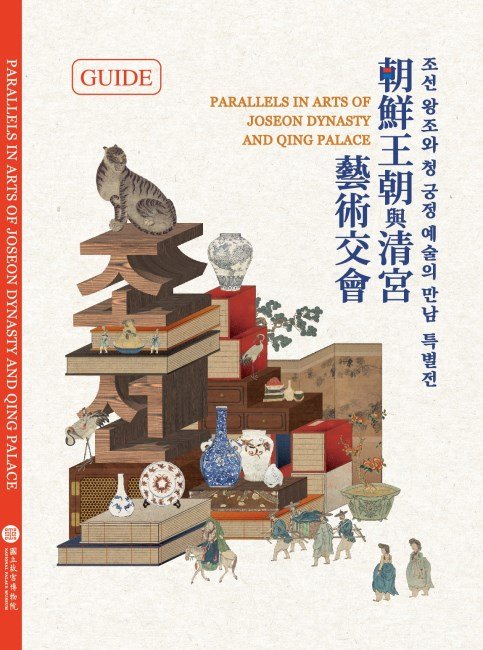
- A Design Study Utilizing the Symbolic Meanings of Traditional Korean and Chinese Furniture Decorations: Focusing on Furniture from the Joseon Dynasty and the Ming and Qing Periods. Journal of the Korean Society of Design Culture. 2018, vol.24, no.3, pp. 497-510 (14 pages). Authors: Lee Jing , Lee Seong-won. The scope of this study focuses on the formative aspects and symbolic meanings of traditional patterns, centering on traditional furniture from the Joseon Dynasty (late 14th century to early 20th century) and the Ming and Qing Dynasties of China. As a research method, first, a study on traditional Korean and Chinese furniture and patterns was conducted through the investigation, review, and comparative analysis of prior research materials such as specialized books, papers, and the internet. Second, the similarities and differences between traditional Korean and Chinese furniture patterns were compared and analyzed by examining the subject matter and symbolic meanings of the patterns.
- A Study on the Formative Design Similarities Between Late Joseon Dynasty Furniture and Ming-style Table Furniture. Journal of the Korea Society. 2020, vol.20, no.8, pp. 522-537 (16 pages). Authors: Yang Xiao, Kim, Kie-Su, Yang Li. This paper examines the formal design of traditional furniture from both countries, specifically focusing on table furniture, with the themes of “late Joseon Dynasty furniture” and “Ming-style furniture.
- A Comparative Study of Traditional Furniture through Korean and Chinese Residential Cultures – Focusing on Joseon Dynasty and Ming and Qing Dynasties. Journal of the Korean Society of Interior Design. 2003, vol.41, pp. 198-205 (8 pages). Authors: Kim Kook Sun, YeunSook Lee. This research aims to analyze characteristics of traditional furniture of Korea and China according to residential culture and to find out their similarities and differences.
ONLINE MUSEUM COLLECTIONS & DATABASES
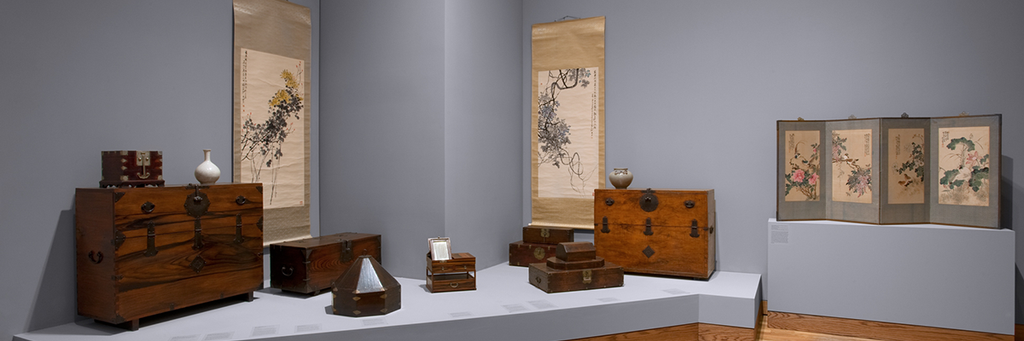
The Edward Reynolds Wright collection contains about 200 examples of Joseon furniture, assembled deliberately to represent different regional styles, woods, furniture types, decorative materials and joinery techniques. That makes the collection exceptionally valuable for comparative study. By clicking the link you will have access to the collection online.
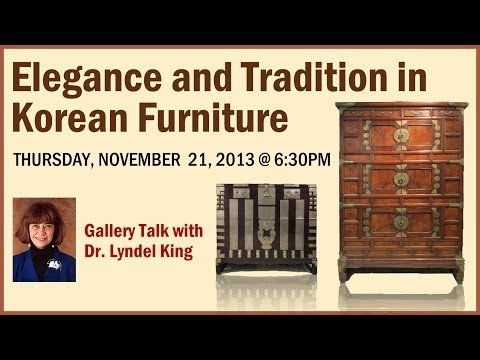
Elegance and Tradition in Korean Furniture –
Gallery Talk with Dr. Lyndel King.
November 21, 2013 – Dr. Lyndel King, Director and Chief Curator at the University of Minnesota’s Frederick R. Weisman Art Museum, introduces traditional Korean furniture with photos from the museum’s collection of Korean furniture, the largest in the world with over 200 pieces. Her presentation explores the traditional Korean home and interior furniture, highlighting its craftsmanship, many specialized uses, and regional differences.
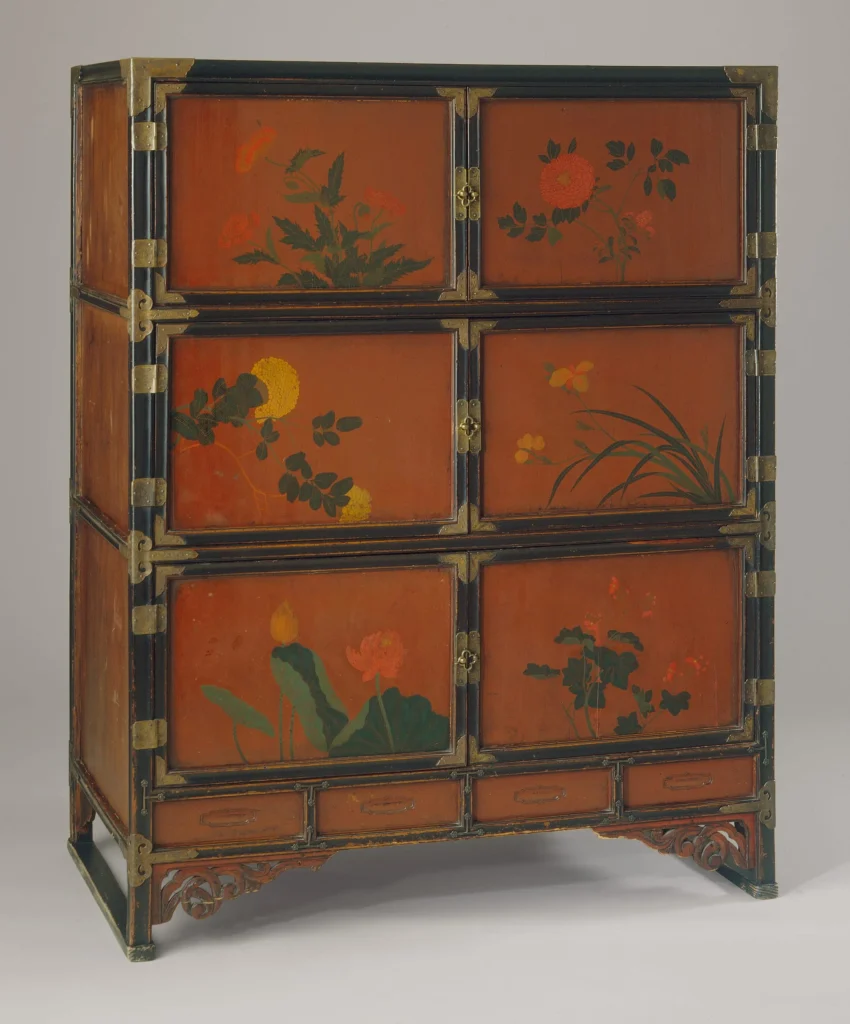
LACMA holds an important collection of Korean art ranging from the Three Kingdoms period through the twentieth century. Its holdings include Joseon dynasty furniture, lacquerware, ceramics, paintings and decorative arts. Of particular interest for the study of traditional furniture are wooden chests, lacquered cabinets and bookcases, regional furniture including a Gyeonggi-style chest, and mother-of-pearl inlaid lacquer furniture. The collection was significantly expanded by the Chester and Cameron Chang Collection.
HISTORICAL SOURCES & EARLY PHOTOGRAPHS
FURTHER READING – RELATED KOREAN DECORATIVE ARTS


Tuttle Publishing. Tokyo – Rutland, Vermont. Singapore 2006. With photography by Lee Jongkeun and an introduction by Clark E. Llewellyn, this richly illustrated publication explores traditional and contemporary Korean architecture, interior design and decorative arts.
Through photographs of private residences, historic buildings and contemporary interiors, the book examines the influence of Korean traditions on modern design. Particular attention is given to natural materials, simplicity of form, spatial organization and the integration of traditional furnishings into domestic interiors.
Although not specifically devoted to antique furniture, the publication offers valuable insight into Korean aesthetics and the relationship between traditional craftsmanship and contemporary design. English language.

Tuttle Edition, 1999. 144 pages. ISBN: 9780804821292. Written by the Korean scholar and cultural critic O-Young Lee, this illustrated publication explores traditional Korean culture through a selection of everyday objects, folk art and handicrafts.
Featuring more than 100 color illustrations, the book examines the practical uses, cultural significance and symbolism of objects associated with Korean daily life.
Although not specifically devoted to furniture, it provides useful background for understanding Korean aesthetics, traditional craftsmanship and the relationship between household objects and Korean customs. English language.

CHOI, JAE-SOON et al.
Published by Elizabeth: Hollym Int. Corp., 2000.
A monograph on the traditional design and decoration of Korean houses, emphasizing traditional ways of space planning, furniture arrangement, and general interior design and decoration.

Nani Park, Robert J. Fouser,
TUTTLE Publishing.
A rare glimpse into Korean hanok, Inside the Korean House takes readers on an unprecedented tour through the modern interiors of twelve magnificent traditional homes.

The publication introduces objects associated with everyday Korean life, including wooden furnishings, household utensils, ceramics, textiles and decorative objects. Numerous color photographs illustrate the variety of materials, techniques and artistic traditions found in Korean folk culture.
Although not exclusively devoted to antique furniture, the book provides useful background for understanding traditional Korean craftsmanship and the cultural environment in which furniture was produced and used. English language.
EXTERNAL LINKS.
Society of Joseon. Wikipedia article on Joseon society.
Gyeongsang-Do Bandaji. A study of bandaji from the southern province of Gyeongsang Do