THE USE OF PAPER ON KOREAN FURNITURE.

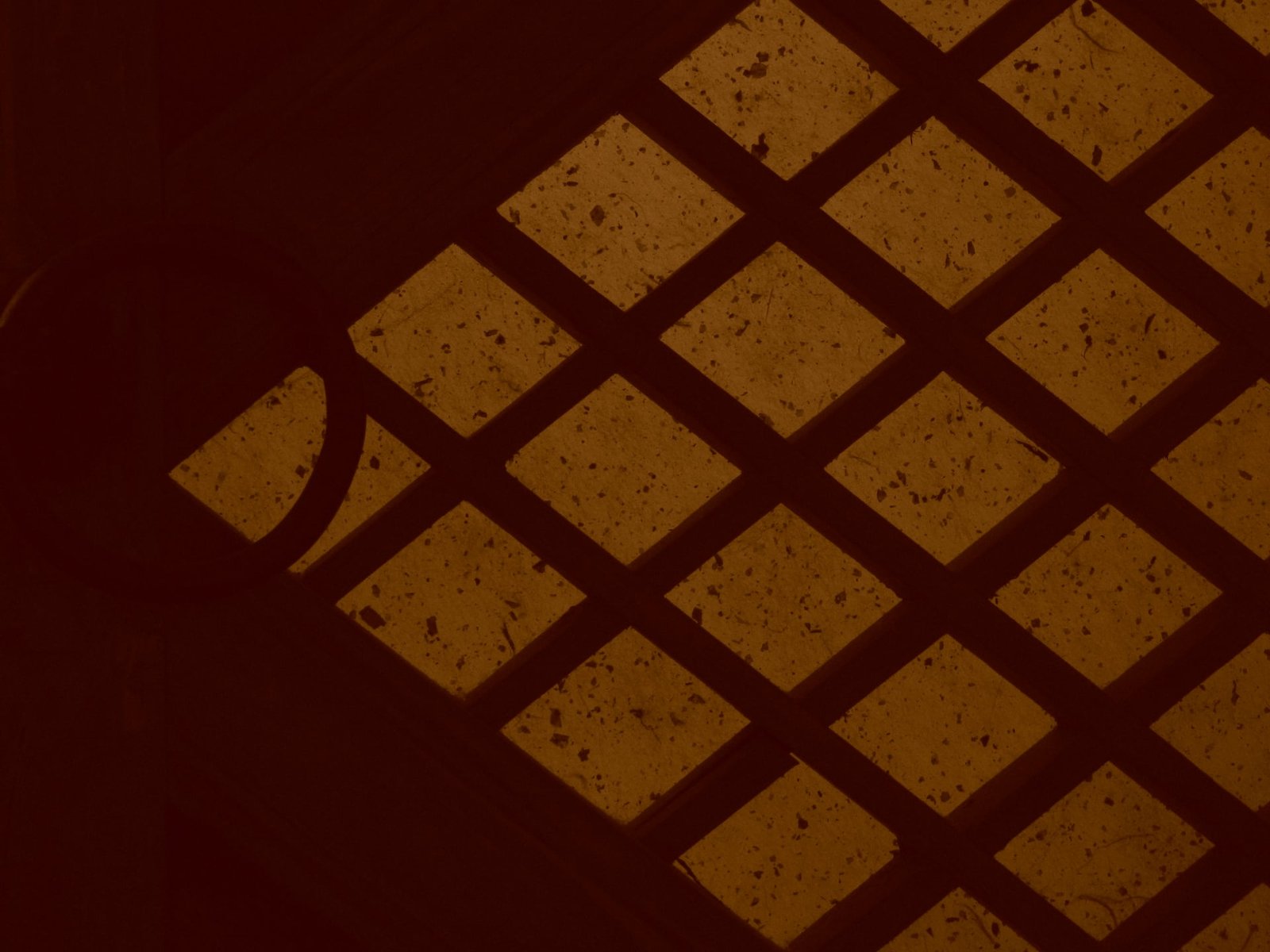
Hanji (Korean: 한지/韓紙) is the traditional handmade paper from Korea. It is made from the inner bark of the mulberry tree or Hibiscus Namihot (also known by its current scientific name, Abelmoschus manihot) both native to Korea, which helps suspend the individual fibers in water. Despite being paper, Hanji is extremely tough, waterproof, and versatile. Because […]
JEONJU CABINET. 전주장

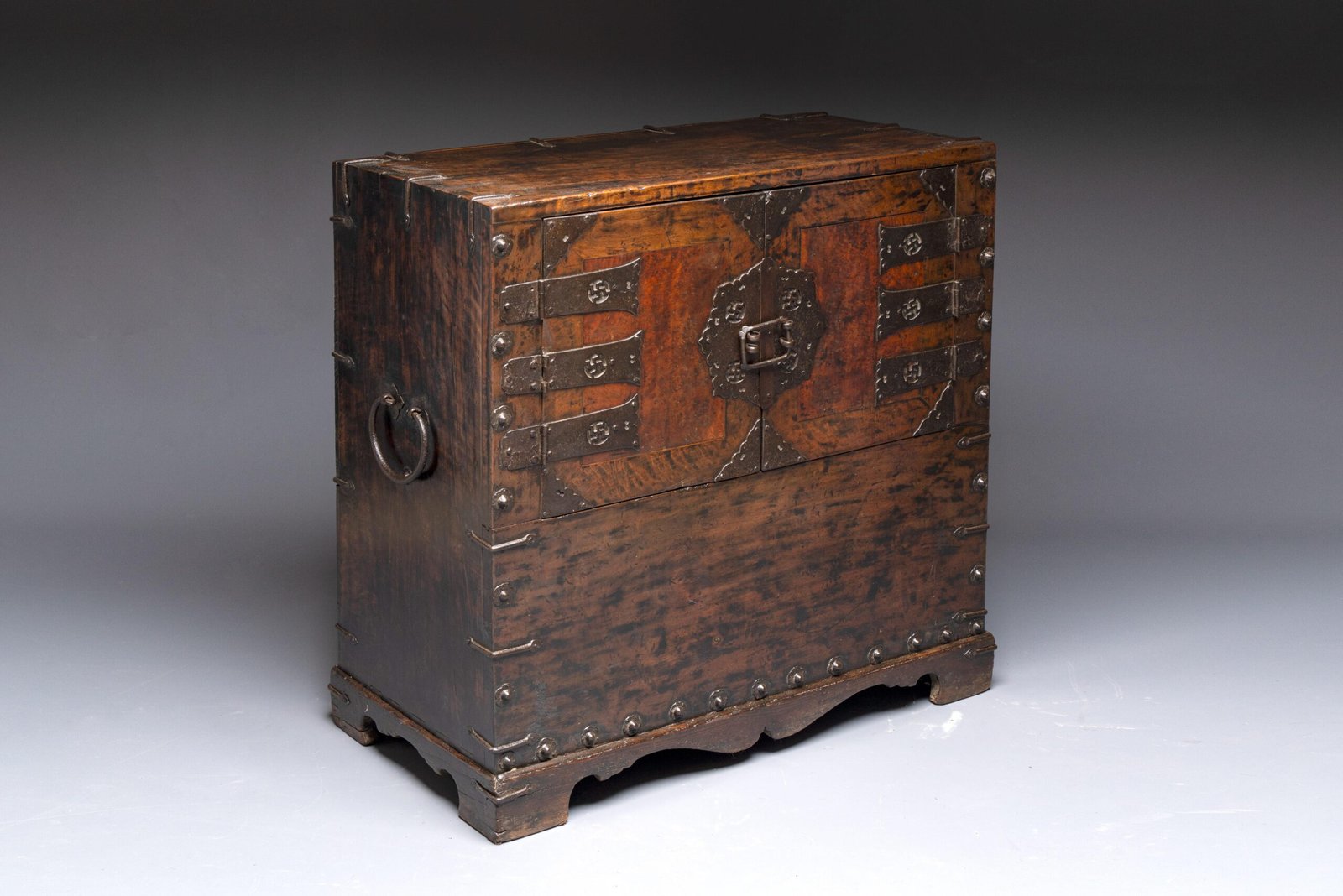
Jeonju-jang refers to wooden furniture made in Jeonju, North Jeolla Province, during the Joseon Dynasty and used by the middle-upper classes. It is valued as local cultural heritage for its distinctive shapes, metal ornaments, and multifunctional design tailored to users’ needs. Jeonju was a key residential center where landowners and yangban officials from the Honam […]

KOREAN WEDDING BOX (함)

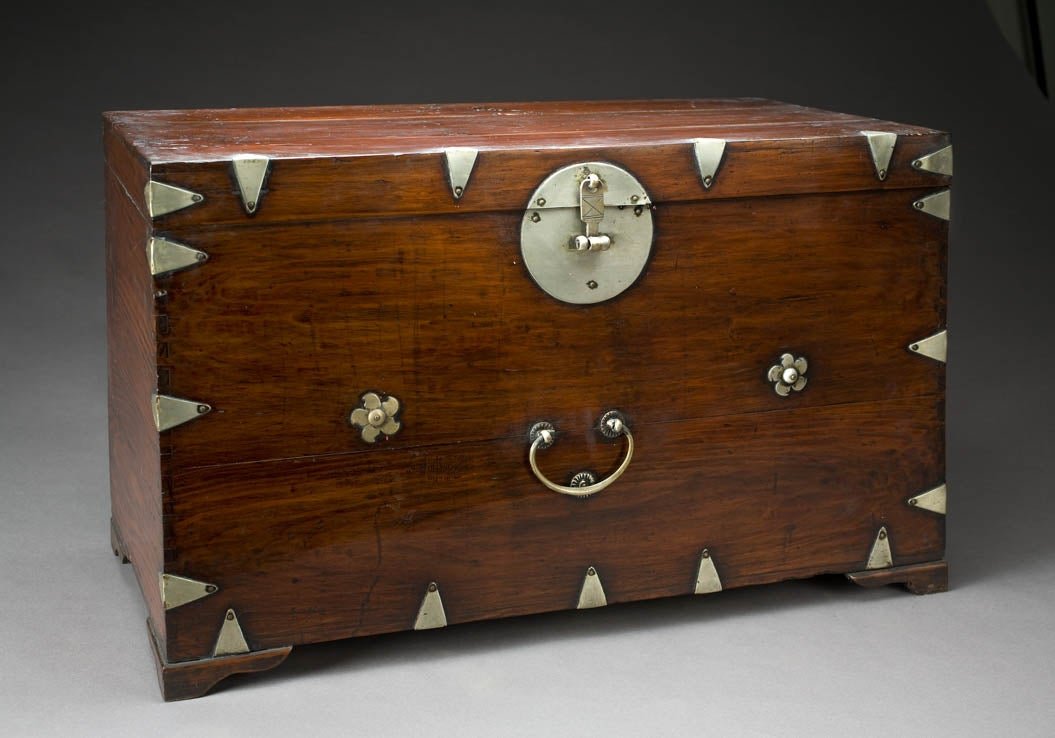
Korean wedding boxes, known as “Ham” or “Hon-su ham“, are typically characterized by their low and wide dimensions. The average measurements for these boxes are approximately 30cm in height, 60cm in width, and 30cm in depth. The top part of these boxes features a hinged lid at the back, which can be lifted open. The […]

OVERVIEW OF THE QUALITY AND ANTIQUITY OF KOREAN FURNITURE IN MUSEUM COLLECTIONS.

Earlier examples are rare due to the ravages of war, natural disasters, and Korea’s historical use of natural materials that degrade over time. Some older examples from the Goryeo Dynasty (918–1392) or earlier periods might be found but are exceedingly rare. Retention of Earlier Pieces in Korea: Older and more valuable pieces of furniture—such as […]

KOREAN FURNITURE IDENTIFICATION.

If you wish to know more about your items, and want us to examine your pictures and give you more detailed information about your item origin, or if your item is real antique or not, Do not hesitate to contact us by email at: tortuebangkok@gmail.com. Send us photos to assist in identifying your pieces. Precise […]

THE NATIONAL FOLK MUSEUM OF KOREA COLLECTION

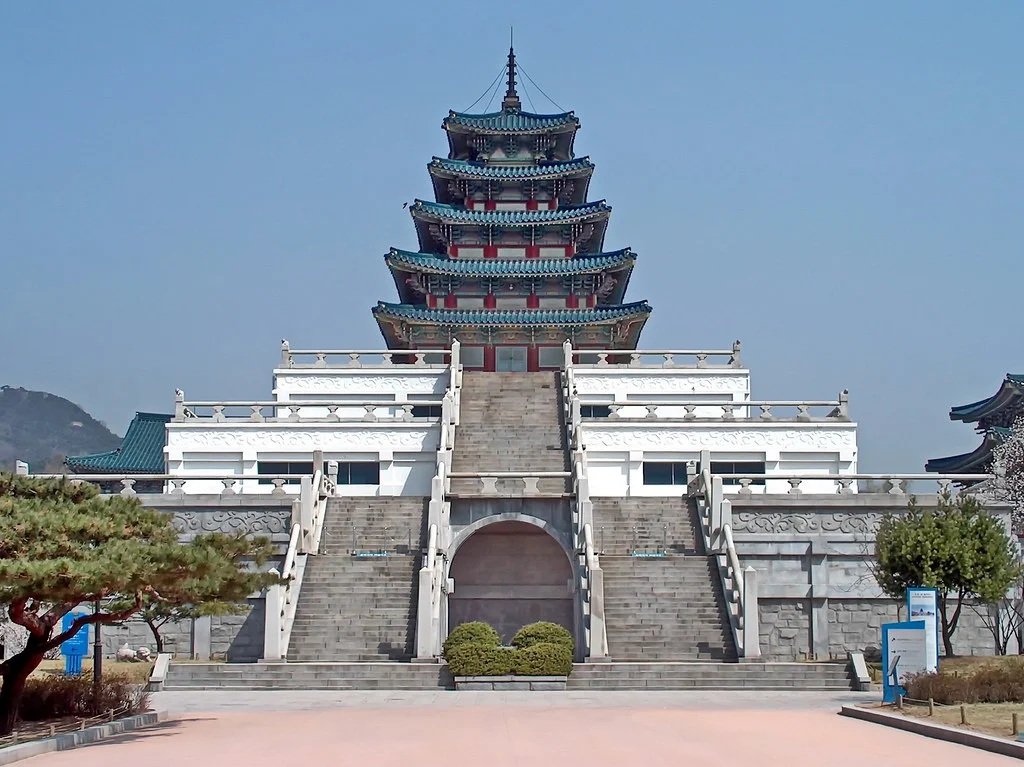
The National Folk Museum of Korea (Korean: 국립민속박물관) is a museum located on the grounds of Gyeongbokgung in Jongno District, Seoul, South Korea.

KOREAN WOODS

Years later, I came to realize that my university studies in Geomorphology had greatly aided my comprehension of Korean furniture in terms of the materials employed in its construction. During my initial visit to Korea in the mid-1980s, I was struck by the deep reverence Koreans held for wood. An examination of the country’s geography […]

KOREAN FURNITURE WITH MODIFIED DESIGNS.

Our exploration of the various collections housed in Korean furniture museums has enabled us to identify furniture with distinctive designs. Feature image: Described as a clothing chest. Period Japanese occupation, early 20th century.H. 121,5cm, W. 88cm, D. 39cm.Also called a Jeongju wardrobe, this chest is from Jeongju city, capital of North Jeolla province DOCUMENT & […]

CASE STUDIES.

In this chapter, we study furniture in depth in order to better estimate their precise origin and carry out accurate dating. “SUNG SUN I” BANDAJI. This piece of furniture, bought in China in the mid-90s, probably came from North Korea. In the late ’80s, many pieces circulated between North Korea and China via the northern […]

KOREAN MOTHER-OF-PEARL INLAY LACQUER WARE.

Mother-of-pearl, also known as nacre, is an inorganic composite material produced by certain mollusks as an inner shell layer, and accumulated in other shells, such as freshwater pearl mussels, in the form of pearls. It is very strong, resilient, and iridescent. It can be found in strains of mollusks in the class of “Bivalvia“, such as […]