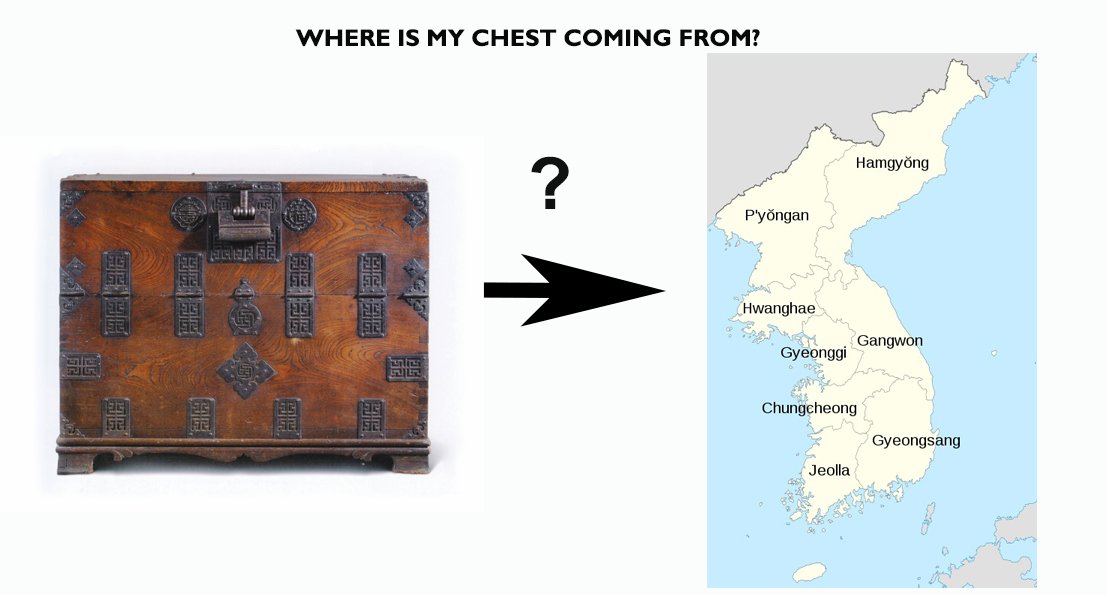
Traditional Korean bandaji chest with decorative iron fittings, shown beside a map of Korea's historical provinces, illustrating the identification of regional furniture styles.

HOW TO IDENTIFY THE REGIONAL ORIGIN OF A KOREAN BANDAJI.

In this publication, we examine bandaji of various designs and attempt to determine their geographical origin. One important point worth emphasizing is that metalwork alone is not sufficient to establish regional provenance. Hinges and locking plates can be replaced, and similar designs were sometimes used in different regions. Wood species, construction, proportions and documented provenance […]
Black-and-white photograph of traditional Korean metal furniture locks, including several fish-shaped padlocks, decorative locking mechanisms and assorted metal fittings.

TRADITIONAL KOREAN FURNITURE LOCKS. Designs and Symbolism.

When you buy antique Korean furniture, it’s rare for it to come with a padlock. In fact, padlocks have either disappeared, or if they were of good quality, they were sold separately to enthusiasts. In the book “Korean Style,” which focuses on the interiors of Korean homes, a fine collection of padlocks is presented From […]

Traditional Korean Bandaji chest with elaborate pierced iron fittings, geometric patterns and a large semicircular metal handle.

METALWORK PATTERNS ON KOREAN FURNITURE.

CHANGSOK. “Changsok” refers to the metal decoration used on Korean furniture. These metal fixtures served both utilitarian and decorative purposes, being crafted from materials like cast iron, copper, tin, nickel, and white brass. The white brass alloy, which includes tin and sometimes nickel in addition to the conventional copper and zinc found in yellow brass, […]