
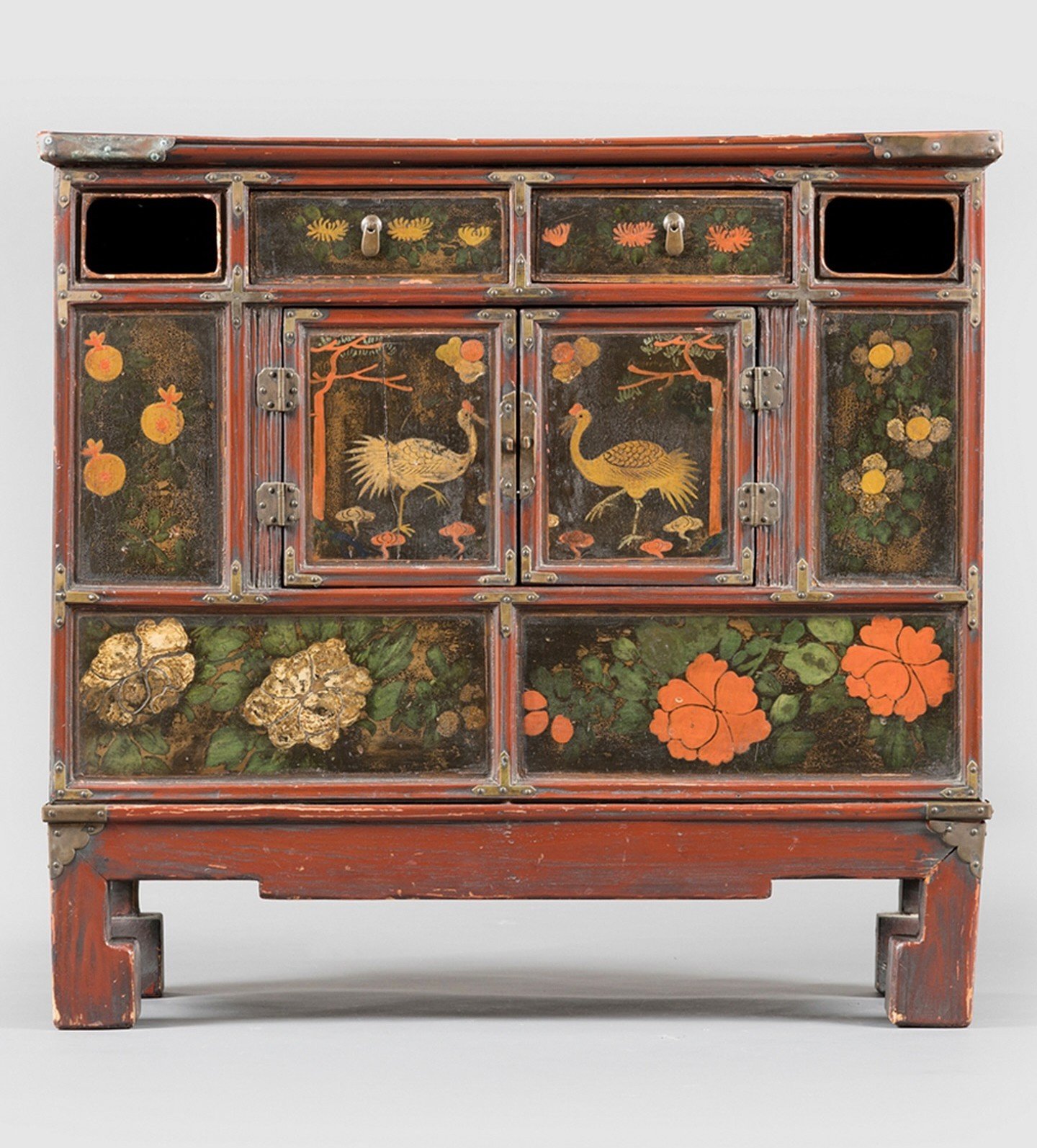
Except for lacquered furniture, which was mostly reserved for the royal household and court members, very few pieces were painted in Korea during the Joseon dynasty. The taste of the period favored Neo-Confucian aesthetics that emphasized natural wood and restraint. In fact, sources and references on this subject are scarce.
However some Korean antique furniture was occasionally painted, though far less often than Chinese or Japanese pieces. When it was painted, it usually followed clear regional, functional, or symbolic traditions.
Here are the main situations where Korean furniture could be painted:
FOLK-DECORATED (MINHWA- INSPIRED) PIECES.
Minhwa (Korean: 민화; Hanja: 民畵) refers to Korean folk art produced mostly by itinerant or unknown artists. It means “painting of the people” or “popular painting”.
Some late-Joseon rural workshops painted:
- Flowers, birds, butterflies
- Character talismans
- Geometric borders
These appear mostly on bandaji (blanket chests) and nong (stacking chests) and smaller pieces. The painting is usually lively and naive, matching folk-art aesthetics. They concern decorative chests for weddings and wealthy rural homes.
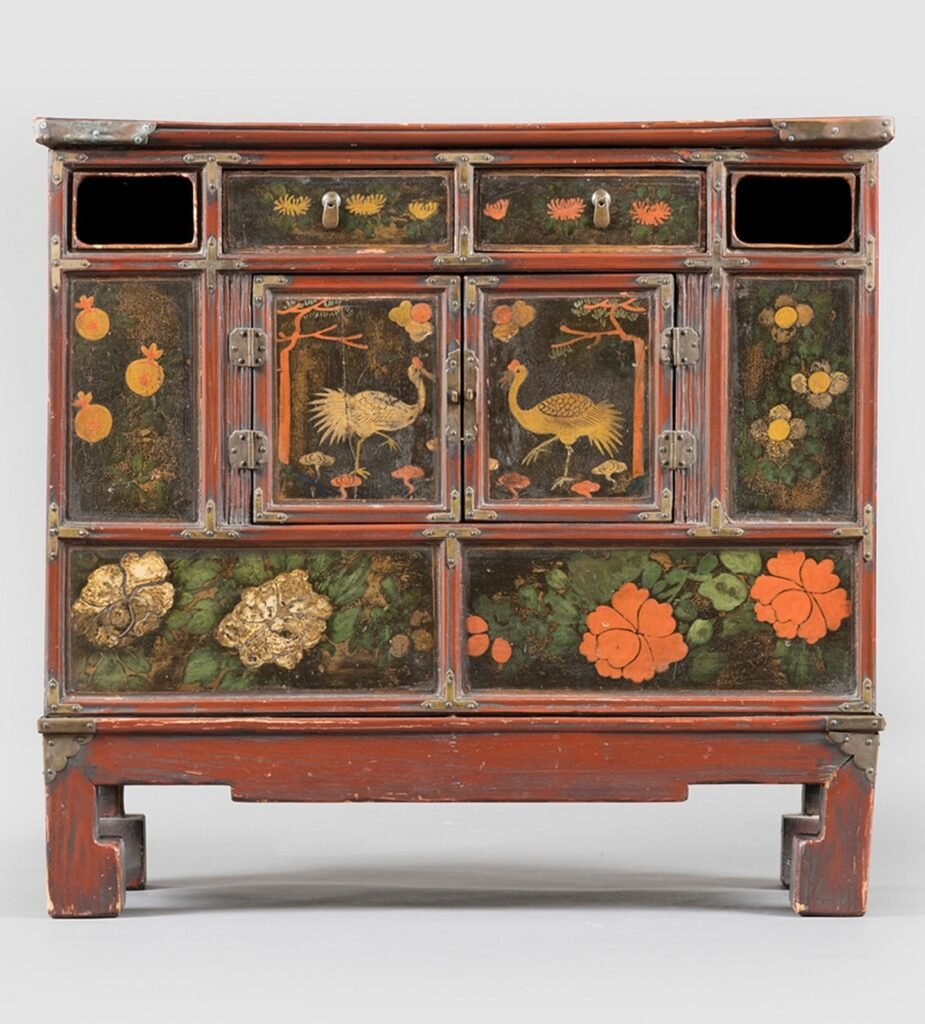
Key Features That Identify It:
The painted panels show classic Korean folk symbols:
- Cranes → longevity, high status
- Peonies → wealth and honor
- Pomegranates → fertility and abundance
- Gourd vines / blossoms → prosperity
- Chrysanthemums → autumn, nobility
These motifs are very typical of Jeolla region minhwa chests, known for bright pigments and layered symbolic images. Here is a motif-by-motif decoding of the cabinet, panel by panel, based on traditional Korean minhwa symbolism.
CENTRAL DOORS: THE CRANE PAIR (학). It is a symbol of longevity, nobility, and purity. A male–female pair represents harmony, marital fidelity, a prosperous household. Cranes are also companions of Daoist immortals, a wish for a long and fortunate life.
THE PINE TREE (소나무). Paired with cranes, pine reinforces the idea of long life and steadfast prosperity. Evergreen represent endurance and loyalty.
LINGZHI MUSHROOMS (영지 / 불로초), Seen below the cranes they represents immortality and the granting of a long and healthy life.
LEFT COLUMN PANEL: POMEGRANATES (석류) is a strong fertility symbol in Korea because one fruit contains many seeds. Often included in wedding furniture or gifts to new couples.
RIGHT COLUMN PANELS: YELLOW- GOLD BLOSSOMS (국화 or 매화). Likely Chrysanthemums or plum blossoms. Chrysanthemum stands for autumn, integrity, and noble character. Plum blossom, renewal and resilience.
LOWER LEFT PANEL: LARGE GILDED FLOWERS (금채 모란). These are peonies rendered with gilded pigment. Peony symbolizes wealth, rank, honor, abundance.
LOWER RIGHT PANEL: RED CAMELLIAS OR PEONIES. The forms resemble camellias (동백꽃), which were a favorite southern motif. Camellia stands for devotion and spring vitality. Peony, if it is the case for prosperity and beauty. The combination suggest a wish for flourishing domestic life.
TOP FRIEZE PANELS: CHRYSANTHEMUMS (국화). Seen Seen along the top band, in repeated pattern, it symbolize longevity and integrity.
In conclusion, when seen as a whole, the cabinet is absolutely a good-fortune ensemble intended for a home’s central space, probably tied to a marriage, a daughter’s trousseau or an auspicious household gift.
The Painting Technique:
This is not lacquer-painting in the Japanese sense.
It uses mineral pigments, animal-glue binder often covered with a thin lacquer wash (not a thick lacquer)
The surface has the matte, flat finish typical of rural workshops.
The frame is painted in opaque cinnabar-red pigment, also typical of Jeolla and sometimes Gyeongsang pieces. Red was protective, auspicious and often used for chests meant for marriage gifts or bedding.
The brass corner plates and hinges follow Southern coastal motifs. Simple, rounded plates rather than sharply geometric ones seen in northern furniture.
RED-PAINTED (주칠 / 단청) FURNITURE.
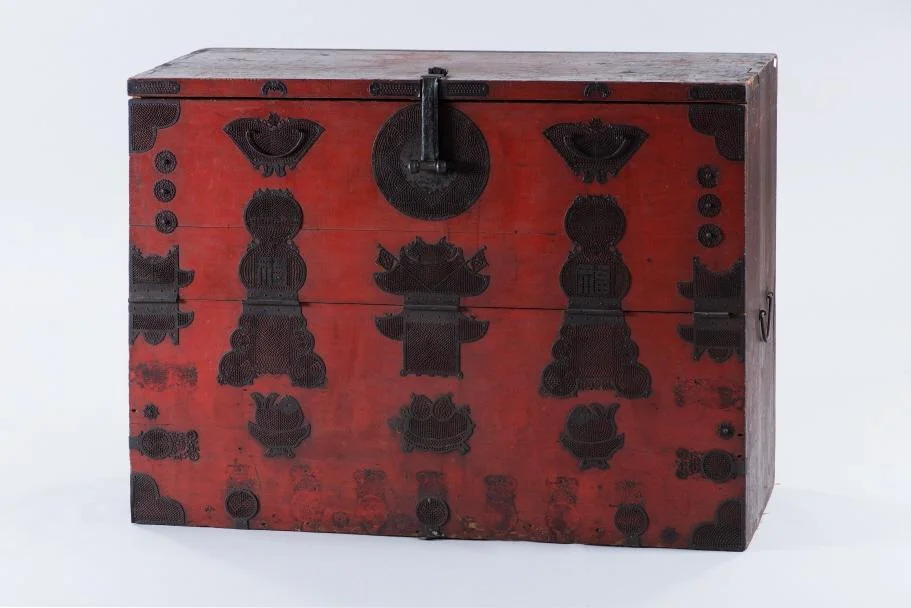
Red surfaces were mainly used in the Northern provinces (Hwanghae, Pyongan). On furniture intended to store textiles, especially bedding such as bandaji. Sometimes for protective symbolism, red was believed to ward off misfortune and attract good energy. This finish was achieved using an opaque red pigment, and only rarely with lacquer, which was too costly.
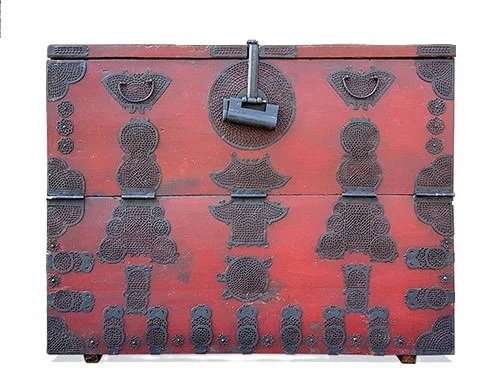
Red paint on pine wood, iron fittings.
H. 88cm, W. 113cm, D. 47cm.
Baengnyeongdo island.
Collection in Korea.
This Korean bandaji (반닫이, blanket chest) is painted red for symbolic, aesthetic, and practical reasons rooted in local tradition. In Korean folk culture, red (주홍 / 홍색) was considered a protective color that warded off evil spirits and brought good fortune, making it a common choice for furniture used in bedrooms or for storing valuable textiles such as bedding and wedding garments.
Folk chests often favored strong, warm colors, unlike Neo-Confucian aristocratic pieces that emphasized natural wood and restraint. Bright red and orange finishes were especially common in rural and island regions, including Baeknyeongdo, Heuksando, Jeju, and parts of Hwanghae Province. Because of this, such pieces are typically classified as regional folk furniture rather than yangban elite work.
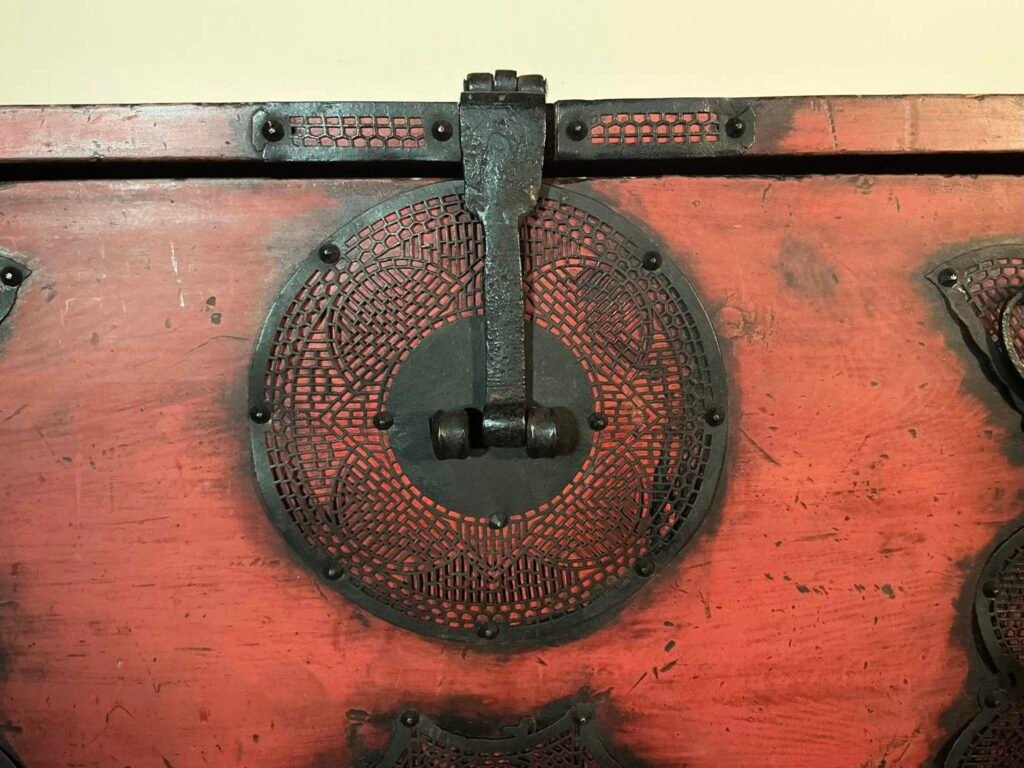
Red pigment also helped conceal mixed or lower-grade woods like pine or linden, while giving the chest a richer appearance suited to dowry or marriage furnishings, often seen on common wedding boxes. The color further enhanced the contrast with iron hardware. The chest in your image, with its dense stamped iron fittings and matte red surface, aligns closely with styles from Baeknyeongdo and the western islands of Hwanghae Province.
BUDDHIST TEMPLE FURNITURE.
Temple furniture could be painted with red, green, blue and gold. Patterns echoing temple decoration were used on offering tables, sutra chests or cabinets for ritual implements.
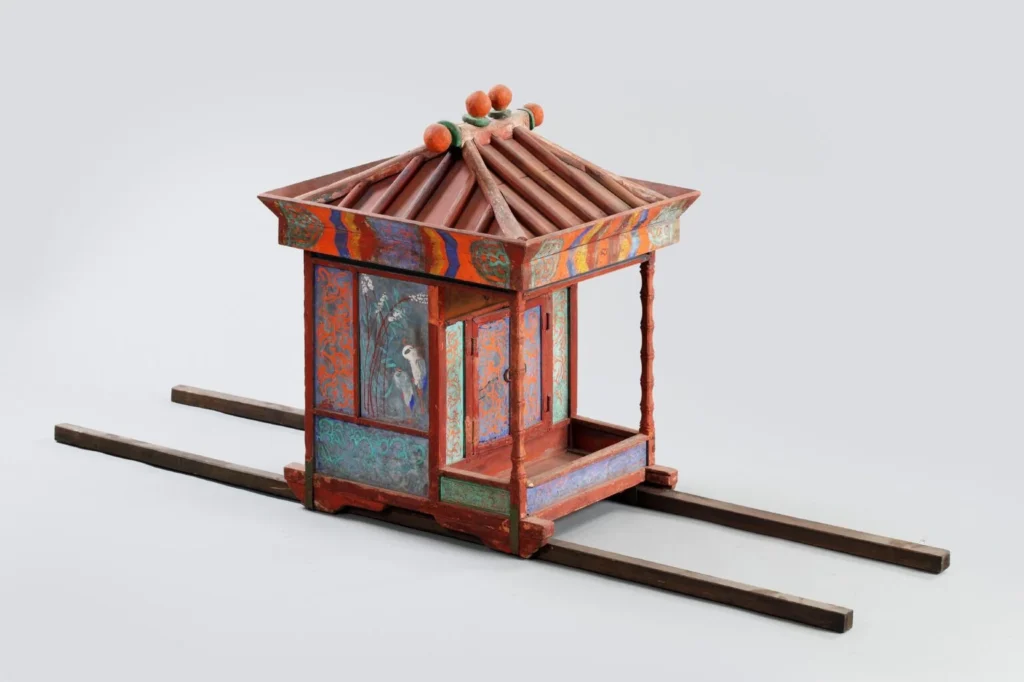
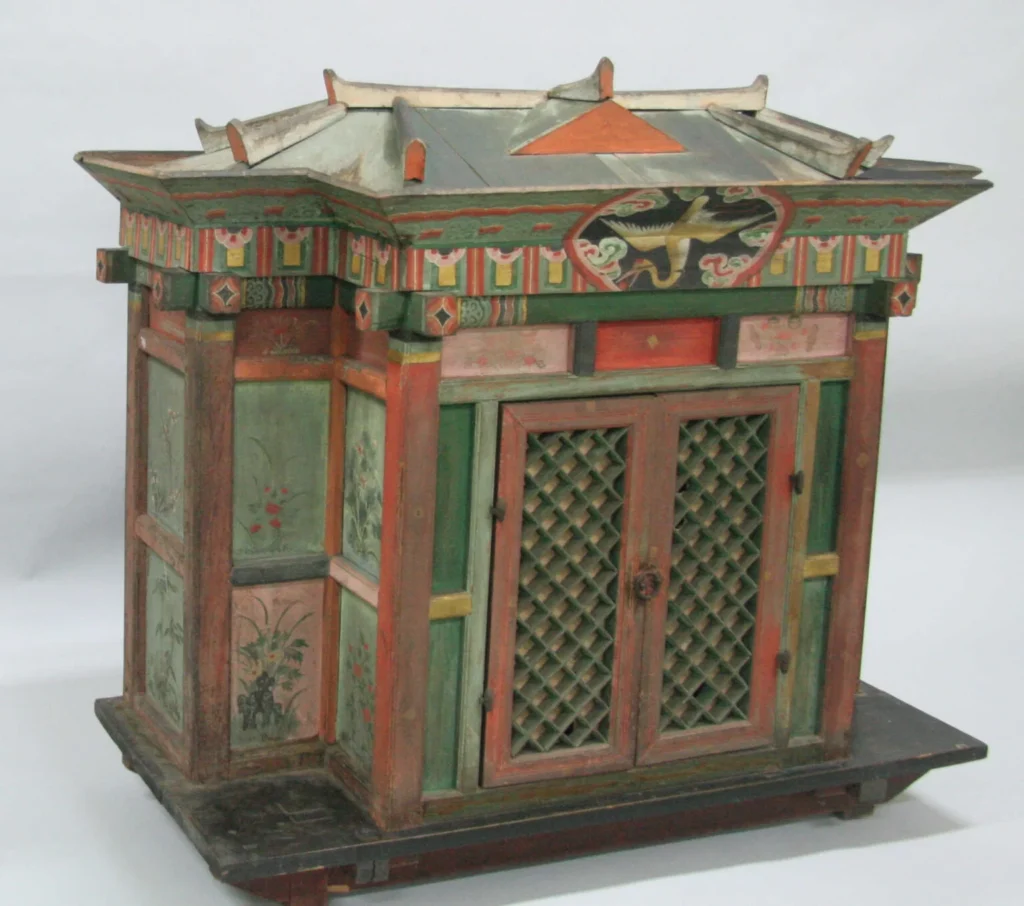
Collection: Gwangju Metropolitan City Folk Museum.
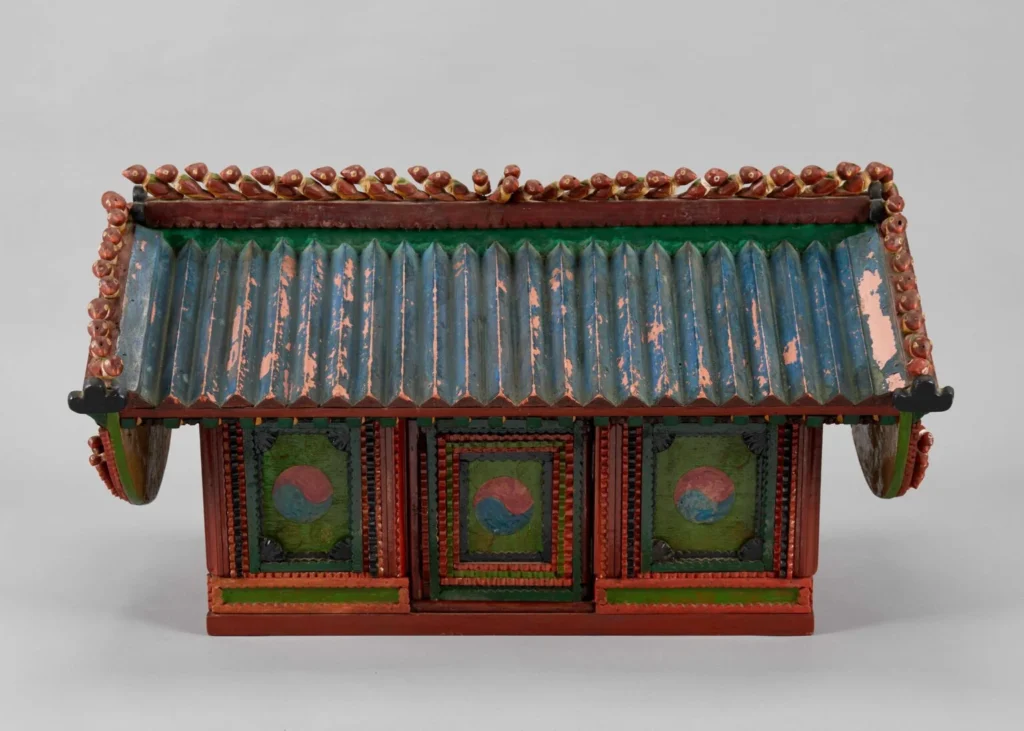
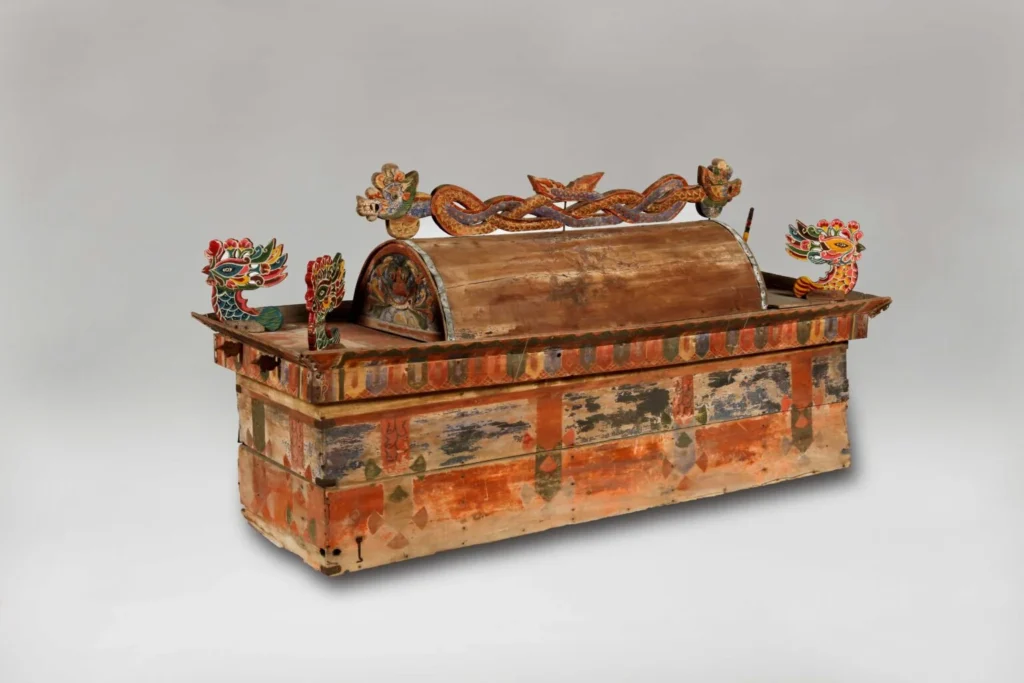
Collection: Busan Metropolitan city Museum, Korea.
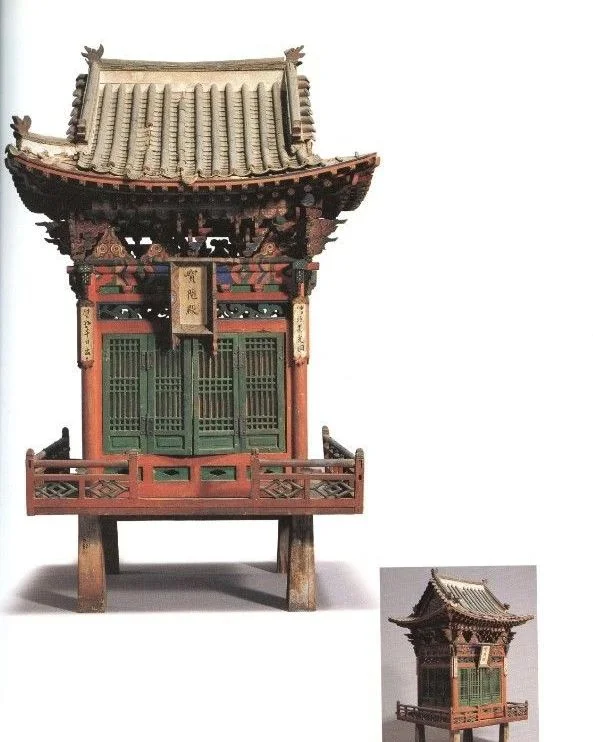
Niche for Buddha image with hanging board. Painted wood.
H. 86cm, W. 62,5cm.
Late Joseon dynasty.